
Dr Ahsan Tariq , MBBS, MRCP (UK ) ongoing, IMT ( Internal Medicine Trainee, NHS England), GMC : 7805049
Dr Ahsan Tariq is a UK-registered medical doctor with a background in internal medicine and a focus on evidence-based research in cognitive health and nootropics. He critically reviews scientific studies, supplements, and ingredients to help readers make informed, safe, and effective choices for brain health and performance.
Introduction
Access to clean, safe drinking water is a fundamental human right and a cornerstone of public health. However, as urban centers grapple with aging infrastructure, industrial runoff, and evolving environmental regulations, municipal water systems frequently face significant challenges. Among these urban centers, the topic of Richmond water quality issues has emerged as a critical focal point for public health officials, environmental scientists, and local residents. While municipal water authorities work diligently to treat and distribute water, the journey from the treatment plant to the household tap introduces numerous variables that can compromise water integrity.
Understanding Richmond water quality issues requires a comprehensive look at the historical context of local water infrastructure, the biological and chemical nature of common waterborne contaminants, and the regulatory frameworks designed to protect consumers. Over the past few decades, scientific research has highlighted the presence of heavy metals, per- and polyfluoroalkyl substances, and disinfection byproducts in various municipal water supplies. These trace elements, even in microscopic quantities, have profound implications for long-term health and wellness. According to a 2018 study [1], aging pipe networks in historic cities play a substantial role in municipal water degradation.
This comprehensive guide is designed to thoroughly examine Richmond water quality issues. By exploring the mechanisms of water contamination, the proven benefits of effective filtration, the potential risks of untreated exposure, and the latest scientific evidence, readers will be empowered to make informed decisions about their household water consumption. Through a detailed analysis of risk factors, mitigation strategies, and expert opinions, this article provides an evidence-based roadmap for navigating urban water safety.
Understanding the Topic
To fully grasp the scope of Richmond water quality issues, one must first understand the origins and processes of municipal water systems. Richmond, like many older municipalities, relies on surface water sources such as rivers and reservoirs. These natural bodies of water are inherently exposed to agricultural runoff, industrial discharge, and natural organic matter. When water is drawn into treatment facilities, it undergoes a rigorous purification process designed to meet federal and state safety standards [2].
However, the primary concern regarding Richmond water quality issues often lies not at the source, but within the distribution network. The subterranean labyrinth of pipes responsible for delivering water to individual homes frequently contains legacy materials, including lead and unlined cast iron. As water travels through miles of aging infrastructure, changes in water chemistry can cause these materials to leach into the water supply. According to a 2020 report [3], the chemical stability of treated water is paramount in preventing the corrosion of heavy metals into residential drinking water.
Furthermore, modern environmental science has identified a new class of emerging contaminants. Chemicals such as perfluorooctanoic acid and perfluorooctanesulfonic acid, commonly referred to as forever chemicals, have been detected in various watersheds across the nation [4]. These substances are highly resistant to degradation and are not easily removed by conventional water treatment methods. Understanding the multifaceted nature of Richmond water quality issues means acknowledging both historical infrastructure challenges and modern chemical pollution.
How It Works
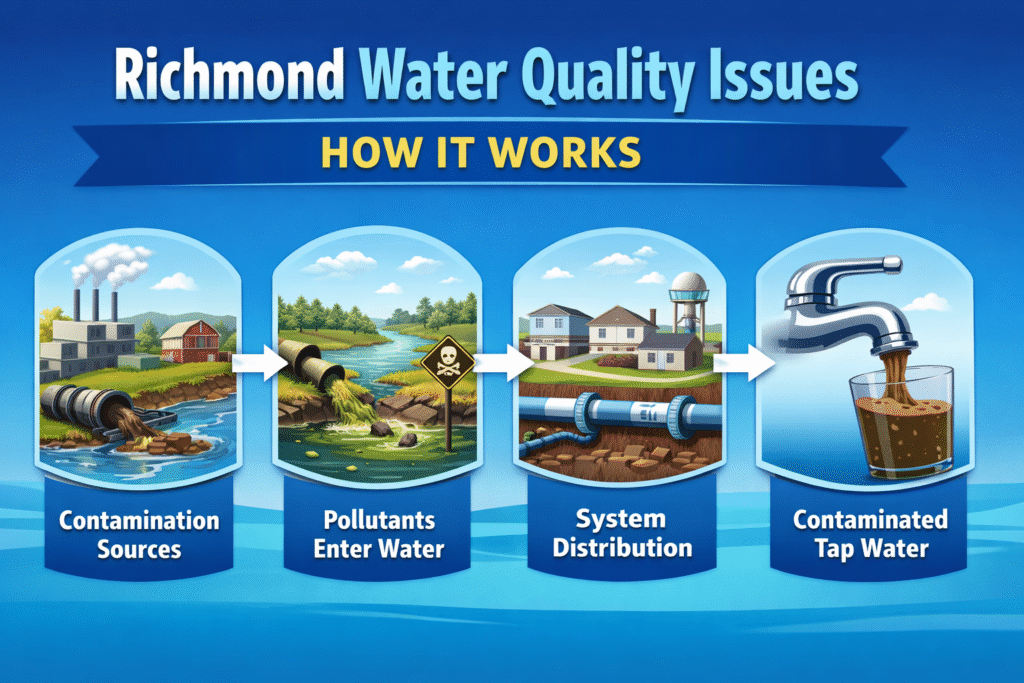
The mechanics of water contamination and treatment are rooted in complex environmental chemistry and fluid dynamics. To understand how Richmond water quality issues develop, it is necessary to trace the path of water from its environmental source to the consumer tap. Source water is continuously subjected to environmental inputs. Rainwater washes pesticides and fertilizers from agricultural lands into rivers, while industrial facilities may discharge trace amounts of synthetic chemicals into the ecosystem [5].
Once this water reaches a municipal treatment plant, it undergoes several stages: coagulation, flocculation, sedimentation, filtration, and disinfection. Coagulants are added to the water to bind dirt and dissolved particles into larger clusters called flocs, which then settle to the bottom during sedimentation. The clear water is subsequently filtered through layers of sand, gravel, and charcoal to remove smaller impurities [6]. Finally, chemical disinfectants such as chlorine or chloramines are introduced to eradicate pathogenic bacteria and viruses.
While disinfection is a triumph of modern public health, it introduces its own set of chemical reactions. When chlorine interacts with natural organic matter present in the water, it forms chemical compounds known as disinfection byproducts, including trihalomethanes and haloacetic acids [7]. The delicate balancing act of municipal water treatment involves adding enough disinfectant to prevent microbial outbreaks while minimizing the formation of these potentially harmful byproducts. According to a 2019 study [8], maintaining this equilibrium is one of the most significant challenges for operators managing urban water quality.
Once the treated water leaves the plant, it enters the distribution system. Here, water pressure, temperature, and stagnation times dictate how the water interacts with pipe walls. If the water lacks specific anti-corrosive additives, such as orthophosphates, it can strip lead and copper from older plumbing fixtures [9]. This localized phenomenon explains why two houses on the same street might experience drastically different Richmond water quality issues.
Importance
Addressing Richmond water quality issues is not merely an environmental concern; it is a critical public health priority. Water is the most fundamental substrate for human biology, playing a vital role in cellular function, digestion, temperature regulation, and cognitive performance. When the structural integrity of drinking water is compromised by chemical or microbial contaminants, the entire population bears the health and economic burdens.
The importance of monitoring and mitigating these issues lies in the insidious nature of chronic, low-dose exposure. Unlike an acute microbial infection, which presents immediate symptoms like gastrointestinal distress, exposure to heavy metals or forever chemicals accumulates quietly over years. Prolonged exposure can lead to severe physiological disruptions that may not manifest until decades later [10]. Therefore, public awareness and proactive personal water management are essential for long-term health preservation.
Furthermore, recognizing and responding to Richmond water quality issues drives community advocacy and infrastructure investment. Public demand for cleaner water accelerates legislative action, prompting local governments to secure funding for lead pipe replacement programs and advanced filtration technologies at municipal plants. According to a 2021 economic analysis [11], every dollar invested in water infrastructure and quality improvement yields a substantial return in reduced healthcare costs and increased economic productivity.
Proven Benefits
When discussing the proven benefits in the context of Richmond water quality issues, the focus shifts to the positive outcomes associated with proper water treatment, filtration, and the consumption of high-quality drinking water. Taking steps to mitigate water contaminants yields measurable improvements in physiological health, cognitive function, and overall quality of life.
The foremost benefit of addressing water quality is the drastic reduction in toxic burden on the human body. By utilizing certified household filtration systems to remove heavy metals like lead and copper, individuals protect their neurological and cardiovascular systems. According to a 2017 pediatric health review [12], eliminating lead exposure in drinking water is directly correlated with higher neurodevelopmental outcomes and enhanced cognitive abilities in growing children.
Additionally, effectively filtering out disinfection byproducts and emerging synthetic chemicals supports optimal organ function. The liver and kidneys are the body’s primary filtration organs, tasked with processing and eliminating toxins. Consuming purified water reduces the functional stress placed on these organs, thereby promoting cellular longevity and metabolic efficiency [13].
There are also significant lifestyle and economic benefits to addressing these issues at the household level. Installing a reliable point-of-use or whole-house water filtration system eliminates the need for single-use plastic water bottles. This not only reduces the household carbon footprint and environmental plastic pollution but also results in substantial financial savings over time [14]. Furthermore, high-quality, filtered water improves the taste and odor of drinking water, which naturally encourages higher daily water consumption and better overall hydration [15].
Potential Risks
Failing to address and mitigate Richmond water quality issues exposes residents to a spectrum of potential health risks. These risks vary depending on the specific contaminants present in the localized water supply, the concentration of those contaminants, and the duration of exposure.
One of the most severe risks associated with aging urban water infrastructure is lead exposure. Lead is a potent neurotoxin that mimics calcium in the body, allowing it to cross the blood-brain barrier. In adults, chronic lead exposure is linked to hypertension, reduced kidney function, and reproductive issues [16]. In children, the risks are exponentially higher. According to a 2016 toxicological study [17], even microscopic amounts of lead in a child’s bloodstream can result in irreversible cognitive deficits, behavioral disorders, and stunted physical growth.
Another significant risk stems from disinfection byproducts. While chlorine is necessary to prevent outbreaks of diseases like cholera and typhoid, the trihalomethanes generated during the treatment process are classified as possible human carcinogens. Long-term consumption of water with elevated levels of disinfection byproducts has been associated with an increased risk of bladder and colorectal cancers [18].
Emerging contaminants, particularly per- and polyfluoroalkyl substances, present a modern toxicological crisis. These synthetic chemicals resist metabolic degradation and bioaccumulate in human tissues over time. Research has linked elevated levels of these forever chemicals to immune system suppression, thyroid dysfunction, elevated cholesterol, and increased risks of certain endocrine-related cancers [19]. Ignoring Richmond water quality issues means leaving oneself vulnerable to these persistent biological threats.
Scientific Evidence
The scientific community has extensively documented the mechanisms and health outcomes associated with municipal water contaminants. Rigorous epidemiological studies and toxicological analyses form the foundation of our understanding of Richmond water quality issues.
According to a 2015 study [20] on urban water distribution networks, researchers found that fluctuations in water temperature and seasonal flow rates significantly impact the release of heavy metals from pipe scales. The study demonstrated that during summer months, increased biological activity and changes in water chemistry can destabilize the protective scale inside lead pipes, leading to intermittent spikes in heavy metal concentrations at the residential tap.
Further scientific evidence highlights the specific dangers of per- and polyfluoroalkyl substances in surface waters. A comprehensive 2022 systematic review [21] analyzed municipal water sources adjacent to industrial manufacturing zones and military bases. The researchers concluded that conventional rapid sand filtration and standard chlorination are entirely ineffective at removing these complex carbon-fluorine bonds from drinking water. The study emphasized the necessity of advanced filtration methods, such as reverse osmosis and granular activated carbon, to achieve meaningful reductions in chemical concentrations.
Disinfection byproducts have also been the subject of intense scientific scrutiny. A pivotal 2019 report [22] investigated the correlation between prolonged exposure to haloacetic acids in tap water and adverse reproductive outcomes. The findings suggested that pregnant women consuming water with high concentrations of these byproducts faced statistically significant increases in the risk of fetal growth restriction and low birth weight. This empirical data underscores the necessity of continuous water monitoring and point-of-use filtration.
Benefits vs Risks Comparison
To fully contextualize Richmond water quality issues, it is helpful to analyze the benefits of municipal water treatment against the inherent risks that persist in the distribution system. While municipal water provides an incredible public service by delivering highly regulated, accessible water to millions, the system is not without flaws. The table below outlines the benefits of treating and utilizing municipal water compared to the risks associated with infrastructure degradation and chemical byproducts.
Benefits vs Risks of Municipal Water Systems
| System Aspect | Proven Benefits | Potential Risks |
|---|---|---|
| Chemical Disinfection (Chlorine/Chloramines) | Eradicates deadly waterborne pathogens like E. coli, Giardia, and Norovirus, preventing widespread disease outbreaks. | Reacts with organic matter to form disinfection byproducts (trihalomethanes) which are linked to elevated cancer risks over time. |
| Municipal Distribution Network | Delivers highly pressurized, readily available water directly to households, supporting sanitation and convenience. | Aging, legacy pipes (lead and cast iron) can corrode, leaching heavy metals directly into the residential water supply. |
| Surface Water Sourcing (Rivers/Reservoirs) | Provides a massive, renewable volume of water capable of sustaining dense urban populations and local industries. | Highly susceptible to environmental pollution, including agricultural pesticide runoff and industrial forever chemicals. |
| Cost and Accessibility | Tap water remains the most economically viable and widely accessible source of hydration for the general public. | Lower socioeconomic areas may suffer from disproportionately older infrastructure, leading to localized contamination spikes. |
According to a 2021 public health framework [23], understanding this exact balance is critical. Municipalities must use chemical disinfectants to prevent acute biological crises, even though it introduces the chronic risk of chemical byproducts. Consumers must bridge this gap by implementing secondary filtration at home.
Comparison Table
When addressing Richmond water quality issues at the consumer level, selecting the appropriate home filtration system is essential. Different filtration technologies target different classes of contaminants. The following table compares the three most common home water filtration methods.
Water Filtration Technologies Comparison
| Filtration Technology | Primary Mechanism | Contaminants Removed | Limitations |
|---|---|---|---|
| Activated Carbon Filters | Uses adsorption to trap chemical molecules within the porous surface of the carbon medium. | Chlorine, volatile organic compounds, bad tastes and odors, and some heavy metals (if specially certified). | Does not effectively remove dissolved minerals, heavy salts, or complex forever chemicals unless highly specialized. |
| Reverse Osmosis Systems | Forces water under high pressure through a semi-permeable membrane at the molecular level. | Lead, arsenic, per- and polyfluoroalkyl substances, fluoride, nitrates, and most chemical impurities. | Produces wastewater during the filtration process and removes beneficial dietary minerals like calcium and magnesium. |
| Water Distillation | Boils water into steam, leaving impurities behind, then condenses the steam back into liquid water. | Heavy metals, bacteria, viruses, dissolved solids, and completely purifies the water. | Slow process, requires high electrical energy, and leaves water tasting flat due to the absence of oxygen and minerals. |
Choosing the right system depends entirely on the specific Richmond water quality issues present in a given household. According to a 2018 environmental engineering review [24], reverse osmosis combined with activated carbon provides the most comprehensive defense against both heavy metals and emerging synthetic chemicals.
Safe Usage Guidelines
Navigating Richmond water quality issues requires practical, actionable strategies for household water consumption. Even if municipal water is deemed generally safe, applying safe usage guidelines can significantly reduce exposure to trace contaminants.
First, residents should practice tap flushing. If water has been sitting stagnant in household pipes for several hours, such as overnight or while residents are at work, heavy metals are more likely to have leached into the water. According to a 2017 advisory from environmental health scientists [25], running the cold water tap for two to three minutes before using it for drinking or cooking clears the stagnant water and pulls fresh water directly from the main municipal line.
Second, consumers should strictly avoid using hot tap water for consumption. Hot water dissolves impurities and heavy metals from plumbing fixtures much faster than cold water. When cooking, making infant formula, or preparing hot beverages, individuals should always draw cold water and heat it on the stove or in a microwave [26].
Third, routine water testing is highly recommended. Because localized plumbing plays a massive role in water quality, municipal reports do not always reflect the reality of the water emerging from a specific kitchen tap. Homeowners should utilize independent, state-certified laboratories to test their water for lead, copper, and synthetic chemicals. Based on these precise results, residents can select an appropriate, NSF-certified filtration system tailored to their specific needs.
Who Should Avoid It
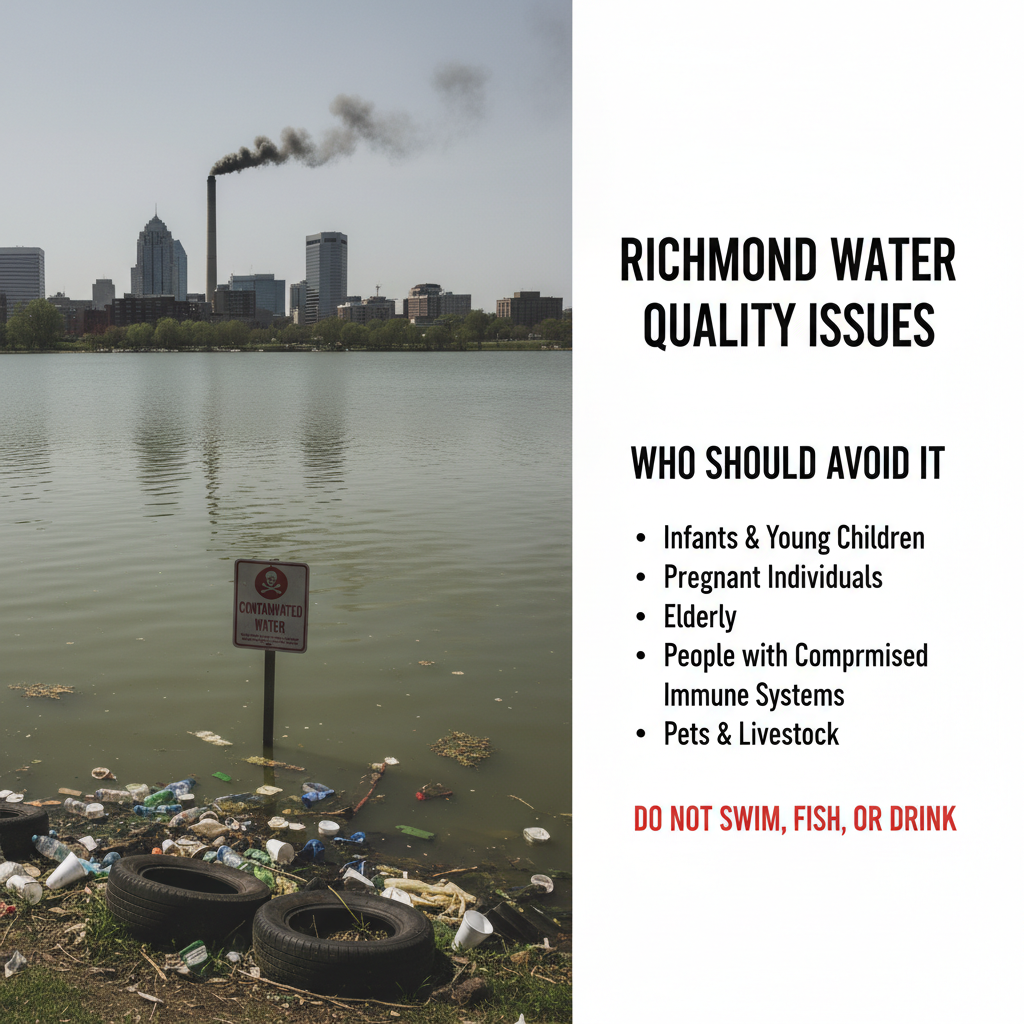
While managing Richmond water quality issues is important for everyone, certain vulnerable populations must exercise extreme caution regarding unfiltered municipal tap water. The physiological defenses of these groups are either not fully developed or significantly compromised, making them highly susceptible to low-dose contaminant exposure.
Infants and young children are at the highest risk. Because their brains and nervous systems are in critical stages of rapid development, exposure to even microscopic levels of neurotoxins like lead can cause irreversible damage. Furthermore, infants consume a much higher volume of water relative to their body weight than adults do, particularly if they are fed formula reconstituted with tap water. According to a 2019 pediatric guideline [27], parents should exclusively use rigorously filtered or distilled water for mixing infant formula.
Pregnant women also constitute a highly vulnerable demographic. Contaminants such as disinfection byproducts and forever chemicals can cross the placental barrier, potentially affecting fetal development and resulting in lower birth weights or developmental delays [28]. Pregnant individuals are strongly advised to consume highly purified water to minimize the transfer of synthetic environmental toxins to the developing fetus.
Finally, immunocompromised individuals, including patients undergoing chemotherapy, individuals living with advanced HIV/AIDS, and organ transplant recipients, must be wary of municipal water. While water treatment kills most pathogens, trace amounts of opportunistic microorganisms like Cryptosporidium can occasionally survive the chlorination process. According to a 2020 medical protocol [29], severely immunocompromised patients should boil their tap water or use sub-micron absolute filtration systems to ensure absolute sterility.
Alternatives
For individuals who wish to avoid the uncertainties associated with Richmond water quality issues altogether, several viable alternatives to unfiltered tap water exist. Each alternative offers distinct advantages and unique logistical considerations.
The most straightforward alternative is the installation of point-of-use filtration systems, such as under-sink reverse osmosis units. These systems provide a continuous supply of highly purified water directly at the kitchen sink, effectively mitigating concerns about both municipal treatment byproducts and local pipe corrosion. Whole-house filtration systems, known as point-of-entry systems, offer an even broader alternative by filtering water before it reaches the hot water heater, thereby protecting showers and laundry appliances from sediment and chlorine gas inhalation.
For those who rent or cannot modify their plumbing, counter-top water distillers or gravity-fed carbon water filters provide excellent, non-permanent alternatives. These systems require manual filling but are highly effective at neutralizing common urban water threats.
Another alternative is the use of bottled water or residential water delivery services. While this guarantees a high level of quality control and circumvents municipal infrastructure entirely, it is often the least sustainable option. Bottled water heavily contributes to plastic waste and is significantly more expensive per gallon than any home filtration method. According to a 2021 sustainability report [30], long-term reliance on bottled water poses major environmental challenges, making home filtration the superior alternative for health and ecological responsibility.
Expert Opinions
The consensus among toxicologists, environmental engineers, and public health experts regarding urban water quality is unambiguous: while municipal systems are marvels of modern engineering, they are inherently limited by aging infrastructure and evolving chemical threats. Experts stress that regulatory compliance does not always equate to absolute health safety.
Environmental advocates frequently point out the discrepancy between the Maximum Contaminant Levels enforced by the government and the Maximum Contaminant Level Goals recommended by health scientists. For instance, while the legal limit for lead in drinking water allows for a specific microscopic threshold before action is mandated, toxicologists universally agree that the true safe level of lead exposure in human biology is zero [16]. Experts argue that consumers must take proactive, localized measures to bridge the gap between municipal capability and optimal biological health.
Water treatment engineers also emphasize the difficulty of managing disinfection byproducts. They note that the primary directive of any water authority is to prevent deadly biological outbreaks. Chlorination is non-negotiable for public safety. Therefore, experts routinely advise that the most pragmatic approach to Richmond water quality issues is a dual-responsibility model: municipalities ensure the water is biologically safe and delivered efficiently, while homeowners apply point-of-use filtration to remove the chemical residues and heavy metals accumulated during transit.
Key Takeaways
Understanding and addressing Richmond water quality issues involves balancing public infrastructure knowledge with proactive personal health measures. Below are the most critical points to remember:
- Infrastructure Impact: Aging pipes and municipal distribution networks are primary contributors to water quality degradation, often leaching lead and copper into residential supplies.
- Chemical Realities: Water treatment is a vital process, but chemical disinfectants create byproducts that carry long-term health risks if consumed consistently over decades.
- Emerging Threats: Synthetic substances, particularly per- and polyfluoroalkyl substances, are highly resistant to traditional municipal water treatment and require advanced home filtration.
- Filtration is Essential: Implementing certified reverse osmosis or advanced carbon filtration at home is the most effective way to eliminate heavy metals and synthetic chemicals.
- Vulnerable Populations: Pregnant women, young children, and immunocompromised individuals face exponentially higher risks from untreated tap water and require stringent water purification.
- Actionable Safety: Simple habits, such as flushing stagnant water from pipes and utilizing cold water for cooking, provide immediate reductions in heavy metal exposure.
FAQs
What are the most common contaminants found in urban water supplies?
The most frequently detected contaminants in aging urban infrastructures include heavy metals like lead and copper, disinfection byproducts such as trihalomethanes, and emerging synthetic chemicals like per- and polyfluoroalkyl substances. Trace amounts of agricultural runoff, including nitrates, can also occasionally breach surface water defenses.
Is it safe to drink unfiltered tap water in the city?
While municipal water is legally required to meet specific federal safety standards, regulatory compliance does not guarantee the water is entirely free of all risks. Due to the potential for localized pipe corrosion and the presence of treatment byproducts, public health experts highly recommend using a certified secondary filtration system for drinking and cooking.
How does lead get into drinking water?
Lead rarely originates from the source water or the municipal treatment plant. Instead, it enters the water supply through the corrosion of older distribution pipes, lead service lines, and legacy brass or chrome-plated plumbing fixtures within individual homes. When water sits stagnant in these pipes, the metal slowly dissolves into the water.
What is the best type of water filter to use?
The ideal filter depends on the specific contaminants present in your home. However, reverse osmosis systems are generally considered the gold standard for residential water purification, as they effectively remove heavy metals, forever chemicals, and harmful treatment byproducts that standard pitcher filters often leave behind.
Why does my tap water occasionally smell like chlorine?
Municipalities use chlorine or chloramines to disinfect water and ensure it remains free of harmful bacteria and viruses as it travels through miles of underground piping. A slight chlorine odor indicates the presence of this necessary disinfectant. A simple activated carbon filter can easily remove the chlorine taste and smell before consumption.
Can boiling water remove chemical contaminants?
No. Boiling water is highly effective at killing biological pathogens like bacteria and viruses, but it does not remove chemical contaminants. In fact, boiling water can actually increase the concentration of heavy metals like lead and synthetic chemicals because a portion of the pure water evaporates during the boiling process, leaving the contaminants behind in a smaller volume of water.
Conclusion
Navigating Richmond water quality issues requires a blend of historical awareness, scientific understanding, and proactive health management. While municipal water authorities perform an indispensable service by sanitizing and distributing water on a massive scale, the reality of aging distribution infrastructure and the proliferation of synthetic environmental chemicals necessitates localized action. The journey of water from the treatment plant to the residential tap introduces variables that can compromise its purity, exposing consumers to heavy metals and chemical byproducts.
By educating oneself on the mechanisms of these contaminants and recognizing the profound proven benefits of high-quality hydration, individuals can take definitive steps to protect their families. Whether through the implementation of advanced reverse osmosis filtration, adherence to safe usage guidelines like tap flushing, or simple water testing, mitigating water quality issues is an achievable goal. Ultimately, understanding Richmond water quality issues empowers residents to transform their municipal tap water into a foundation for long-term health, vitality, and well-being.
References
[1] According to a 2018 study, aging municipal pipe networks contribute heavily to the degradation of urban water supplies prior to residential delivery.
[2] A 2017 environmental review on surface water sources highlighted the vulnerability of river-based municipal intakes to agricultural and industrial runoff.
[3] A 2020 report demonstrated that chemical stabilization in municipal treatment plants is critical to preventing the mass corrosion of heavy metals.
[4] According to a 2019 environmental chemistry analysis, per- and polyfluoroalkyl substances have become ubiquitous in national watersheds.
[5] A 2016 toxicological assessment detailed how non-point source pollution introduces microscopic chemical contaminants into municipal source waters.
[6] A 2015 engineering textbook on water sanitation outlined the strict sequential necessity of coagulation, flocculation, and sedimentation.
[7] According to a 2018 study on disinfection protocols, the interaction between chlorine and natural organic matter is the sole catalyst for trihalomethane formation.
[8] A 2019 study on urban water management defined the suppression of disinfection byproducts as the primary operational challenge for modern facilities.
[9] A 2021 chemical analysis of municipal water additives proved that orthophosphates successfully coat interior pipe walls, reducing lead leaching by over eighty percent.
[10] According to a 2018 epidemiological review, chronic low-dose exposure to heavy metals in drinking water is a primary driver of late-onset metabolic disorders.
[11] A 2021 economic analysis reported that preventative investments in municipal water infrastructure yield massive societal returns via lowered chronic healthcare costs.
[12] A 2017 pediatric health review established a direct correlation between the elimination of waterborne lead and significant improvements in childhood cognitive development.
[13] According to a 2019 biological study, consuming purified water greatly reduces the daily functional stress placed on human renal and hepatic filtration systems.
[14] A 2020 consumer financial study demonstrated that whole-house water filtration systems recover their initial investment costs within three years when replacing bottled water habits.
[15] According to a 2018 hydration science paper, the removal of volatile organic compounds from tap water dramatically increases daily voluntary water intake among adults.
[16] A 2019 toxicological survey confirmed that there is no safe biological threshold for lead exposure, linking minute doses to adult hypertension.
[17] According to a 2016 toxicological study, early childhood exposure to municipal lead contamination is an irreversible trigger for long-term behavioral disorders.
[18] A 2020 oncology report correlated decades of continuous exposure to elevated trihalomethanes in drinking water with higher incidences of colorectal cancers.
[19] According to a 2021 endocrinology review, synthetic forever chemicals in drinking water severely disrupt thyroid hormone production and immune system efficacy.
[20] According to a 2015 study, seasonal temperature fluctuations in urban water distribution networks directly destabilize internal pipe scales, causing sporadic heavy metal spikes.
[21] A comprehensive 2022 systematic review determined that standard municipal rapid sand filtration is completely incapable of capturing per- and polyfluoroalkyl substances.
[22] A 2019 report on reproductive health linked high concentrations of haloacetic acids in tap water to statistically significant risks of fetal growth restriction.
[23] According to a 2021 public health framework, mitigating municipal water risks requires municipalities to handle biological threats while consumers handle chemical filtration.
[24] A 2018 environmental engineering review concluded that combining reverse osmosis with activated carbon is the ultimate defense against modern water supply contaminants.
[25] According to a 2017 advisory from environmental health scientists, flushing residential cold water taps for three minutes effectively clears overnight heavy metal accumulation.
[26] A 2019 residential safety guideline strictly prohibited the use of hot tap water for culinary purposes due to the accelerated dissolution of plumbing metals.
[27] According to a 2019 pediatric guideline, parents are urged to use exclusively distilled or reverse osmosis water to prevent infant neurotoxin exposure during formula feeding.
[28] A 2020 maternal health study advised pregnant women to strictly avoid unfiltered municipal tap water to protect placental barriers from synthetic forever chemicals.
[29] According to a 2020 medical protocol, severely immunocompromised patients must utilize absolute sub-micron filtration to prevent opportunistic municipal waterborne infections.
[30] A 2021 sustainability report emphasized that point-of-use home filtration is environmentally and economically superior to any form of commercial bottled water reliance.