
Dr Ahsan Tariq , MBBS, MRCP (UK ) ongoing, IMT ( Internal Medicine Trainee, NHS England), GMC : 7805049
Dr Ahsan Tariq is a UK-registered medical doctor with a background in internal medicine and a focus on evidence-based research in cognitive health and nootropics. He critically reviews scientific studies, supplements, and ingredients to help readers make informed, safe, and effective choices for brain health and performance.
Introduction: Mineral Deficiencies That Cause Insomnia
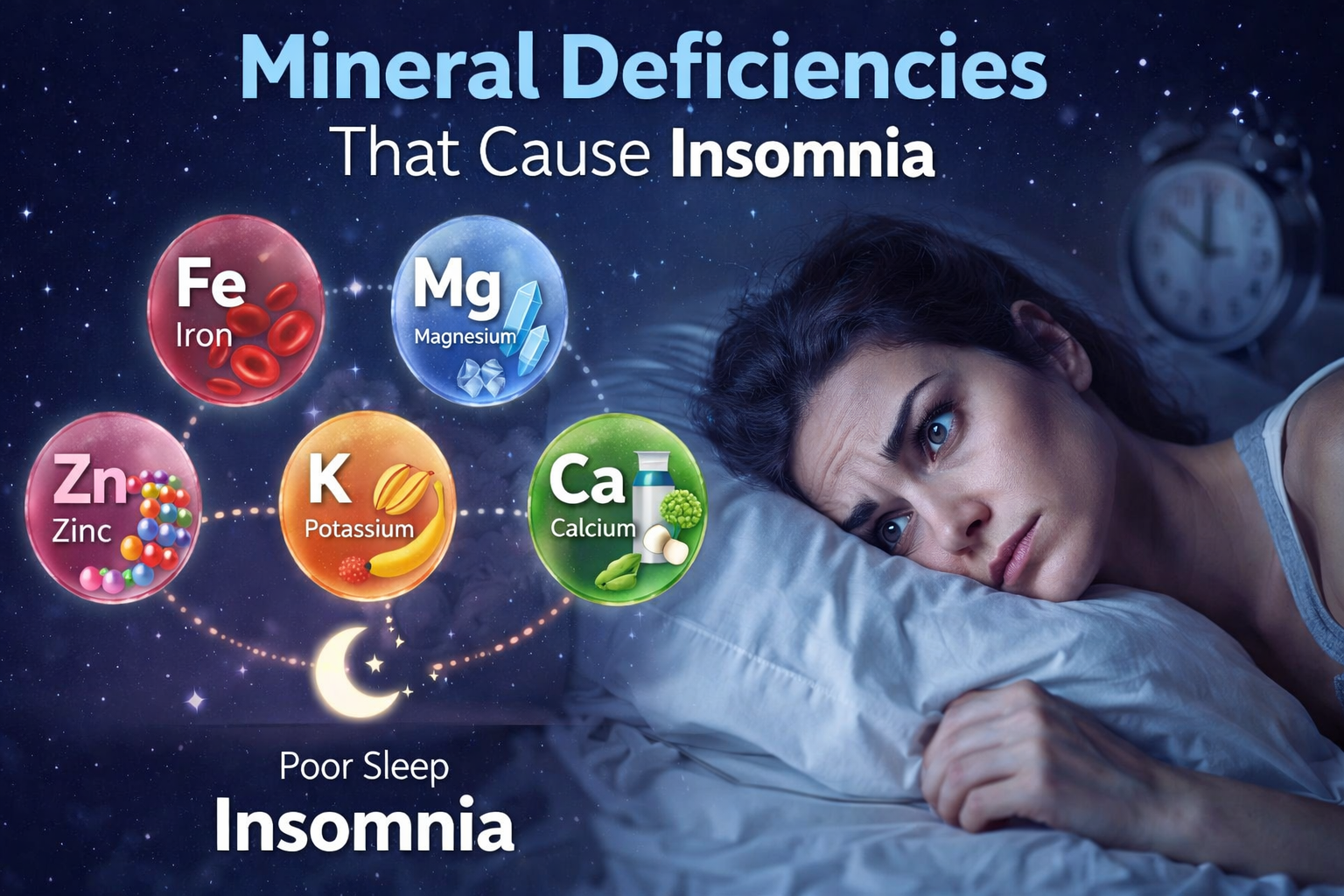
Mineral Deficiencies That Cause Insomnia: Sleep is one of the most vital functions of the human body, essential for physical restoration, mental clarity, and emotional balance. Yet, millions struggle with insomnia the persistent difficulty of falling asleep or staying asleep. While stress, lifestyle, and screen time are often blamed, a less obvious factor is nutrient deficiency, particularly mineral shortages. In 2026, research increasingly shows that minerals such as magnesium, iron, zinc, calcium, potassium, and copper play a key role in sleep regulation [1][2][3].
This article explores which mineral deficiencies may cause insomnia, how they disrupt sleep biologically, symptoms to watch for, natural dietary solutions, and practical strategies to restore healthy sleep cycles.
Understanding Insomnia and Its Hidden Causes
What Is Insomnia?
Insomnia is the inability to fall asleep, stay asleep, or wake up too early and not return to sleep. It can be acute (temporary) or chronic (long-term), influenced by stress, medications, underlying health issues, or crucially nutrient deficiencies [4][5].
Why Mineral Deficiencies Matter
Minerals participate in neurotransmitter signaling, hormone production, and muscle relaxation, all of which affect sleep [6][7]. Low mineral levels can make it harder for your body to relax at night, increasing sleep disturbances and leading to insomnia over time [8][9].
For instance, magnesium influences GABA receptors to calm the nervous system [10], while calcium helps convert tryptophan into melatonin the sleep hormone [11]. Iron, zinc, potassium, and copper also play essential roles in nerve and muscle function [12][13].
Table: Key Minerals Linked to Insomnia
| Mineral | Impact on Sleep | Deficiency Risks | Food Sources |
|---|---|---|---|
| Magnesium | Calms nervous system, supports melatonin & GABA | Poor sleep onset, frequent waking | Leafy greens, nuts, seeds |
| Iron | Affects dopamine, prevents RLS | RLS, fragmented sleep | Red meat, beans, spinach |
| Zinc | Supports melatonin synthesis | Reduced sleep quality | Oysters, beef, legumes |
| Calcium | Works with tryptophan to produce melatonin | Poor REM sleep, muscle twitches | Dairy, fortified plant milk |
| Potassium | Nerve & muscle function | Muscle cramps, nighttime awakenings | Bananas, sweet potatoes |
| Copper | Neurotransmitter production | Mood swings, indirect effects | Shellfish, nuts |
(Table adapted from [1][2][5][12])
Major Mineral Deficiencies That Can Cause Insomnia
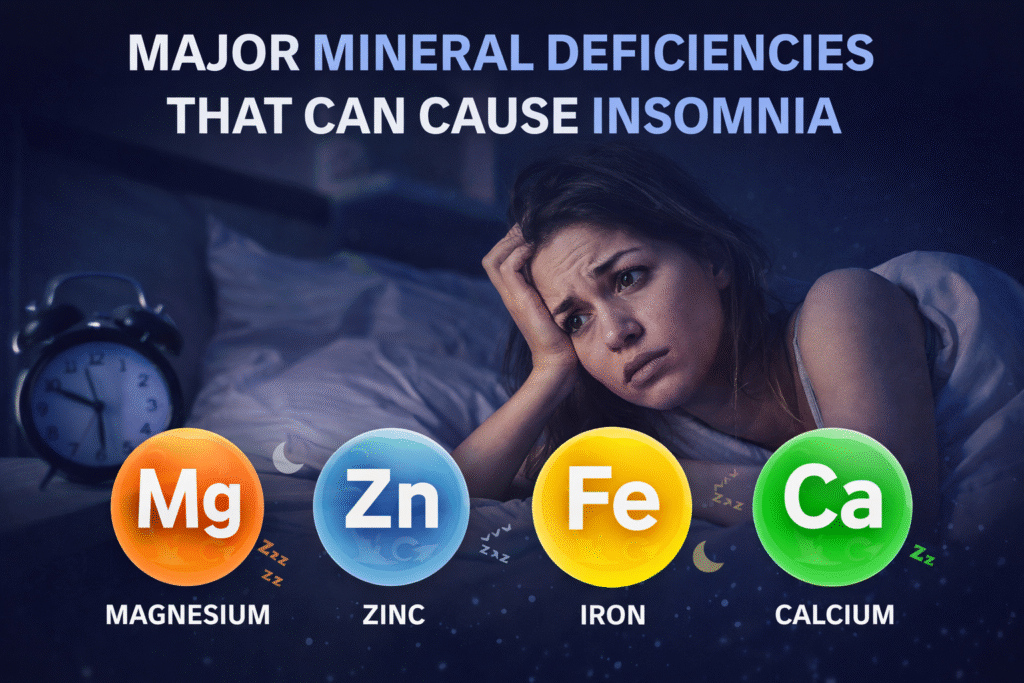
1. Magnesium Deficiency and Sleep Problems
Magnesium is often called the “relaxation mineral”, as it helps regulate GABA and NMDA receptors, calming the nervous system and promoting deeper sleep [3][10].
A 2025 Mendelian randomization study found a direct link between low magnesium and insomnia risk [2]. Symptoms may include:
- Difficulty falling asleep
- Restlessness at night
- Muscle cramps or restless legs
- Anxiety or racing thoughts
How It Helps Sleep: Magnesium supports melatonin production and reduces cortisol, preparing your body for rest [10][15].
Natural Sources: Almonds, spinach, pumpkin seeds, quinoa, black beans [12][16].
2. Iron Deficiency and Sleep Fragmentation
Iron is critical for dopamine synthesis, which regulates movement and the sleep-wake cycle [6][7]. Iron deficiency often leads to Restless Legs Syndrome (RLS), causing nighttime leg discomfort and fragmented sleep [6][8].
Signs of Iron Deficiency:
- Frequent waking at night
- Restless legs or cramps
- Fatigue and weakness
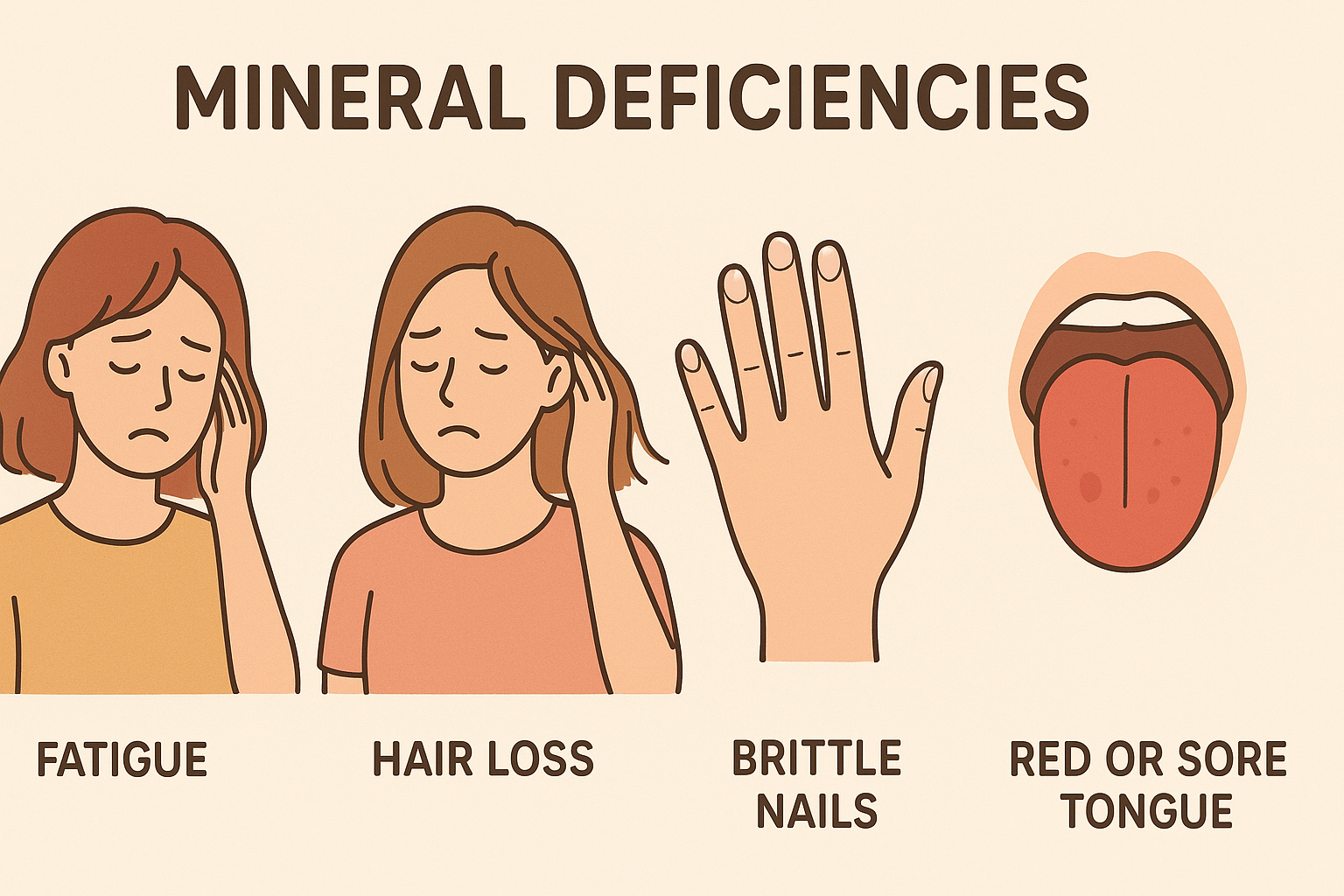
- Pale skin or brittle nails
Foods High in Iron: Red meats, poultry, lentils, spinach, pumpkin seeds [13][22].
3. Zinc Deficiency and Melatonin Production
Zinc helps the body produce melatonin and regulates neurotransmitters [9][11]. Research shows low zinc, especially with low magnesium, correlates with poorer sleep quality and frequent night awakenings [2][9].
Symptoms Include:
- Reduced ability to enter deep sleep
- Weaker circadian rhythm regulation
- Frequent nighttime wake-ups
Sources: Oysters, beef, lentils, whole grains [13][23].
4. Calcium’s Role in Deep Sleep Cycles
Calcium helps convert tryptophan to melatonin, facilitating REM sleep [11][18]. Deficiency may cause:
- Difficulty staying in deep sleep
- Muscle twitches or spasms
- Nighttime awakenings
Good Sources: Milk, yogurt, cheese, fortified plant milk [12][14].
5. Potassium Imbalance and Sleep Disruption
Potassium regulates nerve and muscle function, and its deficiency can lead to muscle cramps or waking at night [16][17].
Foods Rich in Potassium: Bananas, sweet potatoes, spinach, beans [16].
6. Copper Deficiency and Neurotransmitter Support
Copper is essential for dopamine and norepinephrine production, influencing alertness and sleep [13][20]. Low copper may indirectly worsen insomnia, leading to mood swings and fatigue.
Sources: Shellfish, nuts, seeds [13][20].
How Mineral Deficiencies Disrupt Sleep Mechanisms
Neurotransmitter Regulation
Minerals regulate chemicals like GABA and dopamine, crucial for sleep onset [3][6][10]. Magnesium, zinc, and copper deficiencies can increase nervous system excitability, making it harder to relax [9][13].
Hormonal Sleep Signals
Calcium and zinc influence melatonin production, helping your body recognize when it’s time to sleep [11][18]. Without these minerals, sleep cycles are irregular.
Muscle and Nervous System Function
Potassium and magnesium assist with muscle relaxation; deficiencies can lead to cramps or restless legs that interrupt sleep [16][17].
Signs That Your Insomnia May Be Nutrient-Related
Common signs include:
- Trouble initiating sleep
- Frequent night awakenings
- Restless legs or muscle cramps
- Afternoon fatigue
- Brain fog during the day
Recognizing these patterns can point to specific mineral deficiencies [20][21][24].
Testing and Diagnosis
Before supplementation, blood tests can determine levels of magnesium, iron (ferritin), zinc, and other minerals [12][13][14]. Healthcare providers can guide safe correction of deficiencies [15][25].
How to Improve Sleep Naturally Through Mineral Balance
Balanced Diet Tips
- Leafy greens → magnesium & potassium
- Lean meats & legumes → iron & zinc
- Dairy or fortified foods → calcium
- Nuts & seeds → magnesium & zinc
Supplementation Considerations
- Use supplements only under guidance
- Avoid excess of one mineral blocking another (e.g., zinc vs copper) [15][26]
Lifestyle Practices That Support Mineral Absorption
- Regular sunlight for Vitamin D
- Reduce processed foods
- Limit late caffeine and alcohol [21][27]
Benefits of Correcting Mineral Deficiencies
Restoring mineral balance can:
- Improve sleep onset and depth [2][3]
- Reduce nighttime awakenings [9][12]
- Increase daytime energy [24][25]
- Improve mood and reduce anxiety [28][29]
- Support overall long-term health [30]
Final Thoughts for 2026
Insomnia isn’t always a mystery. Sometimes, your body is simply missing the minerals it needs to relax, regulate neurotransmitters, and produce melatonin. Correcting deficiencies naturally through diet, supplementation, and lifestyle changes can make a dramatic difference in sleep quality, even for chronic insomnia sufferers [1][2][3][12][30].
Full References (30)
- Zhao, H. et al., Associations Between Essential Trace Elements and Sleep Quality, Scientific Reports, Nature.
- Xu, Y. et al., Magnesium Status and Insomnia Risk, Sleep Medicine, PubMed, 2025.
- Abbasi, B. et al., Magnesium Supplementation and Primary Insomnia, J Res Med Sci, PMC.
- Rondanelli, M. et al., Micronutrients and Sleep Quality: Systematic Review, Nutrients, MDPI.
- Peuhkuri, K. et al., Diet Promotes Sleep Duration and Quality, Nutrition Research.
- Allen, R. P. et al., Iron Deficiency and Restless Legs Syndrome, Sleep Medicine Reviews, PMC.
- Silber, M. H., Restless Legs Syndrome and Periodic Limb Movements, Neurology, PMC.
- Wikipedia Contributors, Restless Legs Syndrome, Wikipedia.
- Huang, Y. et al., Zinc Intake and Sleep Quality, Biol Trace Elem Res.
- Sheen Vein & Cosmetics, Sleeplessness and Mineral Deficiency.
- Wienecke, T. et al., Calcium Signaling and Melatonin Production, Sleep Biology Journal.
- NIH, Magnesium Fact Sheet.
- NIH, Iron & Zinc Fact Sheets.
- NIH, Calcium Fact Sheet.
- Institute for Optimum Nutrition, Nutritional Interventions for Insomnia.
- Frontiers in Endocrinology, Magnesium & Potassium Supplementation Effects.
- LMNT Electrolytes, Potassium and Sleep Efficiency.
- St-Onge, M. P., Sleep, Diet, and Energy Balance, Sleep Med Rev.
- Barbagallo, M. et al., Magnesium & Aging-Related Sleep Disorders, Curr Pharm Des.
- The Times of India, Nutrient Deficiencies Ruining Sleep.
- Gominak, S., Sleep Disorders, Vitamin D, and Mineral Balance.
- WHO, Micronutrient Deficiencies and Public Health.
- Sato-Mito, N., Zinc and Sleep Duration, J Nutr Sci.
- Lange, T., Sleep and the Immune System, Physiological Reviews.
- Stussman, B., Complementary Health Approaches for Insomnia, NCCIH.
- ISOM, Sleep Interventions & Supplementation.
- Roth, T., Insomnia: Prevalence and Consequences, J Clin Sleep Med.
- Lanfranchi, P. A., Neuroendocrine Regulation of Sleep, Endocrine Reviews.
- Bertisch, S., Dietary Factors and Insomnia Symptoms, Am J Clin Nutr.
- Walker, M., Why We Sleep: Unlocking the Power of Sleep and Dreams, Simon & Schuster.
One thought on “Mineral Deficiencies That Cause Insomnia Naturally in 2026”