
Dr Ahsan Tariq , MBBS, MRCP (UK ) ongoing, IMT ( Internal Medicine Trainee, NHS England), GMC : 7805049
Dr Ahsan Tariq is a UK-registered medical doctor with a background in internal medicine and a focus on evidence-based research in cognitive health and nootropics. He critically reviews scientific studies, supplements, and ingredients to help readers make informed, safe, and effective choices for brain health and performance.
Introduction: Daily Hacks to Lose Weight
Weight loss in 2026 is no longer defined by extreme dieting, rigid meal plans, or punishing workouts. Instead, it is shaped by behavioral science, nutritional research, metabolic understanding, and lifestyle psychology. The modern approach emphasizes daily systems, not short-term goals.
Despite greater access to information, confusion around weight loss remains high. Many individuals struggle not because they lack motivation, but because they follow outdated or oversimplified advice. According to behavioral health research, sustainable weight loss depends on understanding why habits work, not just what to do [1].
This article presents a theoretical, evidence-informed framework for daily weight loss hacks in 2026 explaining the mechanisms behind them, their benefits, and their limitations.
Understanding Weight Loss: A Theoretical Overview
Weight Loss Is A Biological And Behavioral Process
Weight loss is not purely mathematical. While calorie balance matters, biology regulates how calories are used. Hormones, metabolism, gut health, stress, sleep, and mental state all influence outcomes [2].
From a theoretical standpoint, weight loss involves:
- Energy regulation
- Appetite control
- Behavioral consistency
- Environmental influence
Ignoring any one of these weakens results.
Why “Daily Hacks” Matter More Than Big Changes
According to habit-formation theory, behaviors repeated daily become automatic over time [3]. Daily hacks work because they:
- Require low effort
- Reduce decision fatigue
- Fit into existing routines
- Accumulate results gradually
This aligns with modern health psychology, which prioritizes adherence over intensity.
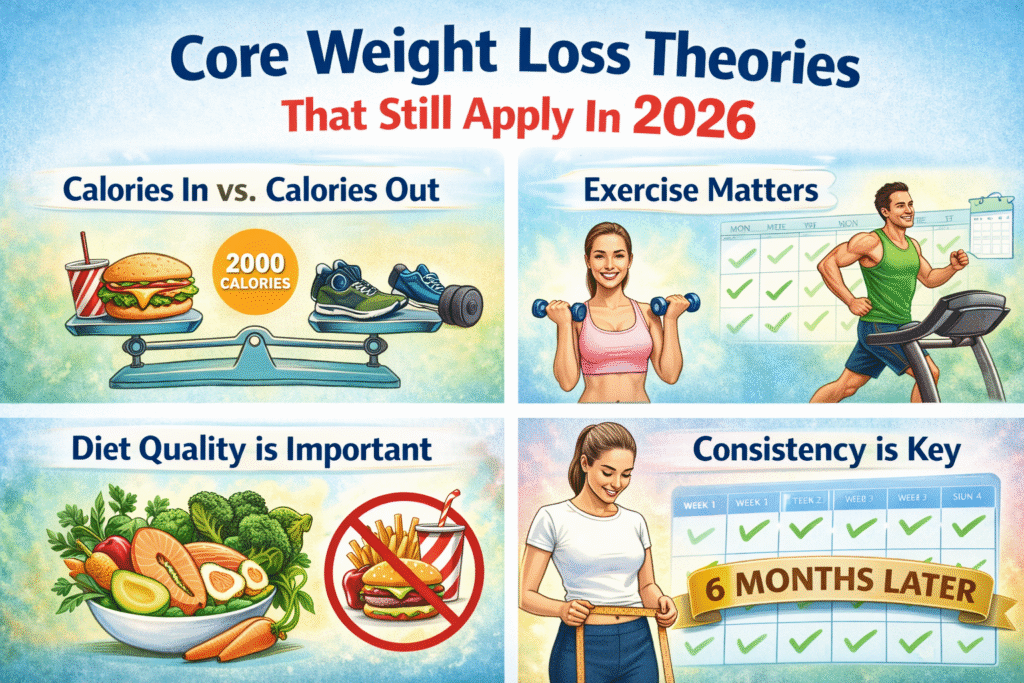
Core Weight Loss Theories That Still Apply In 2026
Energy Balance Theory (With Modern Context)
Energy balance theory states that weight change depends on calories consumed versus calories expended. However, newer research clarifies that food quality and timing affect this balance [4].
For example:
- Protein increases thermic effect
- Fiber slows digestion
- Ultra-processed foods reduce satiety
Thus, calories are not equal in their physiological impact.
Hormonal Regulation Theory
Hormones regulate hunger, fat storage, and energy use. Insulin, leptin, ghrelin, and cortisol interact with lifestyle behaviors daily [5].
Poor sleep and chronic stress disrupt these hormones, making fat loss harder even with calorie control.
Keyword Understanding Table (SEO + Concept Clarity)
| Keyword | Meaning | Why It Matters For Weight Loss |
|---|---|---|
| Daily Hacks To Lose Weight | Small repeatable habits | Builds long-term consistency |
| Sustainable Weight Loss | Gradual, maintainable fat loss | Prevents rebound weight gain |
| Metabolic Health | How efficiently the body uses energy | Affects fat storage |
| Appetite Regulation | Control of hunger signals | Reduces overeating |
| Habit Formation | Behavior automation | Improves adherence |
| Energy Balance | Intake vs expenditure | Core weight principle |
| NEAT | Non-exercise activity | Hidden calorie burn |
| Ultra-Processed Foods | Industrial food products | Linked to weight gain |
Morning Habits: Theoretical Impact On Weight Loss
Circadian Rhythm And Metabolism
The body follows a circadian rhythm that influences digestion, insulin sensitivity, and fat oxidation. Eating earlier in the day aligns better with metabolic efficiency [6].
Protein Intake And Satiety Theory
Protein stimulates satiety hormones such as peptide YY and GLP-1. According to controlled trials, higher morning protein reduces calorie intake later in the day [7].
Movement As Metabolic Signaling
Light morning movement sends metabolic signals that improve glucose uptake and insulin sensitivity without raising cortisol levels [8].
Eating Patterns That Support Weight Loss Theory
Food Quality Over Restriction
Dietary quality affects hunger hormones and gut microbiota. Diets high in whole foods support better appetite control compared to calorie-matched processed diets [9].
Portion Control Without Counting
Visual portion methods work by reducing cognitive load. Studies show that simplified portion cues improve adherence more than calorie tracking [10].
Snacking Theory And Behavioral Awareness
Why Mindless Eating Leads To Weight Gain
Distracted eating bypasses satiety signals. According to behavioral studies, individuals consume significantly more calories when eating with screens [11].
Structured Snacking Model
Snacks that combine protein and fiber slow digestion and stabilize blood sugar, reducing overeating later [12].
Physical Activity Beyond Exercise Theory
NEAT As A Major Fat-Loss Factor
NEAT accounts for a significant portion of daily energy expenditure. Research shows that people with higher NEAT gain less weight over time [13].
Strength Training And Metabolic Preservation
Resistance training helps preserve lean mass during weight loss, preventing metabolic slowdown [14].
Walking And Fat Oxidation
Moderate-intensity walking promotes fat oxidation and is sustainable for most individuals [15].
Sleep Theory In Weight Management
Hormonal Disruption From Sleep Loss
Sleep deprivation increases ghrelin and reduces leptin, leading to increased hunger and cravings [16].
Sleep As A Recovery Tool
Adequate sleep improves decision-making, emotional regulation, and physical recovery all essential for consistency [17].
Stress, Psychology, And Weight Theory
Cortisol And Fat Storage
Chronic stress elevates cortisol, which promotes fat storage, particularly in the abdominal region [18].
Emotional Regulation And Eating Behavior
Stress-driven eating is linked to reward pathways in the brain. Mindfulness-based strategies improve awareness and control [19].
Digital Lifestyle And Weight Loss In 2026
Screen Exposure And Sedentary Behavior
High screen time correlates with lower physical activity and increased snacking [20].
Technology As A Support Tool
Moderate use of tracking tools improves self-awareness and accountability when not used obsessively [21].
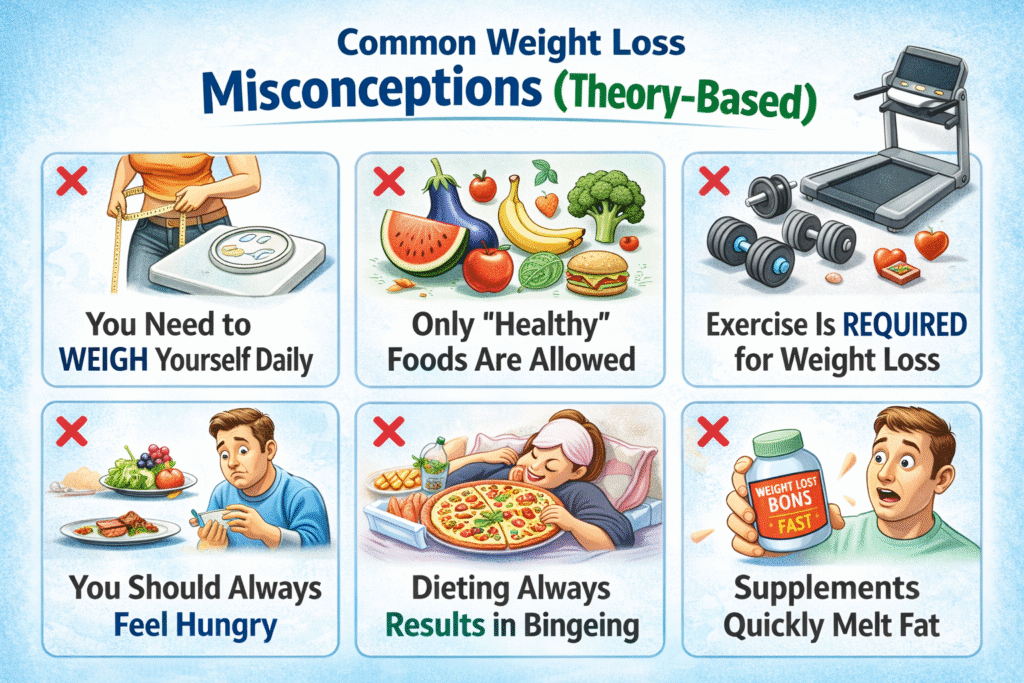
Common Weight Loss Misconceptions (Theory-Based)
Extreme Deficits Damage Adherence
Very low-calorie diets trigger metabolic adaptation and psychological burnout [22].
Fat Is Not The Enemy
Healthy fats support hormone production and satiety when consumed appropriately [23].
Supplements Cannot Replace Behavior
Most supplements lack strong evidence for sustained weight loss [24].
Benefits Of Daily Weight Loss Hacks (Theory Explained)
Physical Benefits
- Improved insulin sensitivity
- Reduced inflammation
- Better cardiovascular markers [25]
Psychological Benefits
- Increased self-efficacy
- Reduced food anxiety
- Improved mood stability [26]
Sustainable Progress: What Theory Suggests
Measuring More Than The Scale
Body weight fluctuates. Experts recommend tracking:
- Waist circumference
- Energy levels
- Strength and endurance
- Habit consistency [27]
When Professional Guidance Is Needed
Individuals with medical conditions or persistent struggles benefit from personalized guidance. Clinical support improves safety and outcomes [28].
Conclusion: What Really Works In 2026
The theory of weight loss in 2026 emphasizes systems over shortcuts. Daily hacks succeed because they align with biology, psychology, and real-life constraints. Sustainable fat loss is not dramatic it is predictable, repeatable, and patient.
References
- WHO Behavioral Health Reports [1]
- Hall et al., Metabolic regulation [2]
- Lally et al., Habit formation [3]
- Hall & Guo, Energy balance [4]
- Morton et al., Appetite hormones [5]
- Garaulet et al., Circadian rhythm [6]
- Leidy et al., Protein satiety [7]
- Colberg et al., Light activity [8]
- Monteiro et al., Food processing [9]
- Rolls et al., Portion control [10]
- Robinson et al., Distracted eating [11]
- Jenkins et al., Glycemic control [12]
- Levine et al., NEAT theory [13]
- Westcott, Resistance training [14]
- Ainsworth et al., Walking benefits [15]
- Spiegel et al., Sleep loss [16]
- Walker, Sleep and health [17]
- Epel et al., Stress and fat [18]
- Kristeller et al., Mindful eating [19]
- Pearson et al., Sedentary behavior [20]
- Patel et al., Self-monitoring [21]
- Keys et al., Starvation study [22]
- Mozaffarian et al., Dietary fat [23]
- NIH supplement review [24]
- ADA metabolic health [25]
- Teixeira et al., Psychology [26]
- National Weight Control Registry [27]
- Academy of Nutrition & Dietetics [28]
3 thoughts on “Daily Hacks to Lose Weight in 2026: What Really Works”