
Dr Ahsan Tariq , MBBS, MRCP (UK ) ongoing, IMT ( Internal Medicine Trainee, NHS England), GMC : 7805049
Dr Ahsan Tariq is a UK-registered medical doctor with a background in internal medicine and a focus on evidence-based research in cognitive health and nootropics. He critically reviews scientific studies, supplements, and ingredients to help readers make informed, safe, and effective choices for brain health and performance.
Introduction: What Is Positive Psychology?
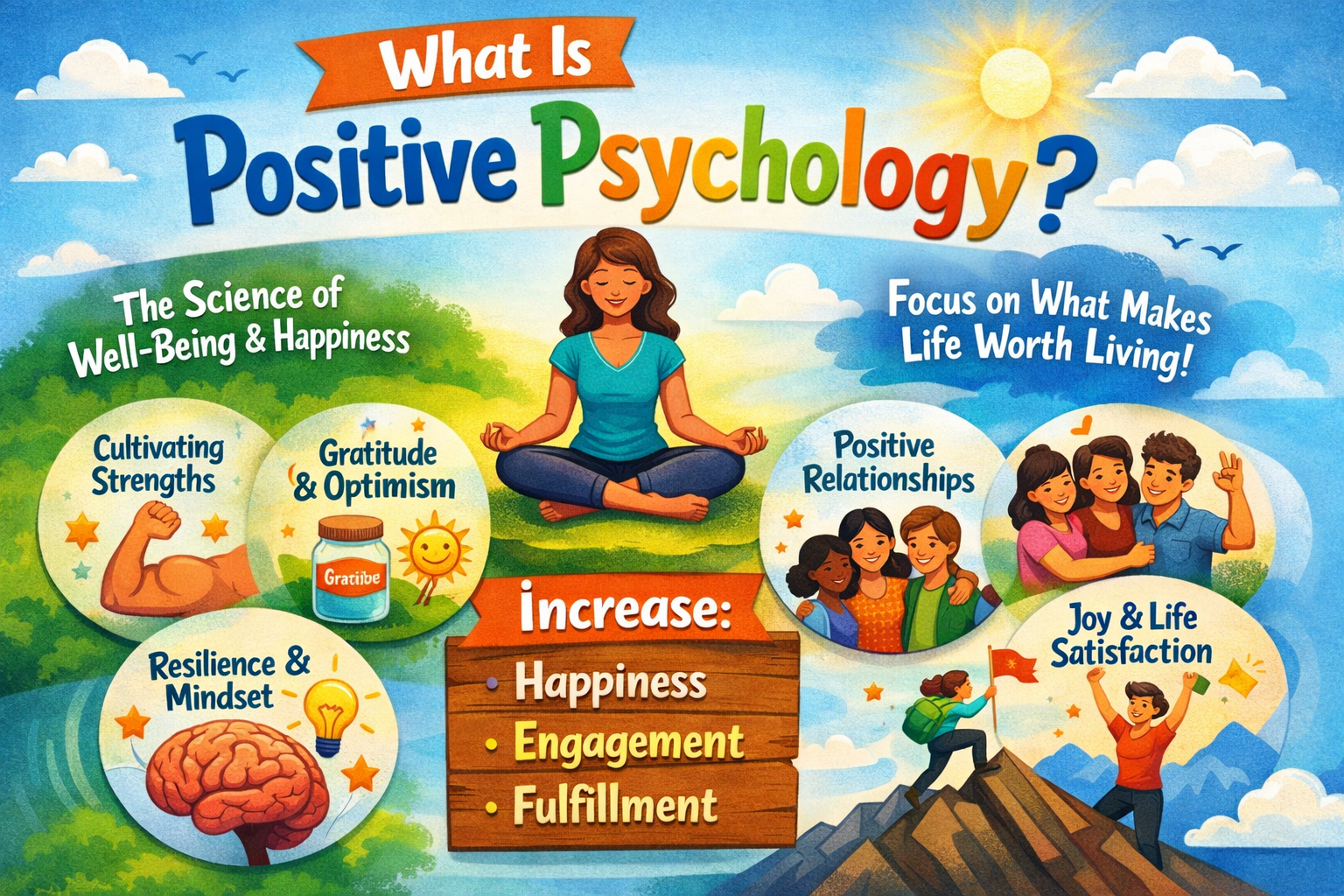
Mental health research has traditionally focused on diagnosing and treating psychological disorders. While this disease-oriented approach has helped millions, it left a critical question unanswered: What makes life worth living? Positive psychology emerged to address this gap by scientifically studying human strengths, happiness, resilience, and well-being. Rather than concentrating solely on mental illness, positive psychology explores how individuals and communities can thrive.
This article provides a comprehensive, evidence-based explanation of what positive psychology is, how it works, its benefits, potential risks, and how it can be applied safely in everyday life.
Understanding The Topic
What Is Positive Psychology?
Positive psychology is a branch of psychology that focuses on the scientific study of positive emotions, character strengths, meaningful experiences, and optimal human functioning. It examines how people can cultivate happiness, purpose, resilience, and fulfillment rather than merely alleviating distress.
The term gained prominence in the late 1990s when psychologist Martin Seligman emphasized the need to balance psychology’s focus between mental illness and human potential [1].
Core Areas Of Positive Psychology
Positive psychology is built around three central domains [2]:
- Positive emotions such as joy, gratitude, and hope
- Positive traits including strengths, virtues, and resilience
- Positive institutions like supportive families, schools, and communities
Together, these domains aim to improve quality of life at both individual and societal levels.
How It Works
Scientific Foundations
Positive psychology relies on rigorous scientific methods, including randomized controlled trials, longitudinal studies, and psychometric assessments. It integrates research from neuroscience, behavioral science, and social psychology to understand how positive experiences influence brain function and behavior [3].
Psychological Mechanisms
Positive psychology interventions work through several mechanisms:
- Enhancing emotional regulation
- Strengthening cognitive flexibility
- Improving social connection
- Reinforcing intrinsic motivation
For example, practicing gratitude has been shown to increase dopamine and serotonin activity, which supports emotional well-being [4].
Importance
Why Positive Psychology Matters
Mental health is not merely the absence of illness. According to the World Health Organization, well-being includes positive functioning, life satisfaction, and emotional balance [5]. Positive psychology provides tools to build these qualities proactively rather than reactively.
Role In Modern Mental Health
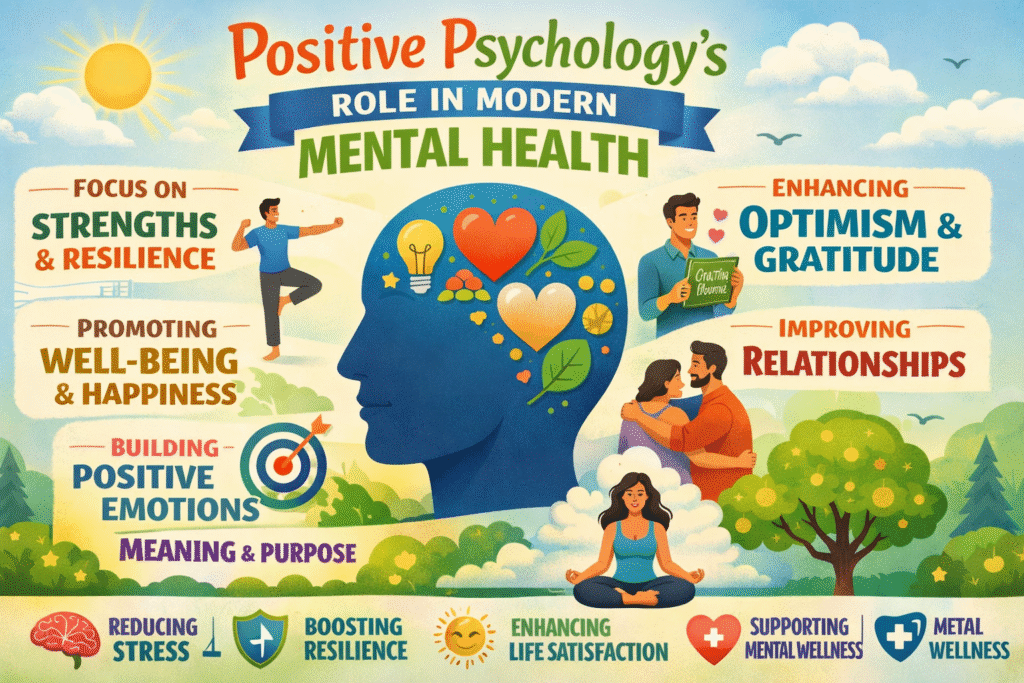
Positive psychology complements traditional therapy by focusing on strengths alongside symptom reduction. It is increasingly used in education, healthcare, workplace wellness, and coaching programs worldwide [6].
Proven Benefits
Emotional Well-Being
Research shows that positive psychology practices significantly increase happiness and life satisfaction [7]. Interventions such as gratitude journaling and acts of kindness consistently improve mood.
Mental Resilience
Positive psychology strengthens coping skills and resilience, enabling individuals to recover more quickly from stress and adversity [8].
Physical Health
Studies suggest a strong link between positive emotions and improved immune function, cardiovascular health, and longevity [9].
Performance And Productivity
Positive psychological states are associated with better academic outcomes, workplace performance, and creativity [10].
Potential Risks
Oversimplification Of Mental Health
One risk is the misconception that positivity alone can replace medical or psychological treatment. Serious mental health conditions require professional care [11].
Emotional Suppression
Excessive focus on positivity may lead individuals to suppress negative emotions, which can increase psychological distress over time [12].
Cultural Misalignment
Positive psychology concepts developed in Western cultures may not align perfectly with collectivist or non-Western value systems [13].
Scientific Evidence
Key Research Findings
Meta-analyses show that positive psychology interventions produce small to moderate improvements in well-being and reductions in depressive symptoms [14]. Long-term studies indicate that benefits are strongest when practices are sustained over time [15].
Neuroscience Support
Brain imaging studies demonstrate that positive emotions activate neural pathways associated with reward, motivation, and emotional regulation [16].
Benefits Vs Risks Comparison
| Aspect | Benefits | Risks |
|---|---|---|
| Emotional health | Increased happiness and optimism | Emotional avoidance |
| Mental resilience | Improved coping skills | Unrealistic expectations |
| Physical health | Better stress regulation | Neglect of medical care |
| Social functioning | Stronger relationships | Cultural mismatch |
Safe Usage Guidelines
Evidence-Based Application
Positive psychology should be applied using research-supported techniques rather than motivational slogans or toxic positivity [17].
Integration With Professional Care
It works best as a complement to therapy, not a replacement, especially for individuals with diagnosed mental health disorders [18].
Personalization
Practices should align with individual values, culture, and psychological needs to maximize effectiveness [19].
Who Should Avoid It
Individuals With Severe Mental Illness

Those experiencing severe depression, psychosis, or suicidal ideation should prioritize clinical treatment before engaging in self-guided positive psychology practices [20].
Situational Grief Or Trauma
During acute grief or trauma, forced positivity may hinder emotional processing and healing [21].
Alternatives
Cognitive Behavioral Therapy
CBT focuses on identifying and changing negative thought patterns and has strong empirical support [22].
Acceptance And Commitment Therapy
ACT emphasizes psychological flexibility and acceptance rather than symptom elimination [23].
Mindfulness-Based Interventions
Mindfulness practices cultivate awareness and emotional regulation without emphasizing positivity alone [24].
Expert Opinions
Leading psychologists emphasize that positive psychology is most effective when balanced with realism. According to Seligman, flourishing involves experiencing both positive and negative emotions in healthy proportions [25].
Other experts stress that well-being is multidimensional and influenced by social, economic, and biological factors, not mindset alone [26].
Key Takeaways
- Positive psychology studies what helps individuals and communities thrive
- It focuses on strengths, meaning, and well-being
- Scientific evidence supports its benefits when used correctly
- It should complement, not replace, professional mental health care
FAQs
Is Positive Psychology Scientifically Proven?
Yes, numerous peer-reviewed studies support its effectiveness in improving well-being [27].
Can Positive Psychology Treat Depression?
It can support recovery but should not replace clinical treatment for moderate to severe depression [28].
How Long Does It Take To See Results?
Many interventions show measurable benefits within weeks, with stronger effects over months [29].
Is Positive Psychology Suitable For Everyone?
Its effectiveness varies depending on personality, culture, and mental health status [30].
Conclusion
Positive psychology represents a paradigm shift in mental health by focusing on human potential rather than pathology alone. Grounded in scientific research, it offers practical tools to enhance happiness, resilience, and life satisfaction. When applied responsibly and in combination with evidence-based care, positive psychology can play a powerful role in promoting holistic well-being.
References
- Seligman, M. E. P. (1998)
- Peterson, C., & Seligman, M. (2004)
- Diener, E. et al. (2010)
- Emmons, R. A., & McCullough, M. (2003)
- World Health Organization (2014)
- Parks, A. C., & Biswas-Diener, R. (2013)
- Lyubomirsky, S. et al. (2005)
- Tugade, M. M., & Fredrickson, B. (2004)
- Pressman, S. D., & Cohen, S. (2005)
- Fredrickson, B. L. (2001)
- Coyne, J. C. (2013)
- Gruber, J. et al. (2011)
- Christopher, J. C., & Hickinbottom, S. (2008)
- Sin, N. L., & Lyubomirsky, S. (2009)
- Bolier, L. et al. (2013)
- Davidson, R. J., & McEwen, B. (2012)
- Held, B. S. (2004)
- Rashid, T. (2015)
- Layous, K., & Lyubomirsky, S. (2014)
- Cuijpers, P. et al. (2012)
- Bonanno, G. A. (2004)
- Beck, A. T. (1976)
- Hayes, S. C. et al. (2006)
- Kabat-Zinn, J. (2003)
- Seligman, M. E. P. (2011)
- Keyes, C. L. M. (2007)
- Diener, E. et al. (2018)
- Lamers, S. M. A. et al. (2012)
- Sheldon, K. M., & Lyubomirsky, S. (2006)
- Joshanloo, M. (2014)
One thought on “What Is Positive Psychology? Meaning and Core Concepts”