
Dr Ahsan Tariq is a UK-registered medical doctor with a background in internal medicine and a focus on evidence-based research in cognitive health and nootropics. He critically reviews scientific studies, supplements, and ingredients to help readers make informed, safe, and effective choices for brain health and performance.
Introduction: What Is Insulin Sensitivity?
Insulin sensitivity is a core pillar of metabolic health, yet it remains widely misunderstood. Many people associate insulin only with diabetes, but in reality, insulin sensitivity affects energy levels, weight management, hormone balance, heart health, and long-term disease risk for almost everyone.
This in-depth guide explains what insulin sensitivity is, how it works, its proven benefits, and the real dangers of poor insulin sensitivity, using clear explanations and peer-reviewed research.
What Is Insulin Sensitivity?
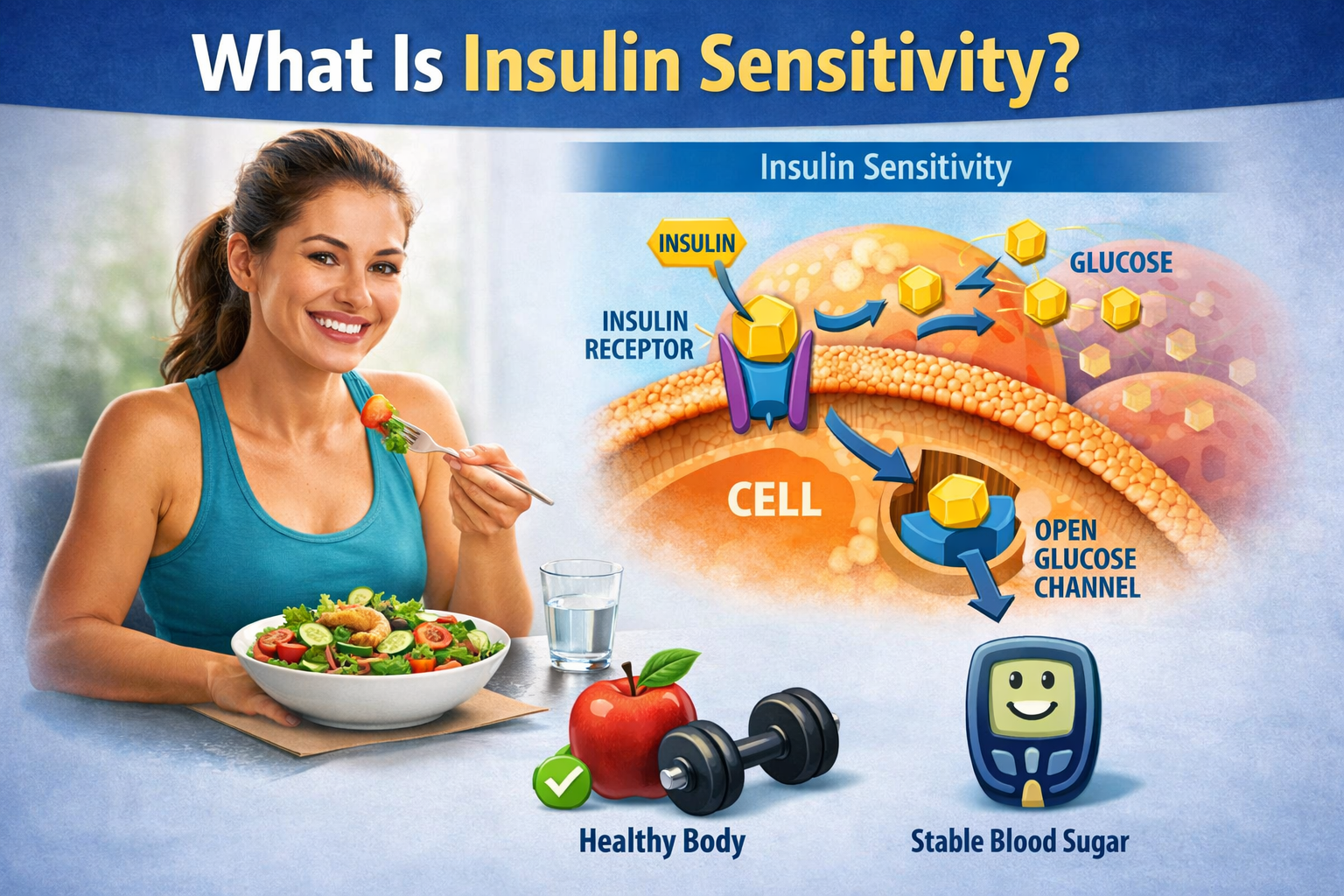
Insulin sensitivity describes how effectively your body’s cells respond to insulin, a hormone that regulates blood sugar by allowing glucose to enter cells and be used for energy.
When insulin sensitivity is high, cells respond efficiently and only a small amount of insulin is needed. When insulin sensitivity is low, cells resist insulin’s effects, forcing the pancreas to produce more insulin: a condition known as insulin resistance.
According to metabolic research, insulin sensitivity is one of the strongest predictors of long-term health outcomes [1].
How Insulin Works in the Human Body
The Role of Insulin in Blood Sugar Control
After eating carbohydrates, glucose enters the bloodstream. Insulin acts like a biological key, unlocking cells so glucose can be absorbed and used for energy [2]. Without proper insulin action, glucose remains in the blood, leading to elevated blood sugar levels.
Insulin Sensitivity vs Insulin Resistance
| Factor | High Insulin Sensitivity | Low Insulin Sensitivity |
|---|---|---|
| Insulin efficiency | Very effective | Poor response |
| Insulin levels | Normal | Elevated |
| Blood sugar | Stable | Fluctuating |
| Disease risk | Low | High |
Research shows insulin resistance can develop years before type 2 diabetes appears [3].
Why Insulin Sensitivity Is So Important
Insulin sensitivity influences:
- Blood sugar stability
- Fat storage and fat burning
- Energy production
- Hormone balance
- Cardiovascular and brain health
Reduced insulin sensitivity is strongly linked to metabolic syndrome and chronic disease [4].
Proven Benefits of Good Insulin Sensitivity
Stable Blood Sugar Levels
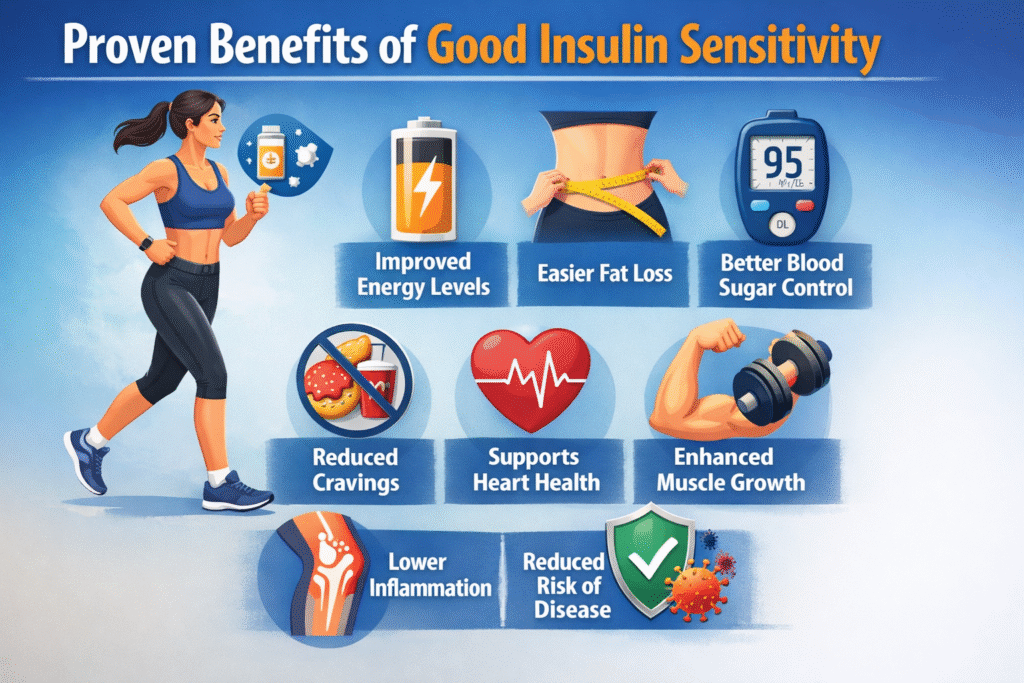
High insulin sensitivity allows glucose to enter cells efficiently, preventing blood sugar spikes and crashes [5].
Lower Risk of Type 2 Diabetes
Large clinical trials confirm that individuals with better insulin sensitivity are far less likely to develop type 2 diabetes [6].
Easier Weight Management
When insulin works efficiently, less glucose is stored as fat and the body can access fat stores more easily [7].
Increased Energy and Focus
Efficient glucose uptake improves cellular energy, leading to better physical stamina and mental clarity [8].
Reduced Inflammation
Insulin resistance is associated with chronic inflammation, which contributes to many diseases [9]. Improving insulin sensitivity helps lower inflammatory markers.
Better Heart Health
Improved insulin sensitivity supports healthy cholesterol levels and blood pressure, reducing cardiovascular risk [10].
Real Dangers of Poor Insulin Sensitivity
Insulin Resistance and Prediabetes
Low insulin sensitivity forces the pancreas to produce excess insulin. Over time, this leads to metabolic dysfunction and rising blood sugar [11].
Type 2 Diabetes Risk
Insulin resistance is the primary underlying cause of type 2 diabetes [12].
Abdominal Weight Gain
High insulin levels promote fat storage, especially around the abdomen [13].
Hormonal Disruption
Insulin resistance interferes with cortisol, estrogen, and testosterone balance [14].
Cardiovascular Disease
Studies show insulin resistance significantly increases the risk of heart disease and stroke [15].
Cognitive Decline
Emerging evidence links insulin resistance to impaired brain glucose metabolism and increased dementia risk [16].
Common Signs of Low Insulin Sensitivity
Physical Symptoms
- Fatigue after meals
- Sugar cravings
- Difficulty losing weight
- Brain fog
- Frequent hunger [17]
Clinical Indicators
- Elevated fasting insulin
- High HbA1c
- High triglycerides
- Low HDL cholesterol [18]
What Causes Insulin Sensitivity to Decline?
Poor Diet Quality
Diets high in refined carbohydrates and added sugars reduce insulin sensitivity [19].
Physical Inactivity
Muscle inactivity decreases glucose uptake efficiency [20].
Chronic Stress
Stress hormones interfere with insulin signaling pathways [21].
Poor Sleep
Even short-term sleep deprivation significantly reduces insulin sensitivity [22].
How Insulin Sensitivity Is Measured
| Test | Purpose |
|---|---|
| Fasting insulin | Baseline insulin levels |
| HbA1c | Long-term blood sugar |
| HOMA-IR | Insulin resistance index |
HOMA-IR is widely used in clinical and research settings [23].
Proven Ways to Improve Insulin Sensitivity
Balanced Nutrition
Fiber-rich foods, whole grains, lean proteins, and healthy fats improve insulin response [24].
Regular Exercise
Physical activity increases glucose uptake independently of insulin [25].
Strength Training
Muscle tissue acts as a glucose reservoir, improving insulin sensitivity [26].
Quality Sleep
Restorative sleep restores insulin signaling pathways [27].
Stress Reduction
Mindfulness and relaxation practices reduce insulin resistance [28].
Insulin Sensitivity at Different Life Stages
Youth and Adolescence
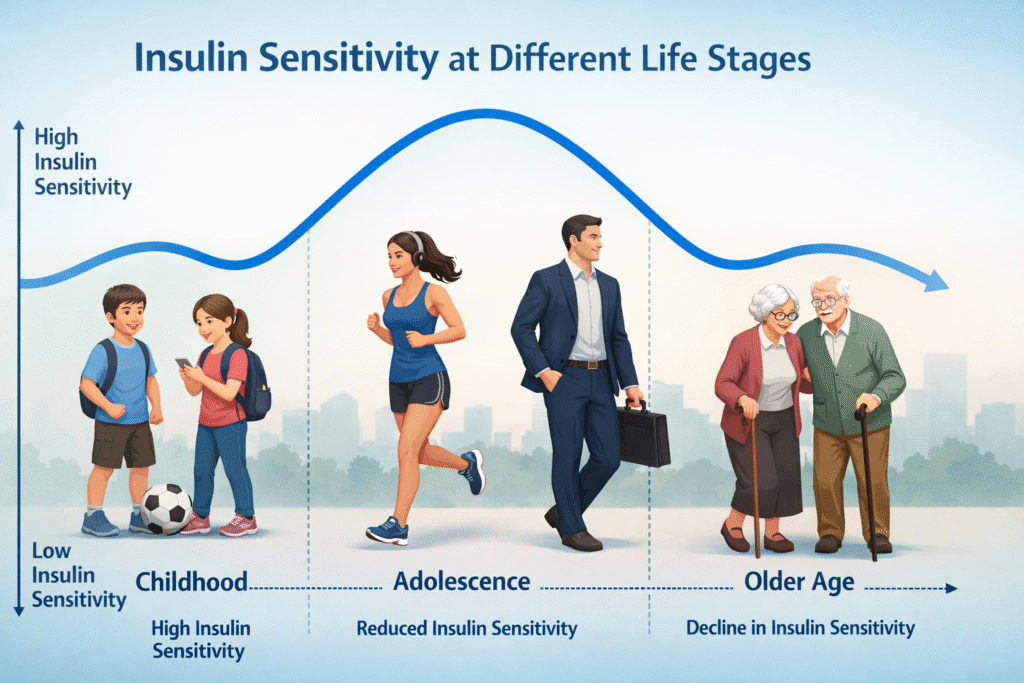
Healthy insulin sensitivity supports growth and energy regulation [29].
Aging and Metabolic Health
Insulin sensitivity naturally declines with age, making lifestyle habits increasingly important [30].
Real-World Experience With Insulin Sensitivity
Many people with insulin resistance report constant fatigue, cravings, and stubborn weight gain. In contrast, individuals who improve insulin sensitivity through lifestyle changes often experience better energy, improved focus, and sustainable weight management. Lifestyle intervention trials confirm these real-world improvements [6][25].
Frequently Asked Questions (FAQs)
What is insulin sensitivity in simple words?
Insulin sensitivity means how well your body responds to insulin to control blood sugar [1].
Is high insulin sensitivity good?
Yes. High insulin sensitivity lowers disease risk and supports metabolic health [6].
Can insulin sensitivity be improved naturally?
Yes. Exercise, nutrition, sleep, and stress management are proven methods [24][25].
How fast can insulin sensitivity improve?
Improvements can occur within weeks of consistent lifestyle changes [25].
Is insulin sensitivity the same as insulin levels?
No. It describes how well insulin works, not how much is present [3].
Medical Review & Disclaimer
This article is based on peer-reviewed research and trusted medical sources. It is for educational purposes only and does not replace professional medical advice. Always consult a qualified healthcare provider for personalized guidance.
References
- Reaven GM. Diabetes, 1988.
- Saltiel AR. Cell, 2001.
- DeFronzo RA. Diabetes Care, 2009.
- Grundy SM. Circulation, 2005.
- ADA Standards of Care, 2023.
- Knowler WC. NEJM, 2002.
- Hall KD. AJCN, 2012.
- Benton D. Neuroscience, 2010.
- Hotamisligil GS. Nature, 2006.
- Laaksonen DE. Diabetologia, 2005.
- Weyer C. JCEM, 2000.
- Taylor R. Diabetologia, 2013.
- Shulman GI. JCI, 2000.
- Dunaif A. Endocrine Reviews, 1997.
- Reaven GM. American Journal of Medicine, 1991.
- Craft S. Archives of Neurology, 2012.
- Kraft JR. Diabetes, 1975.
- Matthews DR. Diabetologia, 1985.
- Ludwig DS. JAMA, 2002.
- Booth FW. J Appl Physiol, 2012.
- Rosmond R. Stress, 2005.
- Spiegel K. The Lancet, 1999.
- Wallace TM. Diabetes Care, 2004.
- Slavin JL. Nutrients, 2013.
- Hawley JA. J Appl Physiol, 2006.
- Phillips SM. Sports Medicine, 2014.
- Buxton OM. Science Translational Medicine, 2012.
- Black DS. Psychoneuroendocrinology, 2015.
- Goran MI. Pediatrics, 2003.
- Petersen KF. Science, 2003.
One thought on “What Is Insulin Sensitivity? Proven Benefits Vs Real Dangers”