
Dr Ahsan Tariq , MBBS, MRCP (UK ) ongoing, IMT ( Internal Medicine Trainee, NHS England), GMC : 7805049
Dr Ahsan Tariq is a UK-registered medical doctor with a background in internal medicine and a focus on evidence-based research in cognitive health and nootropics. He critically reviews scientific studies, supplements, and ingredients to help readers make informed, safe, and effective choices for brain health and performance.
Introduction
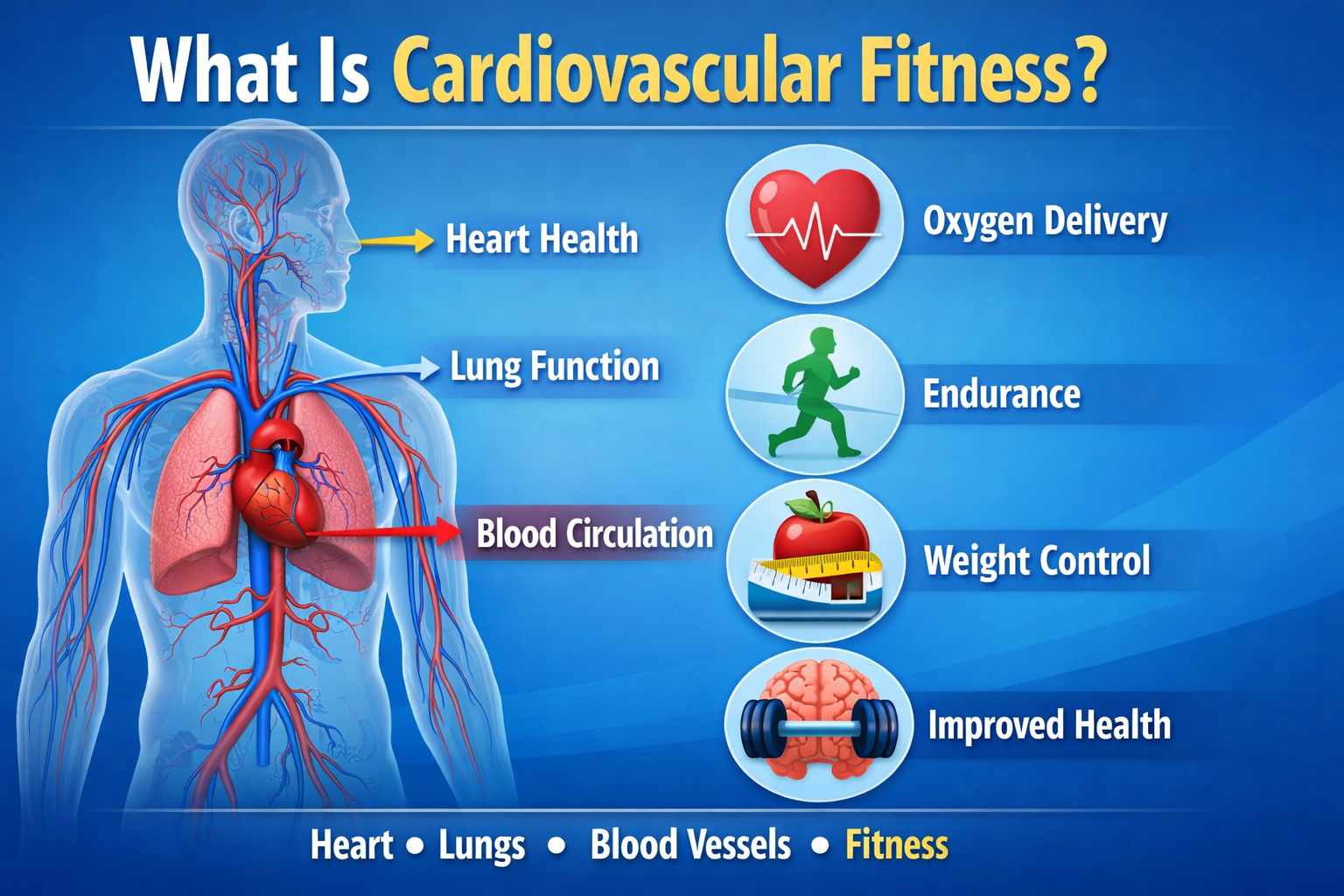
What is cardiovascular fitness? In simple terms, cardiovascular fitness refers to the ability of your heart, lungs, and blood vessels to supply oxygen efficiently to your muscles during sustained physical activity. It is also known as cardiorespiratory fitness (CRF), and it is one of the strongest predictors of overall health and longevity [1].
In today’s modern lifestyle, where prolonged sitting, processed food consumption, and high stress levels are common, cardiovascular disease remains a major public health concern. According to the World Health Organization, cardiovascular diseases are the leading cause of death worldwide [2]. Improving cardiovascular fitness is one of the most effective, evidence-based ways to reduce that risk [3].
Understanding the Topic
Definition of Cardiovascular Fitness
Cardiovascular fitness is the capacity of the circulatory and respiratory systems to deliver oxygen to skeletal muscles during sustained physical activity [1]. It reflects how well your:
- Heart pumps blood
- Lungs exchange oxygen and carbon dioxide
- Blood vessels transport oxygen-rich blood
- Muscles utilize oxygen for energy
The most common scientific measurement of cardiovascular fitness is VO2 max, which refers to maximal oxygen uptake during intense exercise [4]. Higher VO2 max values indicate greater aerobic endurance.
Key Components of Cardiovascular Fitness
Cardiovascular fitness depends on multiple physiological factors:
- Heart rate efficiency
- Stroke volume (amount of blood pumped per beat)
- Cardiac output (heart rate × stroke volume)
- Lung ventilation capacity
- Hemoglobin concentration
- Capillary density in muscles
- Mitochondrial density and function
Research shows that improvements in these systems collectively enhance cardiorespiratory fitness and reduce mortality risk [5].
Cardiovascular Fitness vs General Fitness
Many people confuse general fitness with cardiovascular fitness. While general fitness includes strength, flexibility, balance, and muscular endurance, cardiovascular fitness specifically refers to aerobic endurance and oxygen delivery capacity [6].
How Cardiovascular Fitness Works
Oxygen Delivery Process
When you begin aerobic activity such as brisk walking, jogging, cycling, or swimming, your muscles require more oxygen [7]. The body responds through a coordinated process:
- Increased breathing rate
- Greater oxygen intake in the lungs
- Oxygen diffusion into the bloodstream
- Increased heart rate
- Enhanced cardiac output
- Delivery of oxygen-rich blood to working muscles
- Energy production via aerobic metabolism
This process allows sustained activity without rapid fatigue [8].
Adaptations With Regular Training
Regular aerobic exercise triggers important physiological adaptations:
- Increased stroke volume [9]
- Improved arterial elasticity [10]
- Higher mitochondrial density [11]
- Improved capillary networks [12]
- Lower resting heart rate [13]
These adaptations make the cardiovascular system more efficient over time.
Importance of Cardiovascular Fitness
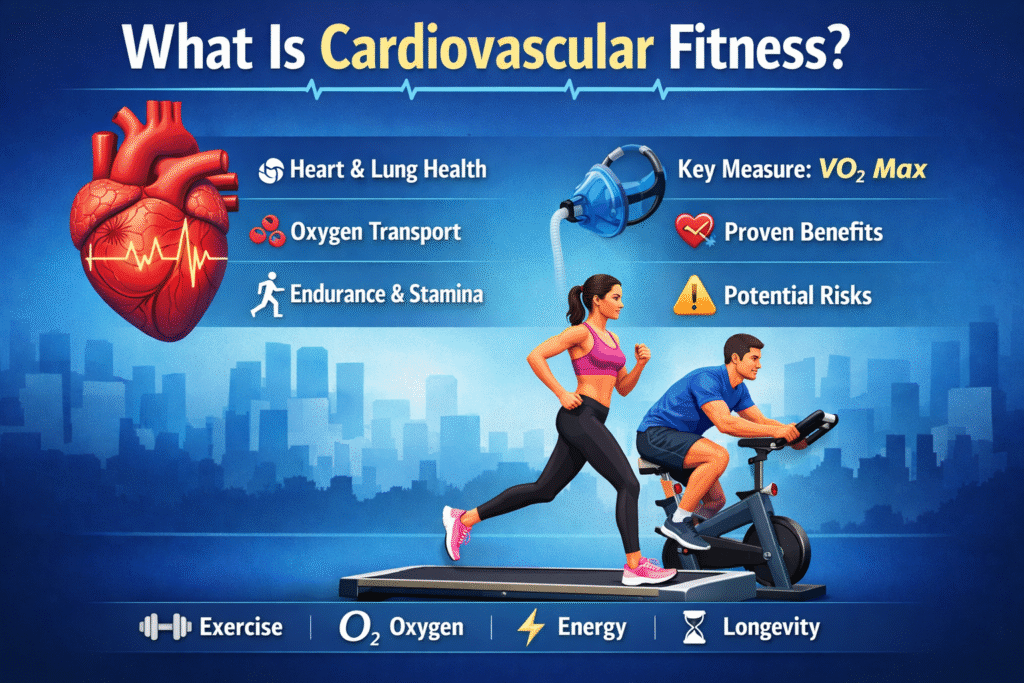
Cardiorespiratory fitness is considered by many experts to be a “vital sign” of health. The American College of Sports Medicine recommends assessing CRF as part of routine health evaluations [1].
Predictor of Mortality
Multiple large-scale studies confirm that low cardiorespiratory fitness is associated with increased risk of all-cause mortality [5]. Research demonstrates that even modest improvements significantly reduce death risk [14].
Cardiovascular Disease Prevention
According to the American Heart Association, higher CRF levels lower the risk of heart attack, stroke, and hypertension [15].
Public Health Significance
Data from the Centers for Disease Control and Prevention supports regular aerobic activity to prevent chronic diseases including diabetes and obesity [16].
Proven Benefits of Cardiovascular Fitness
1. Improved Heart Health
Aerobic training strengthens the heart muscle, enabling it to pump more blood with less effort [17].
2. Lower Blood Pressure
Systematic reviews confirm aerobic exercise reduces both systolic and diastolic blood pressure [18].
3. Improved Cholesterol Profile
Aerobic training increases HDL cholesterol and reduces LDL levels [19].
4. Enhanced Insulin Sensitivity
Regular aerobic exercise improves glucose regulation and reduces type 2 diabetes risk [20].
5. Weight Management
Cardio increases caloric expenditure and supports fat oxidation [21].
6. Reduced Inflammation
Chronic inflammation is linked to heart disease. Exercise lowers inflammatory biomarkers [22].
7. Mental Health Benefits
Aerobic activity reduces symptoms of anxiety and depression [23].
8. Brain Health and Cognitive Function
Research links aerobic fitness with improved memory and reduced dementia risk [24].
9. Increased Longevity
Higher cardiorespiratory fitness is strongly associated with longer lifespan [14].
Scientific Evidence Supporting Cardiovascular Fitness
A landmark study published in JAMA demonstrated that exercise capacity is a stronger predictor of mortality than traditional risk factors [25].
Another long-term study confirmed that individuals with high CRF levels had significantly reduced cardiovascular events [26].
The World Health Organization physical activity guidelines emphasize at least 150 minutes of moderate aerobic exercise weekly to reduce chronic disease risk [27].
Research further shows that VO2 max improvements are independently linked with survival benefits [4].
Potential Risks of Cardiovascular Exercise
While cardiovascular fitness is highly beneficial, certain risks exist.
Overtraining Syndrome
Excessive endurance training without adequate recovery may lead to fatigue, hormonal imbalance, and decreased performance [28].
Cardiac Complications in High-Risk Individuals
People with underlying heart conditions may face rare but serious complications during intense activity [29].
Musculoskeletal Injuries
High-impact activities may increase joint stress and injury risk [30].
Dehydration and Heat Illness
Prolonged exercise in hot conditions increases risk of dehydration and heat-related illness [31].
Benefits vs Risks Comparison
| Benefits | Risks |
|---|---|
| Reduced heart disease risk [17] | Overtraining syndrome [28] |
| Lower blood pressure [18] | Cardiac events in high-risk individuals [29] |
| Improved cholesterol [19] | Joint strain [30] |
| Enhanced insulin sensitivity [20] | Heat illness [31] |
| Increased lifespan [14] | Fatigue without recovery [28] |
Overall, for most individuals, benefits significantly outweigh risks when exercise is performed appropriately.
Safe Usage Guidelines
Recommended Activity Levels
The World Health Organization recommends [27]:
- 150–300 minutes of moderate aerobic activity weekly
- Or 75–150 minutes of vigorous aerobic activity
Gradual Progression
Beginners should increase intensity gradually to avoid injury [32].
Warm-Up and Cool-Down
Proper warm-up prepares muscles and reduces strain [30].
Medical Screening
Individuals with chronic illness should consult healthcare providers before starting vigorous programs [29].
Who Should Avoid or Modify Cardiovascular Exercise
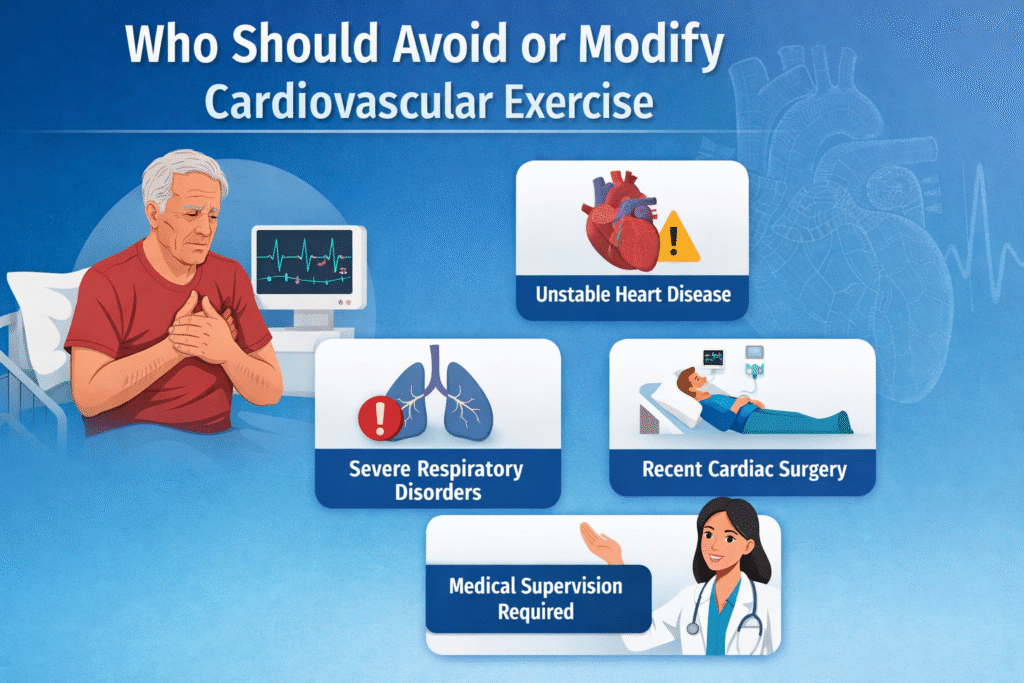
Certain individuals should approach intense aerobic exercise cautiously:
- Those with unstable angina [29]
- Severe respiratory disorders [33]
- Recent cardiac surgery patients [34]
Medical supervision and tailored programs are recommended in these cases.
Alternatives to Traditional Cardio
For individuals unable to perform high-impact cardio, alternatives include:
- Walking
- Water aerobics
- Swimming
- Cycling
- Low-impact elliptical training
High-intensity interval training (HIIT) is also effective for improving CRF when appropriately supervised [35].
Resistance training circuits may also contribute to cardiovascular improvements [36].
Expert Opinions
The American Heart Association states that cardiorespiratory fitness is one of the most powerful health indicators [15].
The American College of Sports Medicine emphasizes that improving CRF should be a central goal in public health initiatives [1].
Experts consistently agree that even small increases in aerobic capacity significantly improve long-term health outcomes [14].
Key Takeaways
- Cardiovascular fitness measures oxygen delivery efficiency.
- VO2 max is the gold-standard measurement.
- Higher CRF significantly reduces mortality risk.
- Regular moderate exercise is safe for most individuals.
- Benefits outweigh risks when guidelines are followed.
Frequently Asked Questions
What is cardiovascular fitness in simple terms?
It is your body’s ability to supply oxygen during sustained activity [1].
How can I improve it quickly?
Consistency is key. Even 8–12 weeks of aerobic training can improve VO2 max [32].
Is walking enough?
Yes, brisk walking qualifies as moderate-intensity exercise [27].
How do I know my fitness level?
VO2 max testing or submaximal fitness assessments can estimate CRF [4].
Can older adults improve cardiovascular fitness?
Yes. Research confirms improvements at all ages with proper training [26].
Conclusion
Understanding what cardiovascular fitness is empowers individuals to take proactive control of their health. It represents the efficiency of the heart, lungs, and circulatory system in delivering oxygen to working muscles. Extensive scientific research confirms that improving cardiovascular fitness reduces chronic disease risk, enhances mental health, improves metabolic function, and increases lifespan.
Global health authorities including the World Health Organization and the American Heart Association strongly recommend regular aerobic activity for long-term health protection.
When performed safely and progressively, cardiovascular exercise is one of the most powerful tools available for improving quality of life and longevity.
References
[1] American College of Sports Medicine Guidelines.
[2] World Health Organization Cardiovascular Diseases Report.
[3] Blair SN et al. Physical fitness and mortality.
[4] Bassett DR, Howley ET. VO2 max determinants.
[5] Kodama S et al. CRF and mortality.
[6] Powers SK, Howley ET. Exercise Physiology.
[7] Brooks GA et al. Aerobic metabolism.
[8] McArdle WD et al. Exercise physiology textbook.
[9] Levine BD. Cardiac adaptations to exercise.
[10] Green DJ et al. Vascular adaptation to exercise.
[11] Holloszy JO. Mitochondrial biogenesis.
[12] Prior BM et al. Capillary density changes.
[13] Carter JB et al. Resting heart rate adaptation.
[14] Laukkanen JA et al. Fitness and longevity.
[15] American Heart Association Scientific Statement.
[16] CDC Physical Activity Guidelines.
[17] Thompson PD et al. Exercise and heart health.
[18] Cornelissen VA, Smart NA. Exercise and blood pressure.
[19] Kodama S et al. Lipid improvements.
[20] Colberg SR et al. Exercise and diabetes.
[21] Swift DL et al. Exercise and weight loss.
[22] Gleeson M et al. Exercise and inflammation.
[23] Schuch FB et al. Exercise and depression.
[24] Erickson KI et al. Exercise and brain health.
[25] Myers J et al. Exercise capacity and mortality.
[26] Kokkinos P et al. Fitness and cardiovascular risk.
[27] WHO Physical Activity Guidelines.
[28] Kreher JB, Schwartz JB. Overtraining syndrome.
[29] Maron BJ et al. Sudden cardiac death in athletes.
[30] Hootman JM et al. Injury risk.
[31] Casa DJ et al. Hydration and heat illness.
[32] Garber CE et al. Exercise recommendations.
[33] Spruit MA et al. Pulmonary rehabilitation.
[34] Anderson L et al. Exercise post-cardiac surgery.
[35] Weston KS et al. HIIT and health.
[36] Steele J et al. Resistance training and cardiovascular fitness.