
Dr Ahsan Tariq , MBBS, MRCP (UK ) ongoing, IMT ( Internal Medicine Trainee, NHS England), GMC : 7805049
Dr Ahsan Tariq is a UK-registered medical doctor with a background in internal medicine and a focus on evidence-based research in cognitive health and nootropics. He critically reviews scientific studies, supplements, and ingredients to help readers make informed, safe, and effective choices for brain health and performance.
Introduction: What Is Body Recomposition
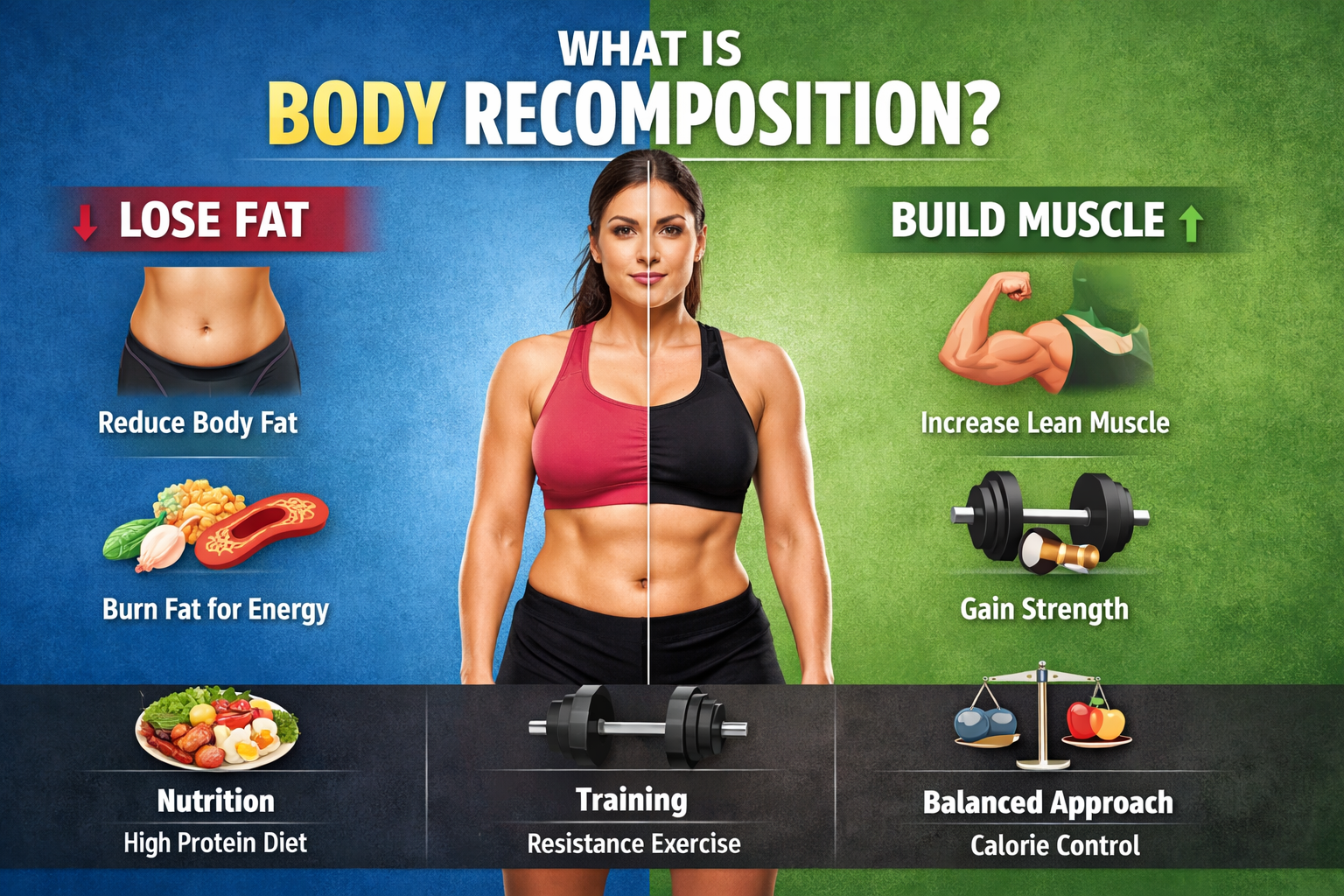
Body recomposition is a scientifically supported fitness and nutrition approach that focuses on improving the body’s fat-to-muscle ratio rather than simply reducing body weight. Traditional weight loss methods emphasize scale weight, often ignoring whether the weight lost comes from fat, muscle, or water. Body recomposition shifts this focus toward improving body composition by reducing fat mass while increasing or preserving lean muscle mass.
This concept has become increasingly important as research shows that muscle mass, fat distribution, and metabolic health are far more important indicators of long-term health than weight alone. Body recomposition is especially appealing because it promotes sustainable habits, reduces the risk of weight regain, and improves physical function and overall well-being.
This article provides a complete, evidence-based explanation of what body recomposition is, how it works, its benefits and risks, scientific backing, and how to apply it safely.
Understanding The Topic
What Is Body Recomposition
Body recomposition is the physiological process in which the body loses fat mass while simultaneously gaining or maintaining lean muscle tissue. Unlike traditional dieting, which often leads to muscle loss, body recomposition emphasizes muscle preservation through resistance training and adequate nutrition [1].
Successful body recomposition results in a leaner, stronger physique, improved metabolic health, and better physical performance, even if total body weight does not change significantly.
Why Body Composition Matters More Than Weight
Body weight does not distinguish between fat, muscle, bone, and water. Studies show that individuals with higher lean mass and lower fat mass have better metabolic health outcomes regardless of total weight [11]. This makes body composition a more reliable indicator of health than the scale alone.
How It Works
The Biological Mechanism Behind Body Recomposition
Body recomposition occurs when muscle protein synthesis exceeds muscle protein breakdown while fat stores are mobilized for energy. This balance is achieved through resistance training, sufficient protein intake, and controlled energy balance [4][18].
Role Of Nutrition In Body Recomposition
Nutrition provides the building blocks for muscle growth and recovery. Protein is essential for stimulating muscle protein synthesis and preventing muscle breakdown during fat loss [4]. Carbohydrates support training intensity and recovery, while dietary fats help regulate hormones and support cellular function [5].
Role Of Resistance Training
Resistance training is the primary stimulus for muscle growth. It signals the body to retain and build muscle even when calorie intake is controlled. Progressive overload, where training demands gradually increase, is essential for continuous improvement [6][7].
Energy Balance And Calorie Control
Unlike aggressive dieting, body recomposition typically uses maintenance calories or a slight calorie deficit. This approach allows fat loss to occur without compromising muscle mass or metabolic rate [8].
Importance
Health Benefits Of Improving Body Composition
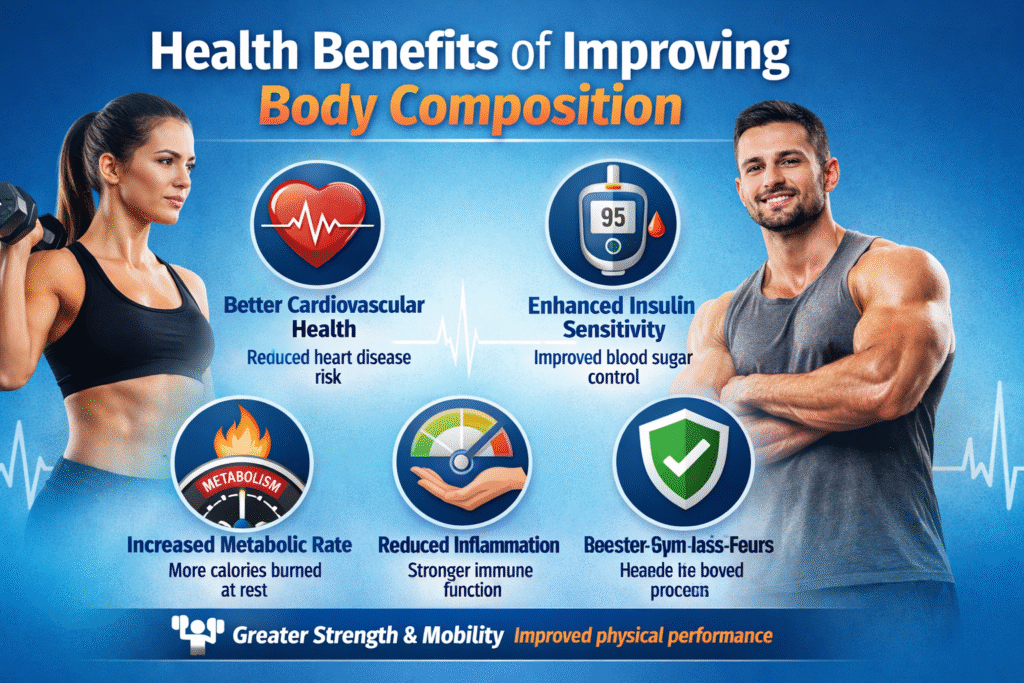
Improved body composition is associated with better insulin sensitivity, reduced inflammation, improved lipid profiles, and lower risk of cardiovascular disease [9]. Increased muscle mass also enhances glucose uptake and metabolic efficiency.
Sustainability And Long-Term Health
Because body recomposition avoids extreme calorie restriction, it supports long-term adherence and reduces the risk of metabolic slowdown and rebound weight gain [10].
Proven Benefits
Improved Metabolic Function
Muscle tissue is metabolically active and increases resting energy expenditure. Increasing lean mass improves fat oxidation and metabolic flexibility [12].
Increased Strength And Physical Performance
Greater muscle mass leads to improvements in strength, endurance, balance, and daily functional tasks, especially important with aging [13].
Better Weight Maintenance
Preserving muscle during fat loss improves long-term weight maintenance and reduces the likelihood of regaining lost fat [14].
Potential Risks
Slow Visible Progress
Body recomposition is gradual. Individuals expecting rapid visual changes may experience frustration, which can affect consistency [15].
Overtraining And Injury Risk
Excessive training without proper recovery increases the risk of injury, fatigue, and hormonal disturbances [16].
Nutritional Deficiencies
Poor planning may result in insufficient calories, protein, or micronutrients, negatively affecting health and performance [17].
Scientific Evidence
Evidence Supporting Body Recomposition
Research consistently shows that resistance training combined with adequate protein intake enables simultaneous fat loss and muscle gain, particularly in beginners and individuals with higher body fat levels [18][19].
Individual Variability
Age, sex, hormonal status, sleep quality, and training experience significantly influence recomposition outcomes [20].
Table 1: Benefits Vs Risks Of Body Recomposition
| Benefits | Risks |
|---|---|
| Fat loss with muscle preservation | Slower visible changes |
| Improved metabolic health | Risk of overtraining |
| Better strength and function | Requires structured nutrition |
| Sustainable long-term approach | Progress demands patience |
Table 2: Body Recomposition Vs Other Fitness Approaches
| Aspect | Body Recomposition | Traditional Weight Loss | Bulking Phase |
|---|---|---|---|
| Primary Goal | Fat loss + muscle gain | Weight reduction | Muscle gain |
| Calorie Strategy | Maintenance/slight deficit | Large deficit | Surplus |
| Muscle Retention | High | Low to moderate | High |
| Sustainability | High | Moderate to low | Moderate |
| Health Focus | Body composition | Scale weight | Performance |
Table 3: Nutrition And Training Guidelines
| Component | Recommendation | Scientific Basis |
|---|---|---|
| Protein Intake | 1.6–2.4 g/kg body weight | Supports muscle synthesis [4] |
| Resistance Training | 3–5 sessions/week | Promotes hypertrophy [6] |
| Cardio | Low to moderate | Supports fat loss [26] |
| Sleep | 7–9 hours/night | Hormonal regulation [20] |
| Recovery | Planned rest days | Injury prevention [16] |
Safe Usage Guidelines
Proper Progress Monitoring
Progress should be tracked using body measurements, strength gains, clothing fit, and body fat estimates rather than scale weight alone [23].
Periodic Adjustments
Training and nutrition should be reviewed every 8–12 weeks to prevent plateaus and ensure continued progress [29].
Who Should Avoid Body Recomposition
Individuals With Medical Or Eating Disorders
People with eating disorders, metabolic diseases, or chronic medical conditions should only attempt body recomposition under professional supervision [24].
Elite Athletes In Competition Phase
Athletes in peak performance phases may require specialized nutritional and training strategies beyond general recomposition principles [25].
Alternatives
Traditional Fat Loss Programs
Focus on calorie reduction and aerobic exercise, often resulting in faster weight loss but increased muscle loss risk [26].
Muscle Gain Focused Programs
Use calorie surplus and hypertrophy training to maximize muscle growth [27].
Maintenance-Based Approaches
Aim to sustain current body composition and metabolic stability [28].
Expert Opinions
Sports Nutrition Experts
Experts emphasize that resistance training combined with adequate protein intake is the foundation of effective body recomposition [29].
Clinical Health Experts
Healthcare professionals increasingly recommend body composition improvement rather than scale-based weight loss for long-term health [30].
Key Takeaways
Essential Points
Body recomposition focuses on losing fat and gaining muscle simultaneously through evidence-based nutrition and resistance training. It is sustainable, health-oriented, and suitable for many individuals when applied correctly.
FAQs
How Long Does Body Recomposition Take
Body recomposition typically takes several months, depending on consistency, nutrition quality, and training experience [18].
Can Body Recomposition Happen Without Weight Loss
Yes, muscle gain and fat loss may offset each other, resulting in minimal scale change despite visible improvements [11][23].
Is Cardio Necessary
Cardio is optional and mainly supports cardiovascular health and fat loss, not muscle gain [6].
Is Body Recomposition Good For Beginners
Beginners often experience faster results due to higher adaptive potential [8].
Can Women Do Body Recomposition
Women can successfully improve body composition at all ages through resistance training and proper nutrition [9][19].
Conclusion
Body recomposition represents a sustainable and science-driven approach to improving health, strength, and physical appearance. Instead of focusing on short-term weight loss, it prioritizes meaningful improvements in body composition that support long-term metabolic health and functional performance.
Scientific evidence strongly supports body recomposition when resistance training, adequate protein intake, balanced nutrition, and proper recovery are combined. While progress may be slower compared to traditional dieting, the results are more durable and beneficial.
For individuals seeking lasting change without extreme dieting or muscle loss, body recomposition offers a realistic and health-focused solution grounded in modern scientific understanding.
References
- Heymsfield, S. B., et al.
- Hall, K. D., et al.
- Phillips, S. M., & Van Loon, L. J.
- Morton, R. W., et al.
- Helms, E. R., et al.
- Schoenfeld, B. J.
- Kraemer, W. J., & Ratamess, N. A.
- Longland, T. M., et al.
- Wolfe, R. R.
- Dulloo, A. G., et al.
- Romero-Corral, A., et al.
- Wolfe, R. R., et al.
- Peterson, M. D., et al.
- Fothergill, E., et al.
- Garthe, I., et al.
- Meeusen, R., et al.
- Thomas, D. T., et al.
- Phillips, S. M.
- Churchward-Venne, T. A., et al.
- McLeod, J. C., et al.
- Rodriguez, N. R., et al.
- American College of Sports Medicine
- Wells, J. C. K.
- Treasure, J., et al.
- Burke, L. M., et al.
- Swift, D. L., et al.
- Slater, G. J., & Phillips, S. M.
- Rosenbaum, M., & Leibel, R. L.
- Aragon, A. A., & Schoenfeld, B. J.
- Kyle, U. G., et al.