
Dr Ahsan Tariq , MBBS, MRCP (UK ) ongoing, IMT ( Internal Medicine Trainee, NHS England), GMC : 7805049
Dr Ahsan Tariq is a UK-registered medical doctor with a background in internal medicine and a focus on evidence-based research in cognitive health and nootropics. He critically reviews scientific studies, supplements, and ingredients to help readers make informed, safe, and effective choices for brain health and performance.
Introduction
Wearable tech for fitness tracking has transformed how people monitor their health, activity levels, sleep, and overall well-being. From smartwatches to advanced biometric sensors, these devices provide real-time data that was once only available in clinical settings. According to industry data, the global wearable technology market continues to grow steadily as consumers seek personalized health insights [1].
Modern fitness wearables are no longer limited to step counting. They now monitor heart rate variability, blood oxygen levels, sleep cycles, stress markers, and even electrocardiogram readings in certain models. Research suggests that self-monitoring technologies can positively influence behavior change when used consistently [2].
This comprehensive guide explains wearable tech for fitness tracking in detail, including how it works, its benefits, potential risks, scientific evidence, expert insights, and safe usage guidelines.
Understanding Wearable Tech For Fitness Tracking
What Is Wearable Tech For Fitness Tracking?
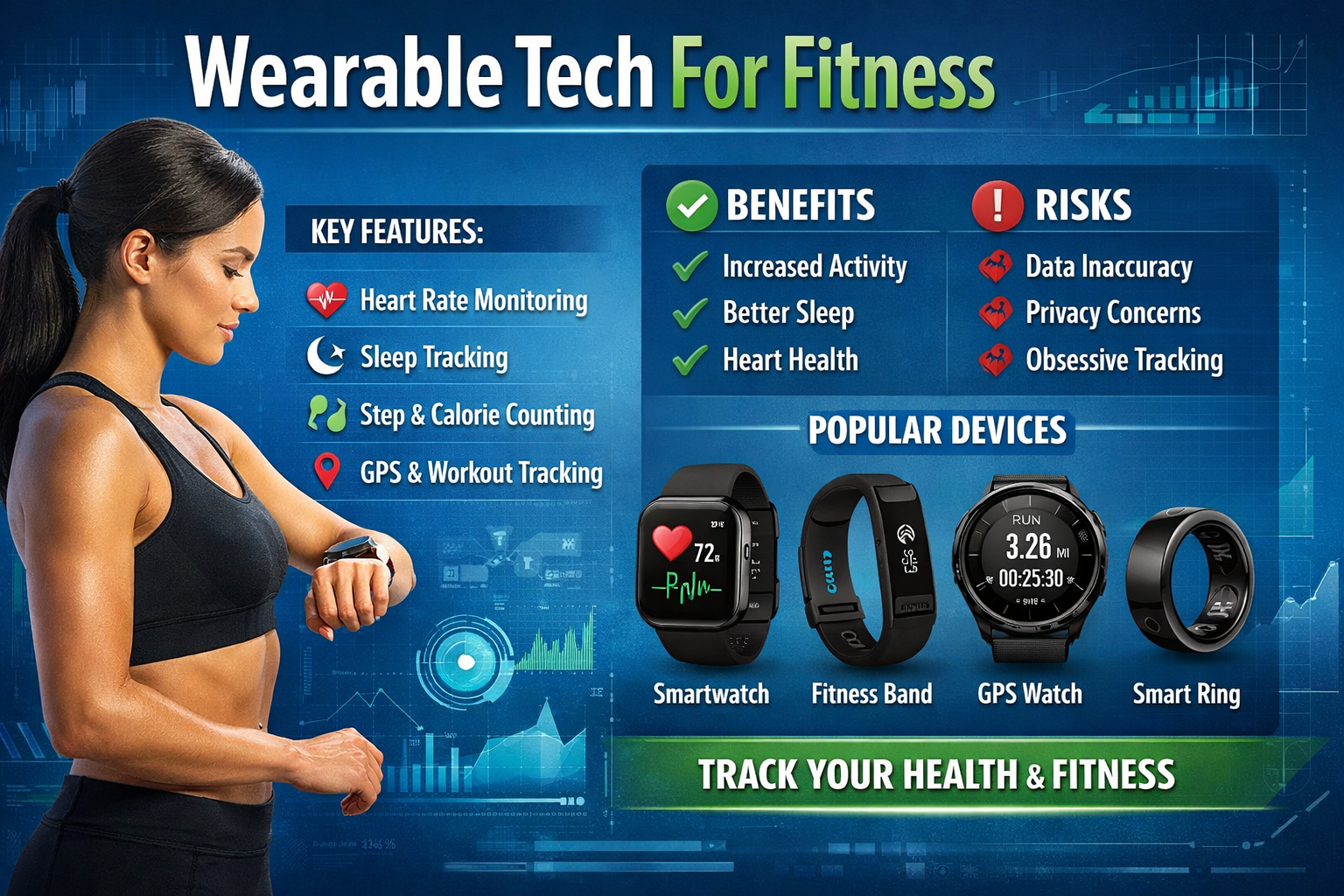
Wearable tech for fitness tracking refers to electronic devices worn on the body that collect physiological and movement-related data. These devices commonly include:
- Smartwatches
- Fitness bands
- Chest strap heart rate monitors
- Smart rings
- Clip-on trackers
Examples include the Apple Watch, Fitbit Charge, Garmin Forerunner, and Oura Ring.
Key Metrics Tracked
Most modern wearables measure:
- Steps and distance
- Calories burned
- Heart rate
- Sleep duration and quality
- Activity intensity
- VO2 max estimation
- Stress levels
Research indicates that objective activity monitoring improves awareness of daily movement patterns [3].
How Wearable Tech For Fitness Tracking Works
Sensors and Technology
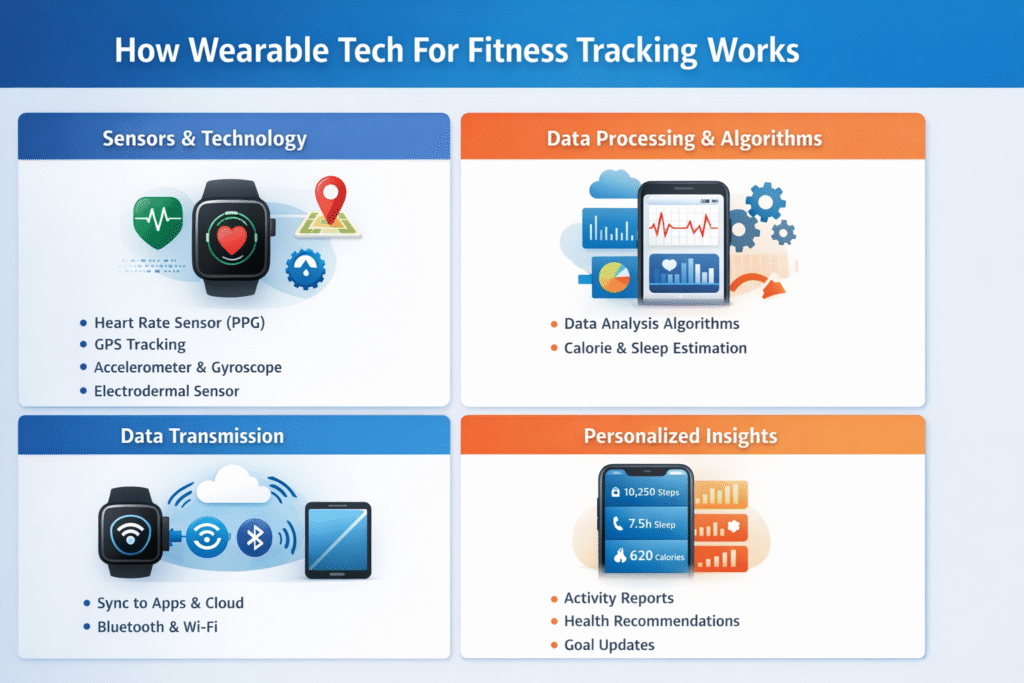
Wearables rely on multiple built-in sensors:
- Accelerometers detect motion [4]
- Gyroscopes measure orientation [5]
- Optical heart rate sensors use photoplethysmography (PPG) [6]
- GPS tracks location and speed [7]
- Electrodermal sensors measure stress response [8]
PPG technology estimates heart rate by detecting blood volume changes under the skin [6]. Studies confirm reasonable accuracy for resting heart rate, though accuracy may decline during intense activity [9].
Data Processing and Algorithms
Wearable devices use proprietary algorithms to interpret raw sensor data. Machine learning models estimate calories burned and sleep stages based on validated physiological models [10].
Cloud-based apps then analyze trends, generate reports, and provide personalized recommendations [11].
Importance Of Wearable Tech For Fitness Tracking
Physical inactivity is a major global health risk [12]. Wearables promote self-monitoring, which is strongly linked to behavior change and improved health outcomes [13].
According to behavioral science research, feedback loops improve adherence to physical activity goals [14]. By providing immediate performance data, wearable tech encourages accountability and motivation.
Wearables are also increasingly used in clinical research for remote patient monitoring [15].
Proven Benefits Of Wearable Tech For Fitness Tracking
Improved Physical Activity Levels
Meta-analyses show that pedometer and wearable-based interventions significantly increase daily step counts [16].
Better Weight Management
Self-monitoring tools are associated with improved weight loss outcomes when combined with lifestyle programs [17].
Heart Health Awareness
Continuous heart rate monitoring may improve cardiovascular awareness [18].
Sleep Optimization
Sleep tracking helps users identify patterns and improve sleep hygiene [19].
Motivation And Goal Setting
Goal-setting theory supports measurable targets for sustained engagement [20].
Potential Risks Of Wearable Tech For Fitness Tracking
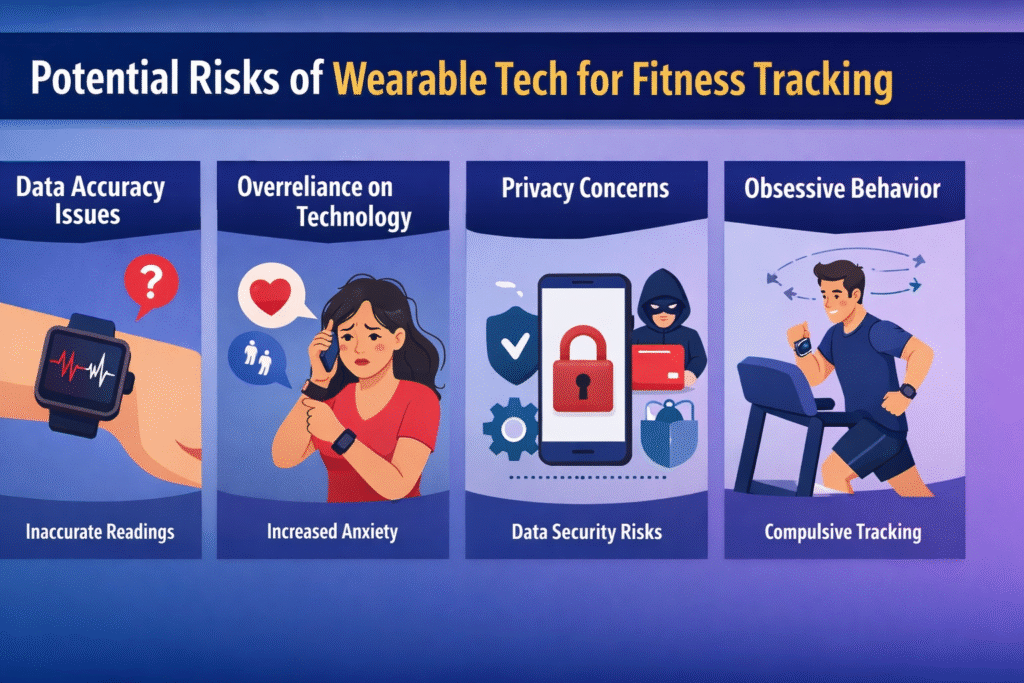
Data Accuracy Limitations
While heart rate measurements are often reliable at rest, inaccuracies may occur during high-intensity workouts [9].
Overreliance On Technology
Psychological studies suggest excessive tracking may contribute to anxiety in some users [21].
Privacy Concerns
Health data security remains a growing concern [22].
Obsessive Behavior Patterns
Excessive monitoring may increase exercise compulsion tendencies in vulnerable individuals [23].
Scientific Evidence Supporting Wearable Tech
Randomized controlled trials demonstrate modest but significant increases in physical activity using wearable trackers [16]. However, long-term adherence varies [24].
Research published in leading medical journals highlights wearable technology’s growing role in remote cardiac monitoring [25].
Large-scale population studies confirm moderate improvements in step count and metabolic markers [26].
Benefits Vs Risks Comparison
| Aspect | Benefits | Risks |
|---|---|---|
| Activity Tracking | Increased movement [16] | Overdependence [21] |
| Heart Monitoring | Early awareness [18] | Occasional inaccuracies [9] |
| Sleep Insights | Improved sleep hygiene [19] | Misinterpretation of data [27] |
| Motivation | Better goal adherence [20] | Pressure and stress [23] |
| Health Data | Personalized insights [11] | Privacy concerns [22] |
Comparison Table Of Popular Wearable Devices
| Device | Key Features | Best For | Limitations |
|---|---|---|---|
| Apple Watch | ECG, GPS, apps | All-around tracking | Higher cost |
| Fitbit Charge | Activity, sleep | Beginners | Limited advanced metrics |
| Garmin Forerunner | Advanced GPS | Athletes | Complex interface |
| Oura Ring | Sleep, recovery | Recovery tracking | No display screen |
Safe Usage Guidelines
Use Data As Guidance, Not Diagnosis
Wearables are not substitutes for medical evaluation [25].
Focus On Trends, Not Daily Fluctuations
Daily variations are normal; long-term trends are more meaningful [28].
Protect Data Privacy
Enable encryption and review app permissions [22].
Avoid Obsessive Tracking
Balance awareness with flexibility to prevent stress [23].
Who Should Avoid Or Use With Caution
- Individuals with diagnosed anxiety disorders related to body image [21]
- Those prone to compulsive exercise patterns [23]
- Individuals relying on inaccurate readings for medical decisions
Consult a healthcare provider before making medical decisions based solely on wearable data [25].
Alternatives To Wearable Tech
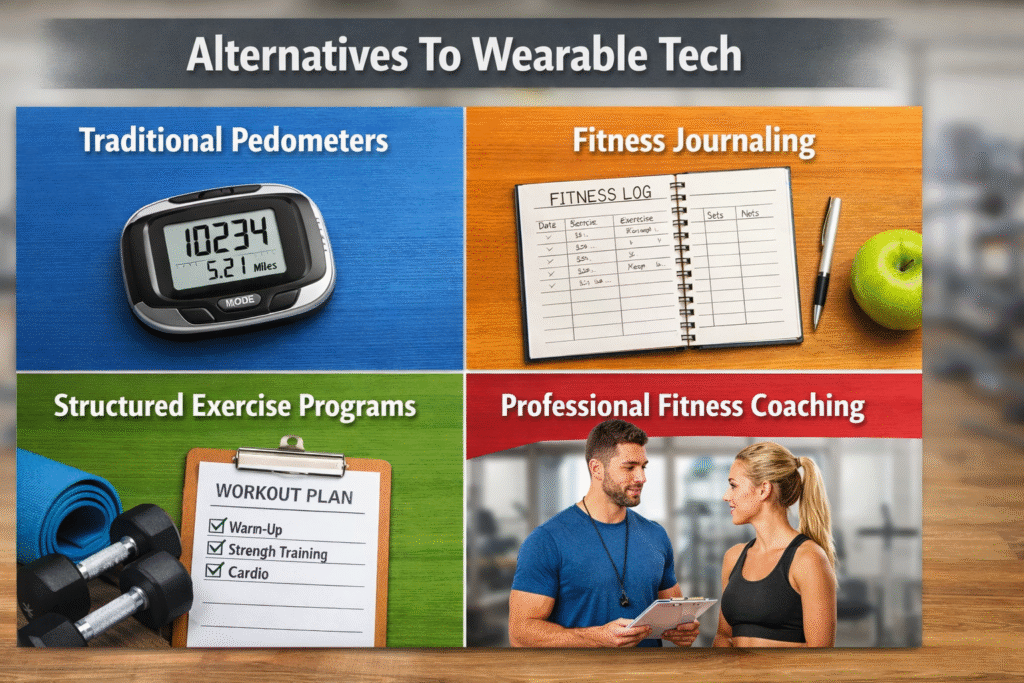
- Traditional pedometers [16]
- Manual fitness journaling
- Structured exercise programs
- Professional fitness coaching
Research shows that even simple pedometers can significantly increase activity levels [16].
Expert Opinions
Cardiologists emphasize that wearable ECG features can detect irregular rhythms but should be clinically confirmed [25].
Behavioral scientists highlight that consistent engagement, not device sophistication, drives results [13].
Public health experts state that digital tracking tools can support large-scale physical activity interventions [12].
Key Takeaways
- Wearable tech for fitness tracking enhances self-awareness
- Scientific evidence supports moderate activity improvements
- Devices are tools, not medical replacements
- Data accuracy varies by metric
- Safe and balanced use maximizes benefits
FAQs
Are wearable fitness trackers accurate?
They are generally accurate for step counting and resting heart rate but may vary during high-intensity exercise [9].
Can wearable tech improve weight loss?
Yes, when combined with lifestyle changes and self-monitoring strategies [17].
Is wearable data secure?
Security depends on the manufacturer’s data policies and user settings [22].
Do fitness trackers improve sleep?
They can increase awareness, but accuracy in sleep staging varies [27].
Are wearables suitable for older adults?
Yes, especially for monitoring activity and heart rate, with medical guidance [25].
Conclusion
Wearable tech for fitness tracking represents a powerful intersection of technology and personal health management. Scientific research supports its role in increasing physical activity, improving awareness, and enhancing motivation. However, benefits depend on responsible usage, realistic expectations, and attention to privacy concerns.
When used wisely, wearable devices can serve as valuable companions on the journey toward better health. They are most effective when combined with balanced lifestyle habits, professional guidance when needed, and a long-term commitment to sustainable wellness.
References
[1] Global wearable technology market analysis report
[2] Michie S. et al., Behavior Change Theory
[3] Tudor-Locke C., Step Counting Research
[4] Accelerometer validation studies
[5] Gyroscope sensor technology review
[6] Photoplethysmography clinical overview
[7] GPS tracking accuracy research
[8] Electrodermal activity monitoring review
[9] Heart rate accuracy during exercise study
[10] Machine learning in wearable analytics review
[11] Digital health app data integration study
[12] World Health Organization physical activity guidelines
[13] Self-monitoring and behavior change meta-analysis
[14] Feedback loop behavioral science review
[15] Remote patient monitoring research
[16] Pedometer intervention meta-analysis
[17] Weight loss and self-monitoring clinical study
[18] Continuous heart monitoring benefits study
[19] Sleep tracking and hygiene research
[20] Goal-setting theory research
[21] Anxiety and self-tracking study
[22] Health data privacy review
[23] Exercise compulsion psychology study
[24] Long-term adherence wearable study
[25] Wearable ECG clinical validation
[26] Population wearable activity research
[27] Sleep stage accuracy wearable validation
[28] Long-term trend monitoring research