
Dr Ahsan Tariq , MBBS, MRCP (UK ) ongoing, IMT ( Internal Medicine Trainee, NHS England), GMC : 7805049
Dr Ahsan Tariq is a UK-registered medical doctor with a background in internal medicine and a focus on evidence-based research in cognitive health and nootropics. He critically reviews scientific studies, supplements, and ingredients to help readers make informed, safe, and effective choices for brain health and performance.
Introduction
In today’s fast-paced world, mental performance is no longer optional, it’s essential. Whether you are a student juggling deadlines, a professional handling complex tasks, or someone simply trying to stay energized throughout the day, you’ve likely experienced moments of mental fatigue, low energy, or foggy thinking. Fortunately, nootropics often called “smart supplements” have gained massive popularity for their ability to improve cognitive function, boost energy, and support brain health.
This guide explores the top nootropics known for enhancing focus, memory, clarity, and energy levels. You’ll learn how they work, who they benefit, how to use them safely, potential side effects, and the best science-backed options available today.
What Are Nootropics?
Nootropics are substances natural or synthetic that enhance cognitive performance without causing harmful side effects. They are typically used to improve:
- Memory
- Focus
- Learning ability
- Motivation
- Mood
- Energy levels
- Mental clarity
- Stress resilience
There are three main categories of nootropics:
1. Natural Nootropics
Plant extracts, herbs, amino acids, and nutrients that support brain health.
2. Synthetic Nootropics
Lab-made compounds like racetams designed specifically to enhance cognition.
3. Prescription Nootropics
Medications such as Modafinil or Ritalin (not discussed for recreational use).
Why Energy & Cognitive Sharpness Go Hand in Hand
Many people imagine nootropics as “focus pills,” but cognitive sharpness and energy are deeply interconnected. When energy dips:
- Neurons fire slower
- Mental clarity declines
- Motivation decreases
- Stress feels heavier
- Memory becomes less reliable
Good nootropics target both systems:
🧠 Brain performance
⚡ Cellular energy
The right nootropic stack can deliver stronger focus and higher energy without the crash of caffeine-heavy products.
How Nootropics Work in the Brain
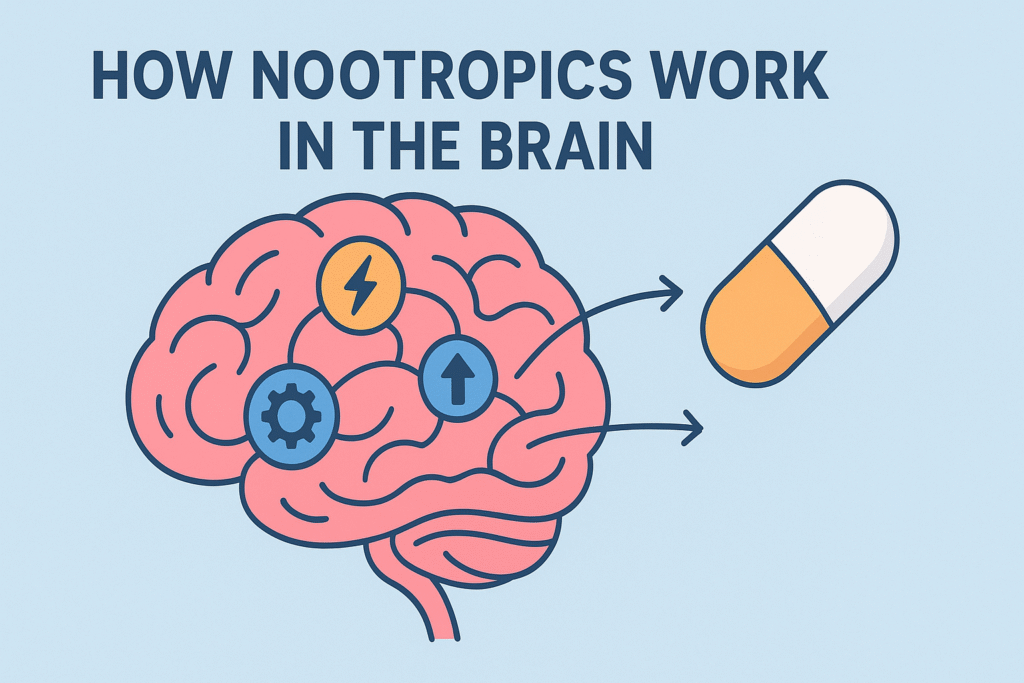
Nootropics influence brain chemistry in several key ways:
1. Boosting Neurotransmitters
Acetylcholine, dopamine, and serotonin all influence memory, learning, mood, and motivation.
2. Enhancing Blood Flow
Better circulation means more oxygen and nutrients to brain cells.
3. Increasing Brain Energy (ATP)
Some nootropics support mitochondrial energy production reducing fatigue.
4. Protecting Neurons
Antioxidant nootropics protect the brain from oxidative stress and aging.
5. Reducing Stress Hormones
Certain compounds lower cortisol, which improves clarity and emotional stability.
Top Nootropics for Sharp Thinking & Higher Energy
Below is a breakdown of the best nootropics scientifically known to improve cognition and fight fatigue.
1. L-Theanine + Caffeine: The Classic Combo
Why It Works
The synergy of calming L-theanine and stimulating caffeine creates smooth, focused energy without the jittery crash.
Benefits
- Improves focus
- Enhances attention
- Reduces anxiety
- Provides stable energy
Best For
Students, office workers, morning productivity.
2. Rhodiola Rosea: The Fatigue Fighter
Why It Works
Rhodiola is an adaptogen that regulates stress hormones and boosts energy naturally.
Benefits
- Reduces physical & mental fatigue
- Improves stress resilience
- Enhances focus
- Supports mood
Best For
Burnout, long workdays, mental exhaustion.
3. Bacopa Monnieri: The Memory Enhancer
Benefits
- Enhances recall
- Improves long-term memory
- Supports calm focus
- Contains powerful antioxidants
How It Works
Boosts acetylcholine and increases neuron communication (synaptic signaling).
4. Lion’s Mane Mushroom: The Brain Builder
Why It Works
Lion’s Mane stimulates Nerve Growth Factor (NGF), helping brain cells repair and grow.
Benefits
- Enhances learning
- Supports long-term memory
- Boosts energy
- Improves mood and clarity
5. Creatine: The Underrated Mental Energizer
Benefits
- Boosts brain ATP production
- Enhances focus
- Reduces mental fatigue
- Improves working memory
Creatine is not just for athletes it’s one of the most researched energy boosters.
6. Alpha-GPC: The Acetylcholine Booster
Why It Works
Provides choline for the neurotransmitter acetylcholine, essential for memory and learning.
Benefits
- Sharpens mental clarity
- Improves memory
- Boosts learning
- Enhances brain energy
7. Ashwagandha: The Stress Reducer
Benefits
- Lowers cortisol
- Enhances calm energy
- Supports mental clarity
- Improves sleep quality
This is ideal for people whose cognitive fog is caused by stress or poor sleep.
8. N-Acetyl L-Tyrosine (NALT): The Motivation Molecule
Why It Works
Supports dopamine production, which governs motivation and mental drive.
Benefits
- Enhances motivation
- Improves multitasking
- Sharpens focus under stress
Great for busy schedules and heavy workloads.
9. Acetyl-L-Carnitine (ALCAR): The Brain Energy Supercharger
Benefits
- Boosts mitochondrial energy
- Enhances mental clarity
- Supports memory
- Improves mood
Especially helpful for combating low energy.
10. Modafinil (Prescription Only)
Note: For informational purposes only not recommended without medical supervision.
Table: Best Nootropics for Sharp Thinking & Energy
| Nootropic | Primary Benefit | Energy Boost | Cognitive Boost | Best For |
|---|---|---|---|---|
| L-Theanine + Caffeine | Smooth focus | ⭐⭐⭐⭐ | ⭐⭐⭐⭐ | Students, workers |
| Rhodiola Rosea | Stress & fatigue | ⭐⭐⭐⭐ | ⭐⭐⭐ | Burnout |
| Bacopa Monnieri | Memory | ⭐⭐ | ⭐⭐⭐⭐ | Learning, recall |
| Lion’s Mane | Brain repair | ⭐⭐⭐ | ⭐⭐⭐⭐ | Long-term brain health |
| Creatine | ATP energy | ⭐⭐⭐⭐⭐ | ⭐⭐⭐ | Mental fatigue |
| Alpha-GPC | Acetylcholine | ⭐⭐⭐ | ⭐⭐⭐⭐⭐ | Memory, clarity |
| Ashwagandha | Stress reduction | ⭐⭐⭐ | ⭐⭐⭐ | Mood, calmness |
| NALT | Motivation | ⭐⭐⭐ | ⭐⭐⭐⭐ | High workload |
| ALCAR | Mitochondria | ⭐⭐⭐⭐⭐ | ⭐⭐⭐⭐ | Energy, clarity |
How to Choose the Right Nootropic
Ask yourself:
1. Is your main issue low energy?
→ Choose Creatine, Rhodiola, ALCAR
2. Do you struggle with memory?
→ Choose Bacopa, Alpha-GPC, Lion’s Mane
3. Do you experience stress overload?
→ Choose Ashwagandha, Rhodiola
4. Need all-in-one brain support?
→ Combine Lion’s Mane + Alpha-GPC + ALCAR
How to Build a Simple Daily Nootropic Stack
Beginner Stack
- L-Theanine + Caffeine
- Lion’s Mane
Energy Boost Stack
- ALCAR
- Creatine
- Rhodiola
Focus & Memory Stack
- Alpha-GPC
- Bacopa
- L-Theanine
Benefits of Nootropics
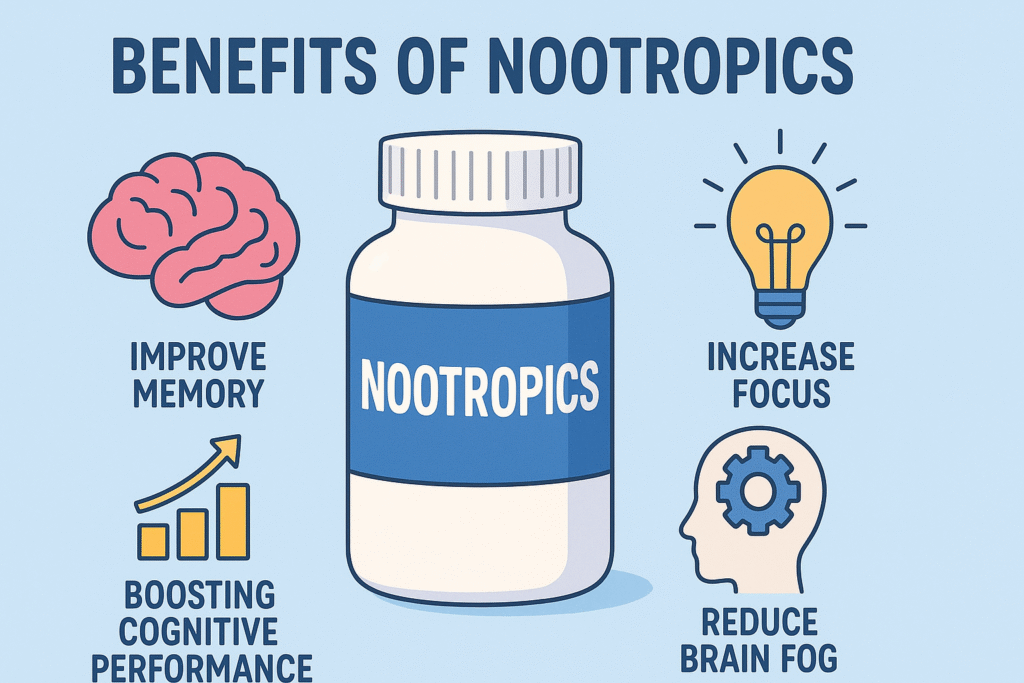
1. Increased Mental Clarity
You think sharper and process information faster.
2. Better Energy Levels
No jittery spikes just clean, steady energy.
3. Improved Memory & Learning
Enhanced recall, learning speed, and information retention.
4. Better Mood & Stress Control
Some nootropics regulate stress hormones and boost dopamine.
5. Long-Term Brain Health
Lion’s Mane and antioxidants protect neurons from damage.
Potential Side Effects (Important!)
Nootropics are generally safe, but you may experience:
- Headache (often from choline imbalance)
- Insomnia (if taken late)
- Digestive discomfort
- Over-stimulation
Always:
- Start with lowest dose
- Avoid combining too many stimulants
- Consult a doctor if pregnant or on medication
Final Thoughts: Sharp Thinking and High Energy Are Possible
Nootropics are not magic pills but when used correctly, they can dramatically improve how you think, feel, learn, and function. Whether you struggle with low energy, brain fog, or poor memory, there’s a safe and effective nootropic to support your goals.
The key is choosing the right blend for your personal needs and using them consistently for best results.
References
- Giurgea C. (1972). Actualités Pharmacologiques.
- Massaad CA, Klann E. (2011). Antioxidants & Redox Signaling.
- Stough C. et al. (2001). Psychopharmacology.
- Zhang Z. et al. (2016). Evidence-Based Complementary and Alternative Medicine.
- Nakagawa T. et al. (2002). Journal of Neuroscience Research.
- Haskell C. et al. (2005). Biological Psychology.
- Kuhn MA. (2012). Journal of Herbal Pharmacotherapy.
- Shevtsov V. et al. (2003). Phytomedicine.
- Rae C. et al. (2003). Proceedings of the Royal Society B.
- Kennedy DO, Wightman EL. (2011). Nutrients.
10 thoughts on “Top Nootropics: Sharp Thinking, No More Low Energy”