
Dr Ahsan Tariq , MBBS, MRCP (UK ) ongoing, IMT ( Internal Medicine Trainee, NHS England), GMC : 7805049
Dr Ahsan Tariq is a UK-registered medical doctor with a background in internal medicine and a focus on evidence-based research in cognitive health and nootropics. He critically reviews scientific studies, supplements, and ingredients to help readers make informed, safe, and effective choices for brain health and performance.
Introduction
Stress has become an unavoidable part of modern life, affecting mental clarity, emotional balance, and physical health. Chronic stress is linked to conditions such as anxiety disorders, cardiovascular disease, digestive problems, and weakened immunity [1]. Stress reduction techniques are evidence-based strategies designed to help individuals manage stress responses and restore balance. This article explores how these techniques work, their benefits and risks, and how to apply them safely for long-term well-being.
Understanding Stress Reduction Techniques
What Are Stress Reduction Techniques
Stress reduction techniques are structured mental, physical, or behavioral practices that help lower the body’s stress response. They aim to regulate cortisol levels, calm the nervous system, and improve emotional resilience [2].
Types Of Stress Reduction Techniques
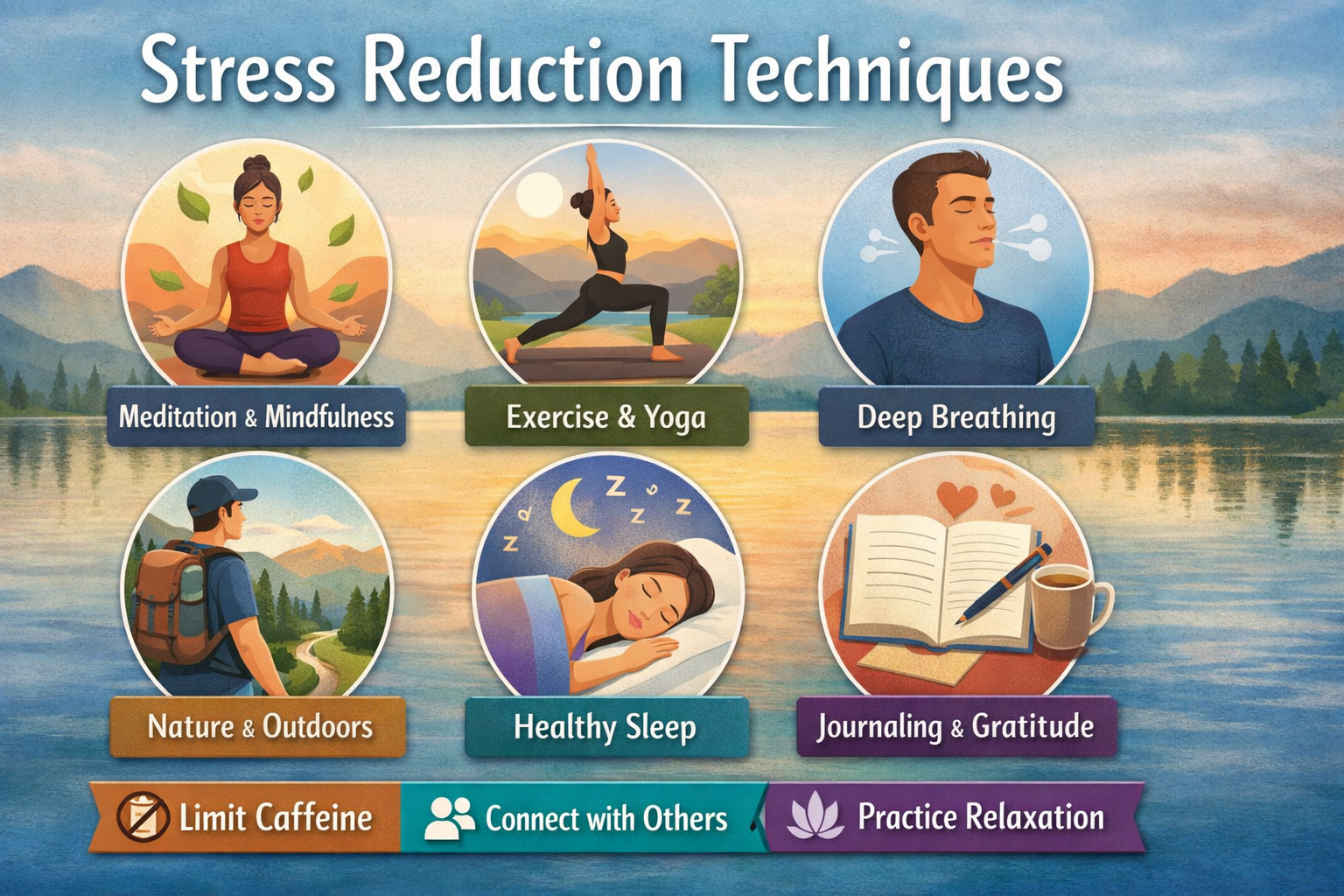
Stress reduction methods generally fall into three categories:
Physical Techniques
These involve movement or body-based practices such as exercise, stretching, yoga, and deep breathing [3].
Mental Techniques
Mental approaches include mindfulness meditation, guided imagery, and cognitive reframing to change stress-inducing thought patterns [4].
Lifestyle-Based Techniques
Sleep optimization, time management, social support, and nutrition also play a vital role in reducing stress levels [5].
How Stress Reduction Techniques Work
Nervous System Regulation
Stress activates the sympathetic nervous system, triggering the fight-or-flight response. Stress reduction techniques stimulate the parasympathetic nervous system, promoting relaxation and recovery [6].
Hormonal Balance
Practices such as meditation and exercise help reduce cortisol and adrenaline while increasing serotonin and dopamine levels, improving mood and focus [7].
Brain Function Improvement
Regular stress management enhances prefrontal cortex function, improving emotional regulation and decision-making [8].
Importance Of Stress Reduction Techniques
Impact On Physical Health
Unmanaged stress increases the risk of heart disease, obesity, diabetes, and immune dysfunction [9].
Impact On Mental Health
Chronic stress contributes to anxiety, depression, sleep disorders, and cognitive decline [10].
Quality Of Life Enhancement
Effective stress management improves productivity, relationships, and overall life satisfaction [11].
Proven Benefits Of Stress Reduction Techniques
Improved Emotional Stability
Stress reduction techniques lower anxiety levels and enhance emotional control [12].
Better Sleep Quality
Relaxation practices improve sleep onset and sleep duration [13].
Enhanced Immune Function
Lower stress improves immune response and reduces inflammation [14].
Cardiovascular Protection
Stress management lowers blood pressure and reduces heart disease risk [15].
Potential Risks Of Stress Reduction Techniques
Overuse Or Improper Practice
Excessive meditation or intense physical practices may lead to emotional discomfort or physical strain in some individuals [16].
Delayed Medical Attention
Relying solely on stress techniques instead of seeking medical care for serious conditions can be harmful [17].
Temporary Emotional Discomfort
Mindfulness practices may initially increase awareness of negative emotions [18].
Scientific Evidence Supporting Stress Reduction Techniques
Clinical Research Findings
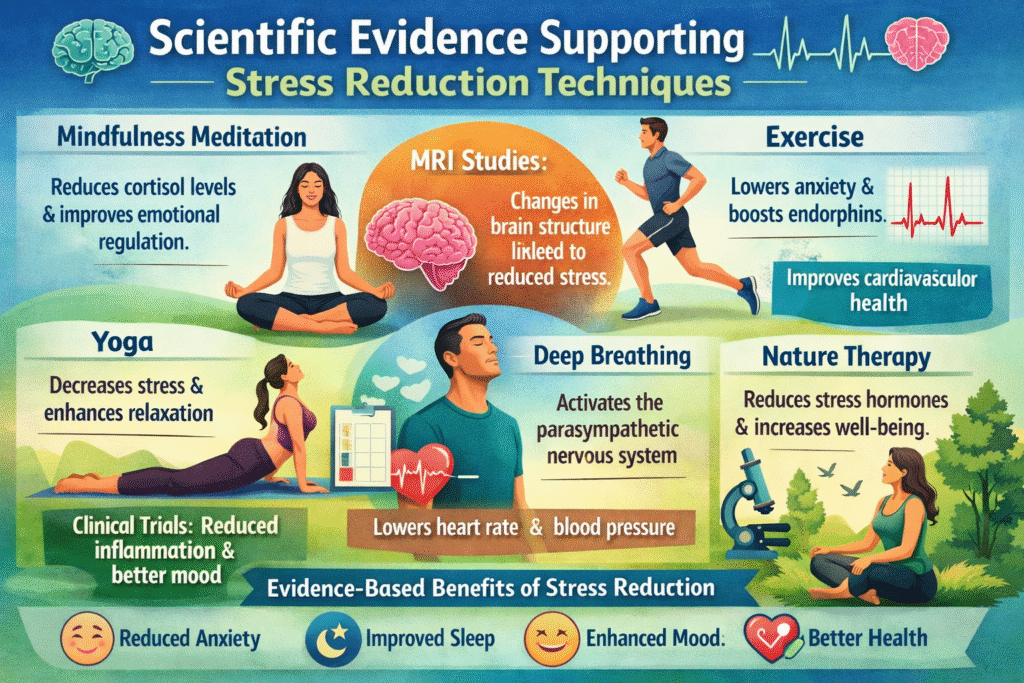
Multiple randomized controlled trials show mindfulness and relaxation techniques significantly reduce stress and anxiety [19].
Long-Term Outcome Studies
Longitudinal studies link consistent stress management with reduced chronic disease risk [20].
Neurobiological Evidence
Brain imaging studies confirm structural and functional changes associated with regular stress reduction practices [21].
Comparison Of Common Stress Reduction Techniques
| Technique | Primary Benefit | Best For | Scientific Support |
|---|---|---|---|
| Meditation | Mental calm | Anxiety | Strong [19] |
| Exercise | Hormonal balance | Depression | Strong [22] |
| Deep Breathing | Immediate relaxation | Acute stress | Moderate [6] |
| Yoga | Mind-body balance | Chronic stress | Strong [23] |
Benefits Vs Risks Comparison
| Benefits | Risks |
|---|---|
| Reduced anxiety and tension | Temporary emotional discomfort |
| Improved sleep and focus | Physical strain if overdone |
| Better heart and immune health | Delay in seeking medical care |
| Enhanced emotional resilience | Not suitable for all conditions |
Safe Usage Guidelines
Start Gradually
Begin with short sessions and increase duration slowly to avoid overwhelm [24].
Maintain Consistency
Regular practice delivers better results than occasional sessions [25].
Combine Multiple Techniques
Using a mix of physical and mental methods enhances effectiveness [26].
Seek Professional Guidance When Needed
Those with mental health conditions should consult professionals before starting new practices [27].
Who Should Avoid Or Modify Stress Reduction Techniques
Individuals With Severe Mental Health Conditions
Certain mindfulness practices may require supervision in individuals with trauma-related disorders [18].
People With Physical Limitations
High-intensity exercise or advanced yoga poses may need modification [28].
Alternatives To Traditional Stress Reduction Techniques
Professional Therapy
Cognitive behavioral therapy is effective for stress and anxiety management [29].
Social Support Interventions
Strong social connections significantly reduce stress levels [11].
Medical Management
In some cases, medical treatment may be required alongside stress techniques [30].
Expert Opinions On Stress Reduction Techniques
Health organizations consistently recommend stress management as part of preventive healthcare. According to the World Health Organization, stress reduction is essential for mental well-being and disease prevention [1]. Experts emphasize personalized approaches based on individual needs and health status [27].
Key Takeaways
Stress reduction techniques help regulate the nervous system
They improve mental, emotional, and physical health
Consistency is essential for long-term benefits
Proper guidance enhances safety and effectiveness
Frequently Asked Questions
How long does it take to see results
Many people notice improvements within two to four weeks of consistent practice [25].
Are stress reduction techniques scientifically proven
Yes, extensive research supports their effectiveness [19].
Can stress reduction replace medical treatment
No, they complement but do not replace medical care [17].
Which technique works best
Effectiveness varies depending on personal preferences and health conditions [26].
Conclusion
Stress reduction techniques are powerful, evidence-based tools for improving mental and physical health. When practiced correctly and consistently, they reduce anxiety, enhance emotional balance, and protect against chronic disease. Understanding their benefits, risks, and scientific backing allows individuals to integrate these techniques safely into daily life for sustainable well-being.
References
- World Health Organization, 2019
- American Psychological Association, 2020
- Harvard Medical School, 2018
- National Institute of Mental Health, 2021
- Centers for Disease Control and Prevention, 2020
- Brown and Gerbarg, 2005
- McEwen, 2017
- Davidson and McEwen, 2012
- American Heart Association, 2019
- Mayo Clinic, 2021
- Holt-Lunstad et al., 2010
- Hofmann et al., 2010
- Ong et al., 2014
- Segerstrom and Miller, 2004
- Chiesa and Serretti, 2009
- Van Dam et al., 2018
- National Health Service, 2020
- Britton, 2019
- Goyal et al., 2014
- Grossman et al., 2004
- Tang et al., 2015
- Schuch et al., 2016
- Cramer et al., 2013
- Kabat-Zinn, 1990
- Creswell, 2017
- Sharma et al., 2018
- American Psychiatric Association, 2021
- National Institute on Aging, 2020
- Beck, 2011
- National Institute for Health and Care Excellence, 2019