
Dr Ahsan Tariq , MBBS, MRCP (UK ) ongoing, IMT ( Internal Medicine Trainee, NHS England), GMC : 7805049
Dr Ahsan Tariq is a UK-registered medical doctor with a background in internal medicine and a focus on evidence-based research in cognitive health and nootropics. He critically reviews scientific studies, supplements, and ingredients to help readers make informed, safe, and effective choices for brain health and performance.
Introduction
Spine alignment is a foundational concept in musculoskeletal health that affects posture, movement efficiency, pain perception, and overall quality of life. The human spine is a complex structural system designed to support body weight, protect the spinal cord, and enable flexible movement. Proper alignment allows these functions to work together harmoniously, while misalignment can disrupt biomechanics and place excessive stress on tissues.
In recent decades, lifestyle changes such as prolonged sitting, increased screen use, and reduced physical activity have significantly increased the prevalence of spinal misalignment. Many individuals experience back pain, neck stiffness, headaches, and reduced mobility without understanding that poor spine alignment may be a contributing factor. Addressing alignment is not about rigid posture correction but about restoring balance, efficiency, and resilience to the spine.
This article provides an in-depth exploration of spine alignment, explaining how it works, why it matters, the benefits and risks involved, and evidence-based strategies for maintaining proper alignment safely over the long term.
Understanding The Topic
What Is Spine Alignment
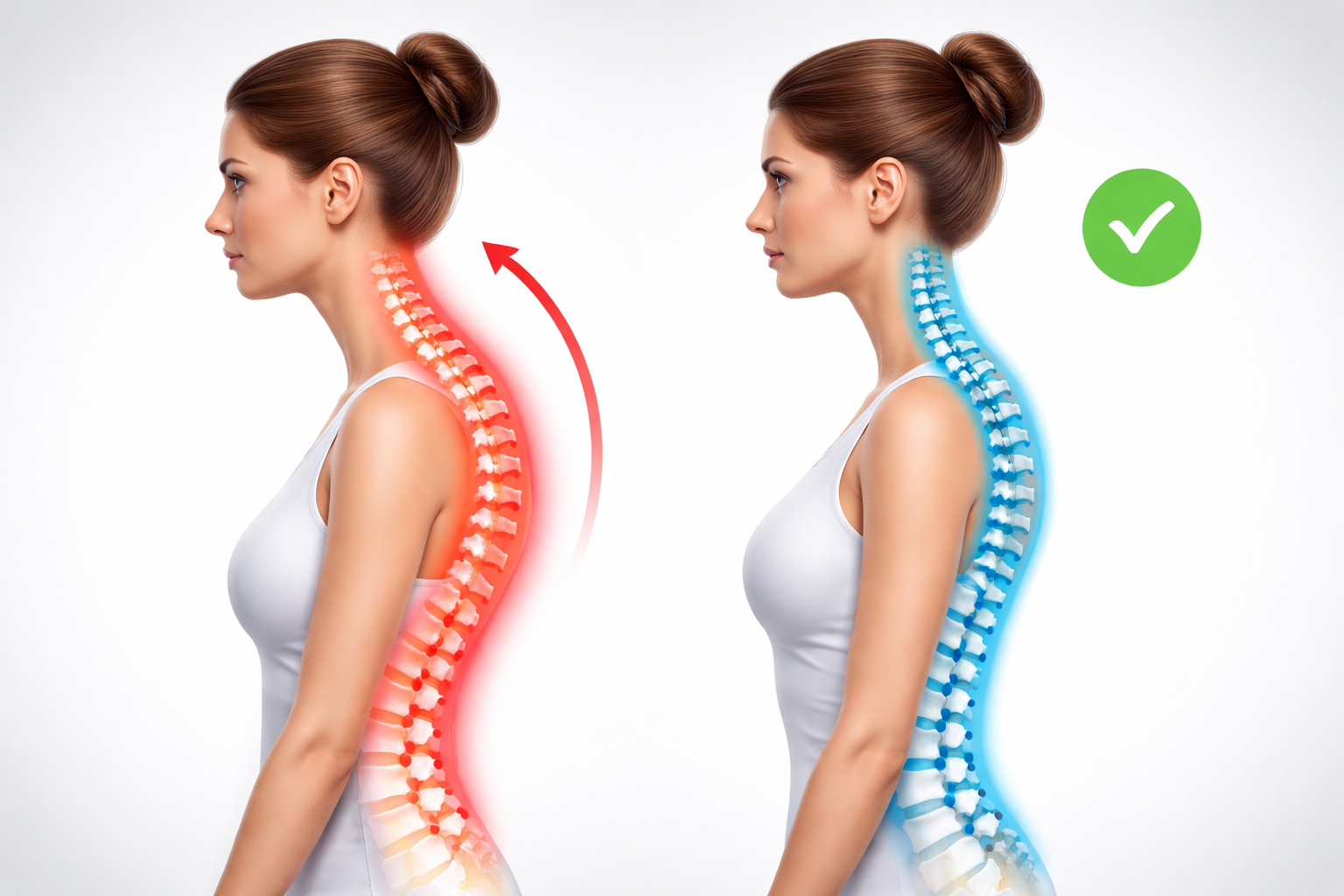
Spine alignment refers to the optimal positioning of the vertebral column so that the head, shoulders, rib cage, pelvis, and lower limbs are stacked efficiently over one another. In proper alignment, the spine maintains its natural curves while minimizing unnecessary stress on joints, muscles, ligaments, and intervertebral discs [1].
Rather than being perfectly straight, a healthy spine features gentle curves that act as shock absorbers. These curves allow the spine to adapt to movement, load, and posture changes throughout daily activities.
The Natural Curves Of The Spine
The spine consists of three primary curves, each serving a specific biomechanical function [2]:
- The cervical curve supports the head and enables neck mobility
- The thoracic curve stabilizes the upper body and protects vital organs
- The lumbar curve bears most of the body’s weight and facilitates bending and lifting
Disruption in any of these curves can affect the entire spinal system, often leading to compensatory patterns and discomfort.
How It Works
Biomechanics Of Proper Spine Alignment
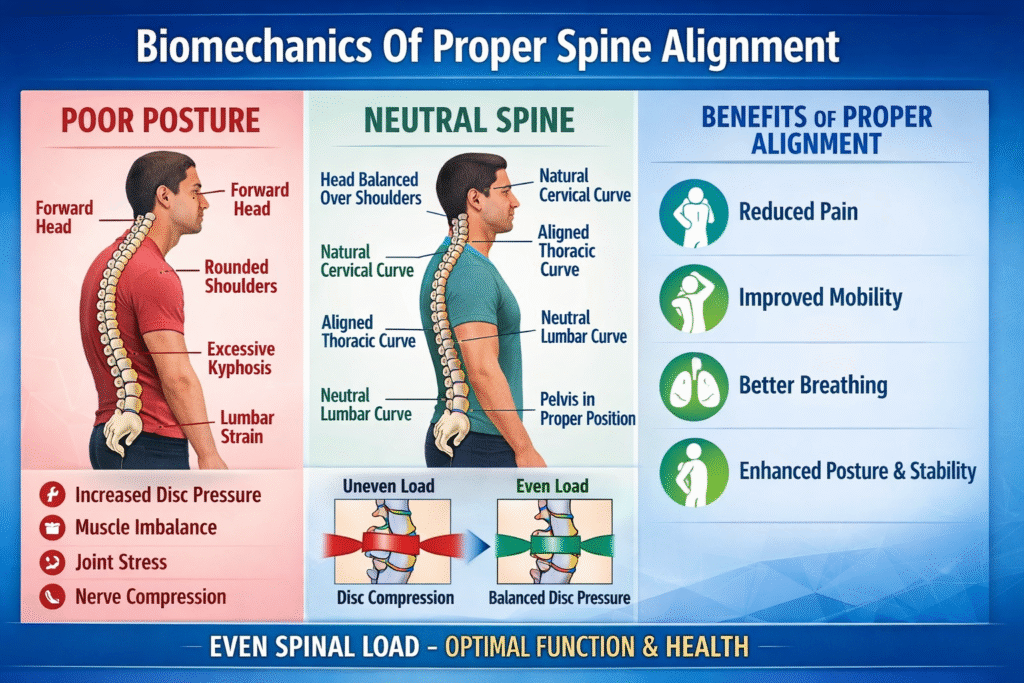
Proper spine alignment allows gravitational forces to pass through the body with minimal resistance. When the spine is aligned, body weight is distributed evenly across vertebrae and intervertebral discs, reducing localized pressure points [3].
Misalignment shifts load to specific segments, increasing wear and tear on discs and joints. Over time, this uneven stress may contribute to disc degeneration, joint stiffness, and chronic pain.
Muscular Coordination And Stability
Muscles play a crucial role in maintaining spinal alignment. In a neutral position, muscles operate at optimal length, allowing efficient force production with minimal fatigue [4]. Misalignment causes certain muscles to become chronically tight while others weaken, creating imbalances that further disrupt posture and movement.
Importance
Role In Posture And Daily Function
Spine alignment forms the structural basis of posture. When alignment is optimal, the body can maintain upright positions with less effort, improving comfort during standing, sitting, and walking [5]. Poor alignment often results in slouched posture, forward head positioning, and excessive lower back arching.
Nervous System Integrity
The spinal cord and nerve roots travel through the vertebral canal. Structural deviations in spinal alignment may contribute to nerve irritation or compression, potentially affecting sensation, coordination, and muscle function [6]. Maintaining alignment supports optimal nervous system communication.
Proven Benefits
Reduction In Musculoskeletal Pain
Multiple studies associate proper spinal alignment with reduced neck, shoulder, and lower back pain. By minimizing mechanical stress on tissues, alignment helps prevent chronic inflammation and pain sensitization [7].
Improved Movement Efficiency
Aligned posture allows joints to move through their intended ranges without compensation. This improves walking mechanics, lifting efficiency, and overall functional movement [8].
Enhanced Breathing Mechanics
Spinal alignment directly influences rib cage mobility. Upright alignment enables full lung expansion, improving oxygen uptake and respiratory efficiency [9].
Increased Balance And Stability
Proper alignment enhances proprioceptive feedback and postural control, reducing fall risk, particularly in older adults and individuals with balance impairments [10].
Potential Risks
Overemphasis On Rigid Posture
Excessive focus on maintaining a rigid upright posture can increase muscle tension and discomfort. Healthy alignment should allow natural movement variability rather than fixed positioning [11].
Inappropriate Techniques
Some alignment practices may not be suitable for individuals with specific spinal conditions, such as severe disc herniation or spinal instability, and may worsen symptoms if applied incorrectly [12].
Scientific Evidence
Clinical Research On Spine Alignment
Clinical trials show that posture correction and alignment-focused interventions can significantly reduce pain intensity and improve functional outcomes in individuals with chronic spinal pain [13].
Ergonomic And Occupational Studies
Workplace research consistently demonstrates that ergonomic interventions supporting spinal alignment reduce musculoskeletal complaints and improve productivity among desk workers [14].
Benefits Vs Risks Comparison
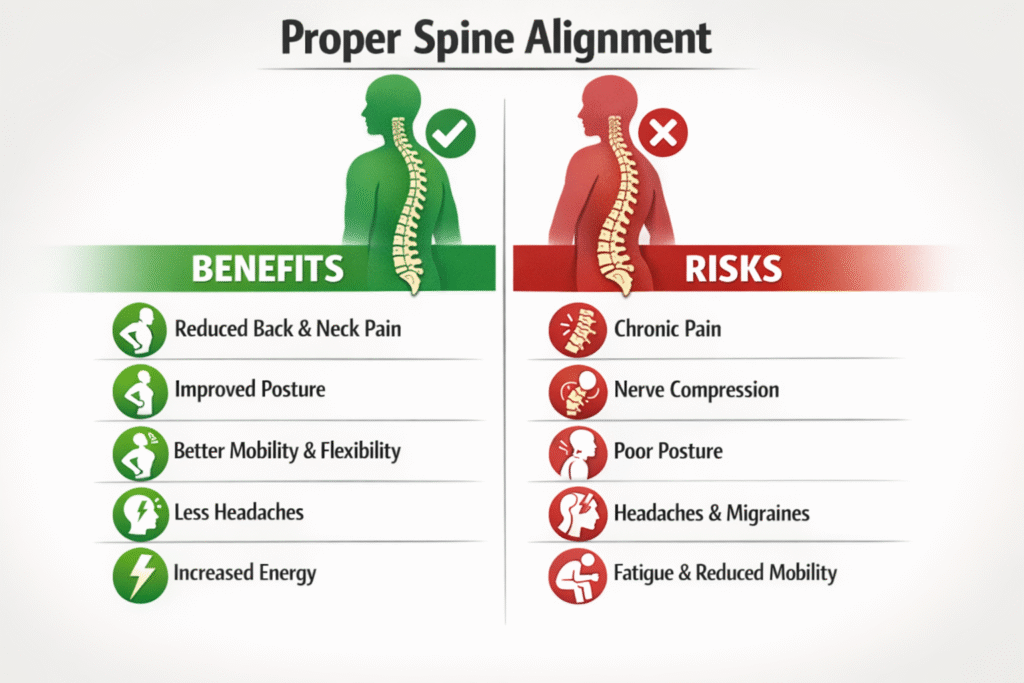
| Factor | Benefits | Risks |
|---|---|---|
| Pain Management | Reduced mechanical stress | Temporary discomfort if overcorrected |
| Mobility | Improved joint efficiency | Limited benefit without consistency |
| Posture | Better balance and endurance | Increased tension if rigid |
Safe Usage Guidelines
Maintain A Neutral Spine
Focus on preserving natural spinal curves rather than forcing an exaggerated upright position. Neutral alignment allows flexibility and shock absorption [15].
Optimize Ergonomic Environments
Proper chair height, lumbar support, screen positioning, and keyboard placement help maintain alignment during prolonged sitting [16].
Progress Gradually
Alignment awareness should be developed gradually. Sudden changes may overload tissues that have adapted to poor posture [17].
Who Should Avoid It
Acute Spinal Injury
Individuals with fractures, acute disc injuries, or post-surgical restrictions should avoid alignment exercises without medical supervision [18].
Severe Structural Conditions
Advanced scoliosis, spinal stenosis, or congenital deformities require individualized treatment plans rather than general alignment strategies [19].
Alternatives
Strength Training
Targeted strengthening of the core, gluteal, and postural muscles supports spinal alignment and load tolerance [20].
Flexibility And Mobility Training
Stretching tight muscles, particularly in the hips and chest, helps restore balanced alignment and reduces compensatory patterns [21].
Movement-Based Therapies
Practices such as yoga, Pilates, and tai chi emphasize spinal awareness, controlled movement, and postural balance [22].
Expert Opinions
Orthopedic Perspectives
Orthopedic specialists emphasize spine alignment as a key factor in preventing degenerative spinal conditions and maintaining joint health over time [23].
Physical Therapy Insights
Physical therapists recommend integrating posture education with functional movement retraining rather than relying on static correction alone [24].
Key Takeaways
Alignment Supports Long-Term Health
Proper spine alignment contributes to pain prevention, improved mobility, and efficient movement patterns.
Consistency And Balance Matter
Sustainable improvements require consistent habits, ergonomic awareness, and physical conditioning.
FAQs
Is spine alignment the same as posture
Spine alignment refers to structural positioning, while posture includes habitual movement patterns and behaviors.
Can improving alignment reduce chronic back pain
Evidence suggests alignment-focused strategies can reduce chronic pain when combined with exercise and education [25].
How long does it take to improve spine alignment
Postural adaptations may begin within weeks, but long-term improvements require ongoing practice [26].
Conclusion
Spine alignment is a cornerstone of musculoskeletal health that influences posture, movement efficiency, nervous system function, and pain levels. Poor alignment can contribute to discomfort, fatigue, and functional limitations, while proper alignment supports resilience and long-term well-being. By understanding how spine alignment works, recognizing its benefits and risks, and applying evidence-based strategies safely, individuals can make meaningful improvements to their spinal health and overall quality of life.
References
- Spinal alignment principles
- Natural spinal curvature biomechanics
- Vertebral load distribution research
- Muscle coordination and posture study
- Postural efficiency analysis
- Spinal nerve function review
- Chronic back pain and alignment studies
- Functional movement biomechanics
- Respiratory mechanics and posture
- Balance and spinal positioning research
- Risks of rigid posture correction
- Contraindications for alignment practices
- Posture intervention clinical trials
- Ergonomic workplace studies
- Neutral spine guidelines
- Sitting ergonomics research
- Musculoskeletal adaptation studies
- Acute spinal injury management
- Structural spinal disorder guidelines
- Core strength and alignment research
- Flexibility and posture relationship
- Movement therapy spinal health review
- Orthopedic spine health perspectives
- Physical therapy posture education
- Alignment and chronic pain evidence
One thought on “Proper Spine Alignment and Its Health Benefits”