
Dr Ahsan Tariq , MBBS, MRCP (UK ) ongoing, IMT ( Internal Medicine Trainee, NHS England), GMC : 7805049
Dr Ahsan Tariq is a UK-registered medical doctor with a background in internal medicine and a focus on evidence-based research in cognitive health and nootropics. He critically reviews scientific studies, supplements, and ingredients to help readers make informed, safe, and effective choices for brain health and performance.
Introduction:
Seasonal allergies, also known as seasonal allergic rhinitis or hay fever, remain one of the most common chronic health conditions worldwide in 2026. Despite medical advances, millions of people continue to experience sneezing, congestion, itchy eyes, fatigue, and breathing discomfort during specific times of the year. Climate change, increased pollution, longer pollen seasons, and lifestyle changes have made seasonal allergies more intense and longer-lasting than ever before.
In 2026, understanding seasonal allergies is no longer optional, it is essential for maintaining productivity, mental well-being, and overall quality of life. This comprehensive guide explains what seasonal allergies are, why they occur, how symptoms present, and what modern science recommends for prevention and relief, based on current research and expert insights.
Understanding Seasonal Allergies In 2026
Seasonal allergies occur when the immune system overreacts to airborne substances that appear during specific seasons of the year. These substances called allergens are usually harmless but trigger an immune response in sensitive individuals.
What Makes Seasonal Allergies Different From Other Allergies?
Seasonal allergies are time-specific, unlike perennial allergies (such as dust mites or pet dander), which occur year-round. According to immunology research, seasonal allergies are primarily triggered by outdoor allergens that fluctuate based on weather and plant cycles [1].
How Seasonal Allergies Develop In The Body
When allergens enter the body through the nose, eyes, or lungs, the immune system mistakenly identifies them as harmful invaders.
The Immune Response Explained (Simple Terms)
- The body detects pollen or mold spores
- The immune system releases IgE antibodies
- These antibodies trigger histamine release
- Histamine causes inflammation, mucus production, and itching
According to allergy research, histamine is responsible for nearly all classic allergy symptoms [2].
Common Seasonal Allergy Triggers In 2026
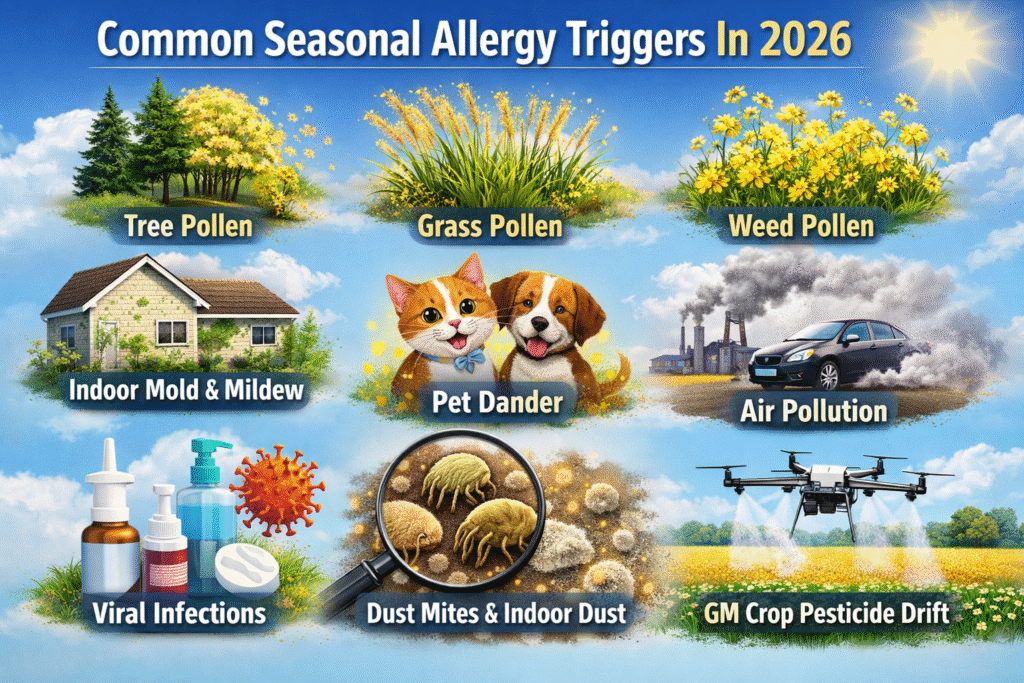
Environmental changes have altered traditional allergy patterns. In 2026, experts report earlier starts and longer allergy seasons due to rising global temperatures [3].
Major Seasonal Allergens
| Season | Primary Allergens | Peak Duration |
|---|---|---|
| Spring | Tree pollen | March – May |
| Summer | Grass pollen | May – July |
| Fall | Weed pollen (ragweed) | August – October |
| Year-Round (Seasonal overlap) | Mold spores | Humid conditions |
Studies show that ragweed pollen levels have increased significantly over the last two decades [4].
Symptoms Of Seasonal Allergies Explained Clearly
Seasonal allergy symptoms vary from mild to severe and can affect multiple body systems.
Nasal And Respiratory Symptoms
- Sneezing fits
- Runny or blocked nose
- Postnasal drip
- Sinus pressure
According to clinical data, nasal congestion is the most reported allergy symptom worldwide [5].
Eye-Related Symptoms
- Itchy eyes
- Redness
- Excessive tearing
- Light sensitivity
Eye symptoms occur when allergens contact the conjunctiva, triggering inflammation [6].
Throat And Mouth Symptoms
- Itchy throat
- Dry cough
- Hoarseness
These symptoms are often worsened by mouth breathing during nasal congestion [7].
Less Common But Important Allergy Symptoms
Fatigue And Brain Fog
Many people underestimate allergy-related fatigue. Research indicates that inflammatory chemicals released during allergic reactions can affect sleep quality and cognitive function [8].
Headaches And Facial Pain
Sinus inflammation caused by allergies can result in pressure headaches, especially during high-pollen days [9].
Seasonal Allergies Vs Cold: Key Differences
Many people confuse allergies with viral infections.
| Feature | Seasonal Allergies | Common Cold |
|---|---|---|
| Fever | Rare | Common |
| Mucus Color | Clear | Yellow/Green |
| Itching | Common | Rare |
| Duration | Weeks to months | 7–10 days |
Medical guidelines emphasize symptom duration as a key diagnostic clue [10].
Why Seasonal Allergies Are Worse In 2026
Climate Change Impact
Rising carbon dioxide levels stimulate plants to produce more pollen for longer periods [11].
Air Pollution Interaction
Pollutants can bind to pollen particles, making them more irritating to airways, according to environmental health studies [12].
Who Is Most At Risk?
Seasonal allergies affect people of all ages, but certain groups are more vulnerable.
High-Risk Groups
- Children with family history of allergies
- Urban residents
- People with asthma
- Individuals with weakened immune balance
Genetic predisposition plays a major role, as shown in twin studies [13].
Benefits Of Early Allergy Awareness
Understanding seasonal allergies early offers significant health benefits.
Improved Quality Of Life
Early management reduces symptom severity and prevents complications like sinus infections [14].
Better Academic And Work Performance
Studies show untreated allergies negatively impact concentration and productivity [15].
Modern Diagnostic Methods In 2026
Skin Prick Testing
Small amounts of allergens are introduced to identify triggers. This remains the gold standard in allergy diagnosis [16].
Blood Tests (IgE Testing)
Blood tests measure allergen-specific IgE antibodies and are useful when skin tests are not possible [17].
Seasonal Allergy Management Strategies
Environmental Control
- Keep windows closed during high pollen days
- Use HEPA air filters
- Shower after outdoor exposure
Environmental avoidance remains a cornerstone of allergy care [18].
Medications Commonly Used
- Antihistamines
- Nasal corticosteroids
- Decongestants (short-term)
Clinical trials confirm nasal corticosteroids as the most effective treatment for moderate to severe symptoms [19].
Natural Supportive Approaches (Evidence-Based)
Some complementary methods may support symptom control when used responsibly.
Saline Nasal Rinses
Saline irrigation helps remove allergens from nasal passages [20].
Lifestyle Support
- Balanced diet
- Proper sleep
- Stress management
Stress can worsen allergic inflammation, according to psychoneuroimmunology research [21].
Long-Term Benefits Of Proper Allergy Control
Reduced Risk Of Asthma Development
Uncontrolled allergies can increase asthma risk, especially in children [22].
Lower Healthcare Costs
Preventive care reduces doctor visits and medication dependency [23].
Seasonal Allergies And Mental Well-Being
Chronic symptoms can impact mood and emotional health.
Studies show higher rates of irritability and low mood during peak allergy seasons [24].
Future Outlook: Seasonal Allergies Beyond 2026
Researchers are exploring:
- Allergy vaccines
- Personalized immunotherapy
- AI-based pollen forecasting
Early trials show promising results for long-term symptom reduction [25].
Final Thoughts
Seasonal allergies in 2026 are more complex but more manageable than ever before. With better awareness, accurate diagnosis, and evidence-based strategies, individuals can significantly reduce symptoms and improve daily functioning. Understanding symptoms is the first step toward long-term relief and healthier seasonal living.
References
- According to allergy immunology reviews, airborne allergens trigger immune hypersensitivity [1]
- Histamine’s role in allergic inflammation explained in pharmacology studies [2]
- Climate change and pollen season length studies [3]
- Ragweed pollen increase research [4]
- Global allergy symptom surveys [5]
- Ophthalmology allergy response studies [6]
- Upper airway allergy research [7]
- Inflammatory fatigue studies [8]
- Sinus pressure and allergy headache research [9]
- Clinical differentiation guidelines [10]
- CO₂ and pollen production studies [11]
- Pollution and allergen interaction research [12]
- Genetic allergy risk studies [13]
- Early intervention outcome studies [14]
- Workplace productivity research [15]
- Allergy diagnostic guidelines [16]
- IgE blood testing studies [17]
- Environmental control effectiveness reviews [18]
- Nasal steroid clinical trials [19]
- Saline rinse effectiveness studies [20]
- Stress and immune response research [21]
- Allergy-asthma progression studies [22]
- Preventive healthcare cost analyses [23]
- Allergy and mental health correlations [24]
- Emerging allergy treatment trials [25]