
Dr Ahsan Tariq , MBBS, MRCP (UK ) ongoing, IMT ( Internal Medicine Trainee, NHS England), GMC : 7805049
Dr Ahsan Tariq is a UK-registered medical doctor with a background in internal medicine and a focus on evidence-based research in cognitive health and nootropics. He critically reviews scientific studies, supplements, and ingredients to help readers make informed, safe, and effective choices for brain health and performance.
Introduction: Why Natural Skin Remedies Matter Today
In recent years, natural skin remedies have gained massive popularity. From turmeric masks shared on social media to aloe vera gels recommended by elders, people increasingly turn to nature for skincare solutions. The appeal is obvious: natural remedies are often affordable, easily available, and perceived as safer than chemical-based products. However, an important question remains are natural skin remedies truly powerful fixes, or are they risky myths that can harm the skin?
This article explores natural skin remedies from awareness to benefits and risks, supported by scientific studies and dermatological insights. We’ll break down common remedies, explain how they work, identify who should use them, and highlight when caution is necessary.
Understanding Natural Skin Remedies
What Are Natural Skin Remedies?
Natural skin remedies refer to skincare practices and treatments derived from plants, minerals, or naturally occurring substances. These include herbs, oils, clays, fruits, and traditional preparations used to improve skin health. Common examples include honey for hydration, turmeric for inflammation, and tea tree oil for acne.
According to [1], humans have used botanical ingredients for skincare for over 5,000 years, particularly in Ayurvedic, Chinese, and Egyptian medicine.
Why People Prefer Natural Over Chemical Products
Many people associate “natural” with “safe,” while chemical-based skincare products are often linked with side effects such as irritation or long-term skin damage. A consumer survey reported that over 60% of skincare buyers prefer products labeled as natural or organic [2].
Key reasons include:
- Fear of synthetic chemicals
- Sensitive skin conditions
- Cultural and traditional beliefs
- Rising awareness of sustainability
The Science Behind Skin Health
How Skin Works
The skin is the body’s largest organ and acts as a protective barrier. It consists of three main layers: the epidermis, dermis, and hypodermis. Healthy skin depends on hydration, balanced oil production, proper cell turnover, and protection from environmental damage.
A study explained that disruption in the skin barrier leads to acne, eczema, premature aging, and infections [3].
Can Natural Ingredients Penetrate the Skin?
Not all natural ingredients can penetrate deeply into the skin. Molecular size, formulation, and application method determine effectiveness. Research shows that oils like jojoba and coconut closely mimic human sebum, allowing better absorption [4].
Benefits of Natural Skin Remedies
Gentle On Sensitive Skin
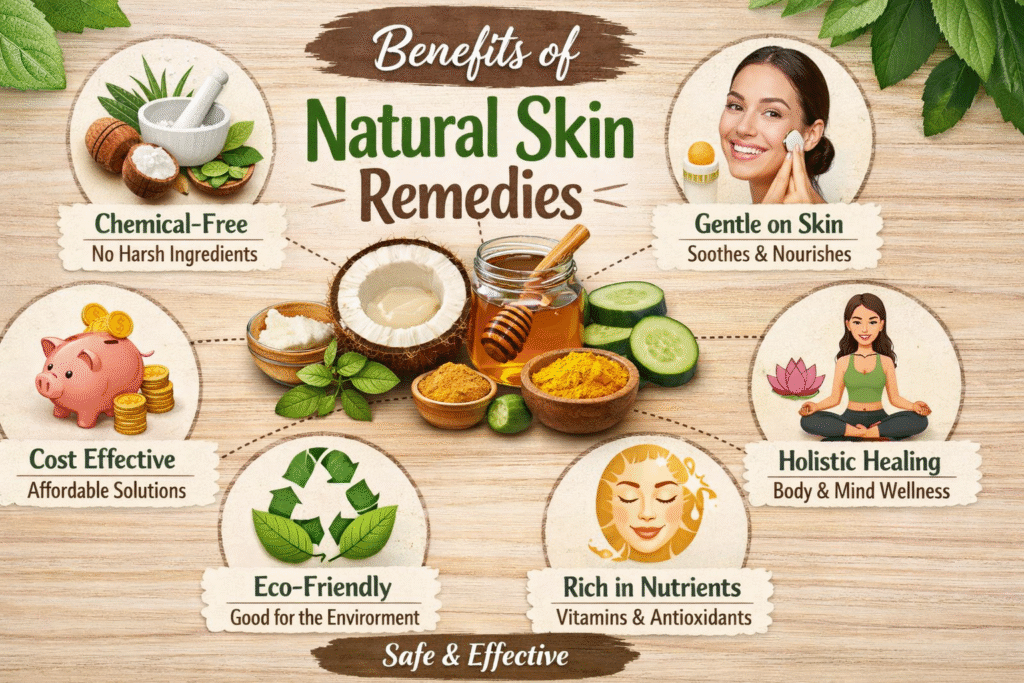
Natural remedies often contain fewer irritants compared to synthetic formulations. For example, oatmeal is widely used to soothe eczema and itching. According to dermatological studies, colloidal oatmeal reduces inflammation and strengthens the skin barrier [5].
Cost-Effective Skincare Solutions
Many natural remedies use household ingredients such as yogurt, honey, or lemon. This makes them accessible to people with limited budgets. Economic studies indicate that homemade skincare routines can reduce monthly skincare expenses by up to 70% [6].
Rich In Antioxidants
Fruits and herbs like green tea, turmeric, and rosehip oil are rich in antioxidants. Antioxidants protect the skin from free radical damage, which contributes to aging and pigmentation. Research confirms green tea polyphenols significantly reduce UV-induced skin damage [7].
Common Natural Skin Remedies And Their Uses
Aloe Vera
Aloe vera is widely used for burns, acne, and hydration. According to clinical trials, aloe vera gel accelerates wound healing and reduces inflammation [8].
Honey
Honey acts as a natural humectant and antibacterial agent. Studies show that raw honey is effective against acne-causing bacteria such as Propionibacterium acnes [9].
Turmeric
Turmeric contains curcumin, a powerful anti-inflammatory compound. Research demonstrates its effectiveness in reducing hyperpigmentation and acne scars [10].
Tea Tree Oil
Tea tree oil is popular for acne treatment. A randomized study found tea tree oil to be as effective as benzoyl peroxide with fewer side effects [11].
Table: Popular Natural Skin Remedies And Evidence
| Natural Remedy | Main Benefit | Skin Type | Scientific Evidence |
|---|---|---|---|
| Aloe Vera | Healing, hydration | All | Strong [8] |
| Honey | Antibacterial | Acne-prone | Moderate [9] |
| Turmeric | Brightening | Oily | Moderate [10] |
| Tea Tree Oil | Acne control | Oily | Strong [11] |
| Oatmeal | Soothing | Sensitive | Strong [5] |
Risks And Myths Around Natural Skin Remedies
“Natural Means Safe” A Dangerous Myth
Not all natural ingredients are safe. Lemon juice, for example, can cause skin burns and photosensitivity. Dermatology reports show increased cases of phytophotodermatitis linked to citrus application [12].
Allergic Reactions And Sensitivity
Essential oils and herbs can cause allergic contact dermatitis. A study documented that lavender and peppermint oils triggered allergic reactions in sensitive individuals [13].
Lack Of Standardization
Unlike commercial products, homemade remedies lack dosage control. Overuse of ingredients like baking soda can disrupt skin pH, leading to dryness and breakouts [14].
Natural Remedies vs Dermatological Treatments
When Natural Remedies Work Best
Natural remedies are effective for:
- Mild acne
- Dry skin
- Minor inflammation
- Maintenance skincare
According to [15], lifestyle-based skincare works best when combined with proper hygiene and diet.
When Medical Treatment Is Necessary
Conditions like severe acne, eczema, rosacea, or fungal infections require professional care. Delaying treatment can worsen symptoms, as highlighted in clinical guidelines [16].
Role Of Diet And Lifestyle In Natural Skin Care
Nutrition And Skin Health
Skin reflects internal health. Diets rich in omega-3 fatty acids, vitamins A, C, and E support skin repair. Studies show a strong link between high-glycemic diets and acne [17].
Hydration And Sleep
Adequate water intake and quality sleep improve skin elasticity and reduce dullness. Research confirms that sleep deprivation accelerates skin aging [18].
Are Natural Remedies Supported By Science?
What Research Says
While some remedies are backed by evidence, others rely on anecdotal claims. A systematic review found that only 30–40% of popular natural remedies have strong clinical support [19].
Traditional Medicine And Modern Science
Ayurveda and Traditional Chinese Medicine emphasize holistic skincare. Modern research increasingly validates these practices, particularly herbal extracts [20].
How To Use Natural Skin Remedies Safely
Patch Testing Is Essential
Always perform a patch test before applying any natural ingredient. According to dermatologists, patch testing reduces allergic reactions by 70% [21].
Proper Formulation And Frequency
Using diluted essential oils and limiting application frequency prevents irritation. Experts recommend no more than 2–3 times weekly for active ingredients [22].
Natural Skincare Trends And Social Media Influence
Viral Remedies: Helpful Or Harmful?
Trends like DIY lemon masks and toothpaste acne hacks often lack scientific basis. Dermatologists warn that misinformation on social media contributes to skin damage cases [23].
Importance Of Evidence-Based Skincare Content
Educational content backed by research improves consumer decision-making and reduces skincare-related harm [24].
Final Verdict: Powerful Fix Or Risky Myth?
Natural skin remedies are neither complete miracles nor total myths. When chosen wisely and used correctly, they can support healthy skin. However, blind trust and misuse can lead to damage. According to dermatological consensus, the best approach is a balanced one combining evidence-based natural remedies with professional guidance [25].
Conclusion
Natural skin remedies offer accessible, gentle, and often effective skincare solutions. Their benefits include affordability, antioxidant protection, and cultural relevance. However, risks such as allergic reactions, misuse, and lack of regulation cannot be ignored. Understanding the science behind ingredients and using them responsibly is the key to achieving healthy, glowing skin without harm.
References
- According to historical botanical medicine research [1]
- Consumer skincare preference survey [2]
- Skin barrier function study [3]
- Oil absorption research [4]
- Colloidal oatmeal clinical review [5]
- Skincare economics study [6]
- Green tea antioxidant study [7]
- Aloe vera clinical trials [8]
- Honey antibacterial research [9]
- Curcumin dermatology study [10]
- Tea tree oil acne trial [11]
- Phytophotodermatitis case studies [12]
- Essential oil allergy research [13]
- Skin pH disruption study [14]
- Lifestyle dermatology review [15]
- Clinical acne guidelines [16]
- Diet and acne research [17]
- Sleep and skin aging study [18]
- Systematic review of natural remedies [19]
- Traditional medicine validation research [20]
- Patch testing dermatology guideline [21]
- Essential oil safety review [22]
- Social media skincare misinformation study [23]
- Evidence-based skincare education research [24]
- Dermatology consensus report [25]
2 thoughts on “Natural Skin Remedies: Powerful Fix Or Risky Myth?”