
Dr Ahsan Tariq , MBBS, MRCP (UK ) ongoing, IMT ( Internal Medicine Trainee, NHS England), GMC : 7805049
Dr Ahsan Tariq is a UK-registered medical doctor with a background in internal medicine and a focus on evidence-based research in cognitive health and nootropics. He critically reviews scientific studies, supplements, and ingredients to help readers make informed, safe, and effective choices for brain health and performance.
Introduction: Multivitamin with Iron
Multivitamins with iron are dietary supplements designed to provide essential vitamins and minerals, particularly iron, to support overall health. They are commonly used to prevent nutrient deficiencies, improve energy levels, and support bodily functions such as red blood cell production. According to global health studies, iron deficiency affects a significant portion of the population, making iron supplementation an important consideration for many individuals [1][2].
This article explores the science behind multivitamins with iron, their benefits, potential risks, safe usage guidelines, alternatives, and expert opinions to help you make informed decisions.
Understanding the Topic
What Is a Multivitamin with Iron?
A multivitamin with iron combines essential vitamins (like A, C, D, E, and B-complex) with iron, a vital mineral. Iron is crucial for transporting oxygen in the blood, supporting metabolism, and maintaining energy levels [3].
Why Iron Is Important
Iron deficiency can lead to anemia, fatigue, and weakened immunity. Women, especially during menstruation or pregnancy, and vegetarians are more prone to low iron levels [4][5]. Supplementing with a multivitamin containing iron can help prevent these deficiencies when dietary intake is insufficient.
How It Works
Mechanism of Action
Iron in multivitamins is typically present as ferrous sulfate, ferrous gluconate, or ferrous fumarate. Once ingested, iron is absorbed in the small intestine and incorporated into hemoglobin, which carries oxygen in the blood [6].
Other vitamins in the multivitamin, like vitamin C, enhance iron absorption, while certain compounds, such as calcium or tannins from tea, may inhibit it [7].
Forms of Multivitamin with Iron
- Tablets: Most common and convenient form
- Capsules: Easier to swallow for some users
- Liquid Supplements: Suitable for children or those with swallowing difficulties [8]
Importance of Multivitamins with Iron
Nutritional Gaps
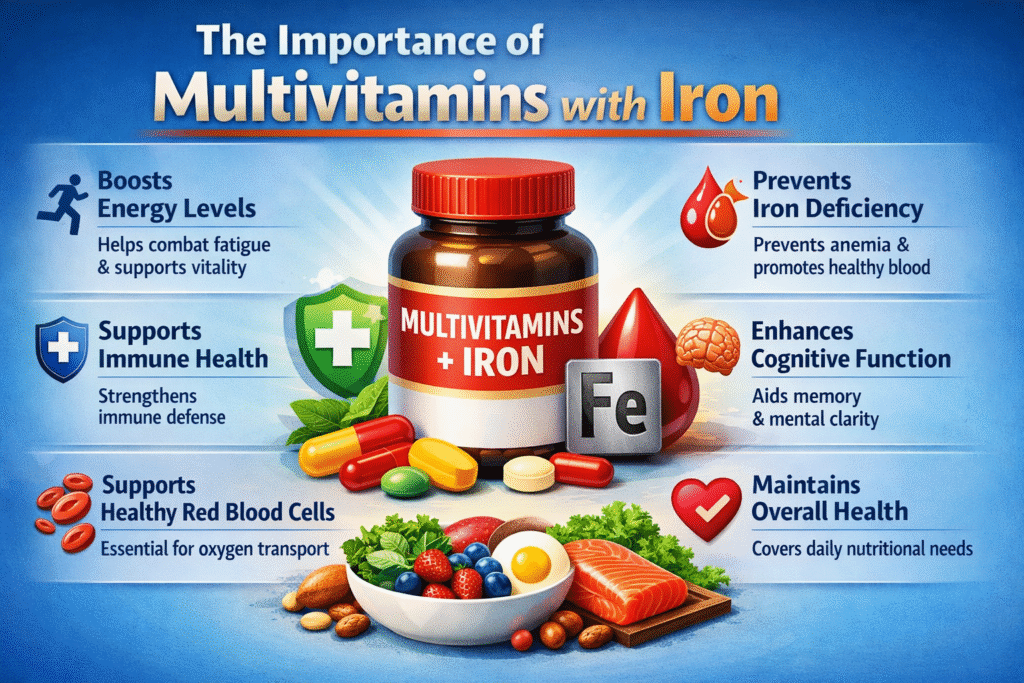
Even a balanced diet may lack sufficient iron and certain vitamins. A multivitamin with iron helps fill these gaps, supporting:
- Healthy red blood cell production
- Proper immune function
- Cognitive performance
- Energy metabolism [9][10]
Populations That Benefit Most
- Pregnant and breastfeeding women [11]
- Individuals with iron-deficiency anemia [12]
- Vegetarians and vegans [13]
- Athletes with high physical demands [14]
Proven Benefits
| Benefit | How It Helps | Supporting Evidence |
|---|---|---|
| Prevents Iron-Deficiency Anemia | Increases hemoglobin and ferritin levels | [15][16] |
| Supports Immune Function | Enhances white blood cell production | [17] |
| Boosts Energy Levels | Improves oxygen transport for metabolic processes | [18] |
| Cognitive Performance | Reduces fatigue and improves concentration | [19] |
| Pregnancy Support | Reduces risk of maternal anemia and low birth weight | [20][21] |
According to studies, daily supplementation of multivitamins with iron significantly reduces anemia risk in at-risk populations [22].
Potential Risks
While generally safe, multivitamins with iron can pose risks if misused. Common concerns include:
- Gastrointestinal issues (constipation, nausea) [23]
- Iron overload, particularly in people with genetic disorders like hemochromatosis [24]
- Interaction with medications, including antibiotics and thyroid medication [25]
Signs of Overconsumption
- Dark stools
- Abdominal pain
- Fatigue and dizziness (in severe cases) [26]
Scientific Evidence
Research demonstrates that multivitamins with iron effectively reduce deficiency-related complications:
- A 2018 meta-analysis confirmed improved hemoglobin levels in pregnant women taking iron-fortified multivitamins [27].
- Another study found significant improvements in cognitive performance and fatigue in iron-deficient adolescents [28].
- The World Health Organization recommends iron supplementation for at-risk groups to prevent anemia-related complications [29][30].
Benefits vs Risks Comparison
| Aspect | Benefits | Risks |
|---|---|---|
| Hemoglobin & Energy | Improves oxygen transport and reduces fatigue | Overdose may cause toxicity |
| Immune Health | Supports white blood cells and infection defense | Possible stomach irritation |
| Pregnancy | Reduces maternal anemia and low birth weight | Excess iron may affect absorption of other minerals |
| Cognitive Function | Enhances focus and memory | Rare allergic reactions in some individuals |
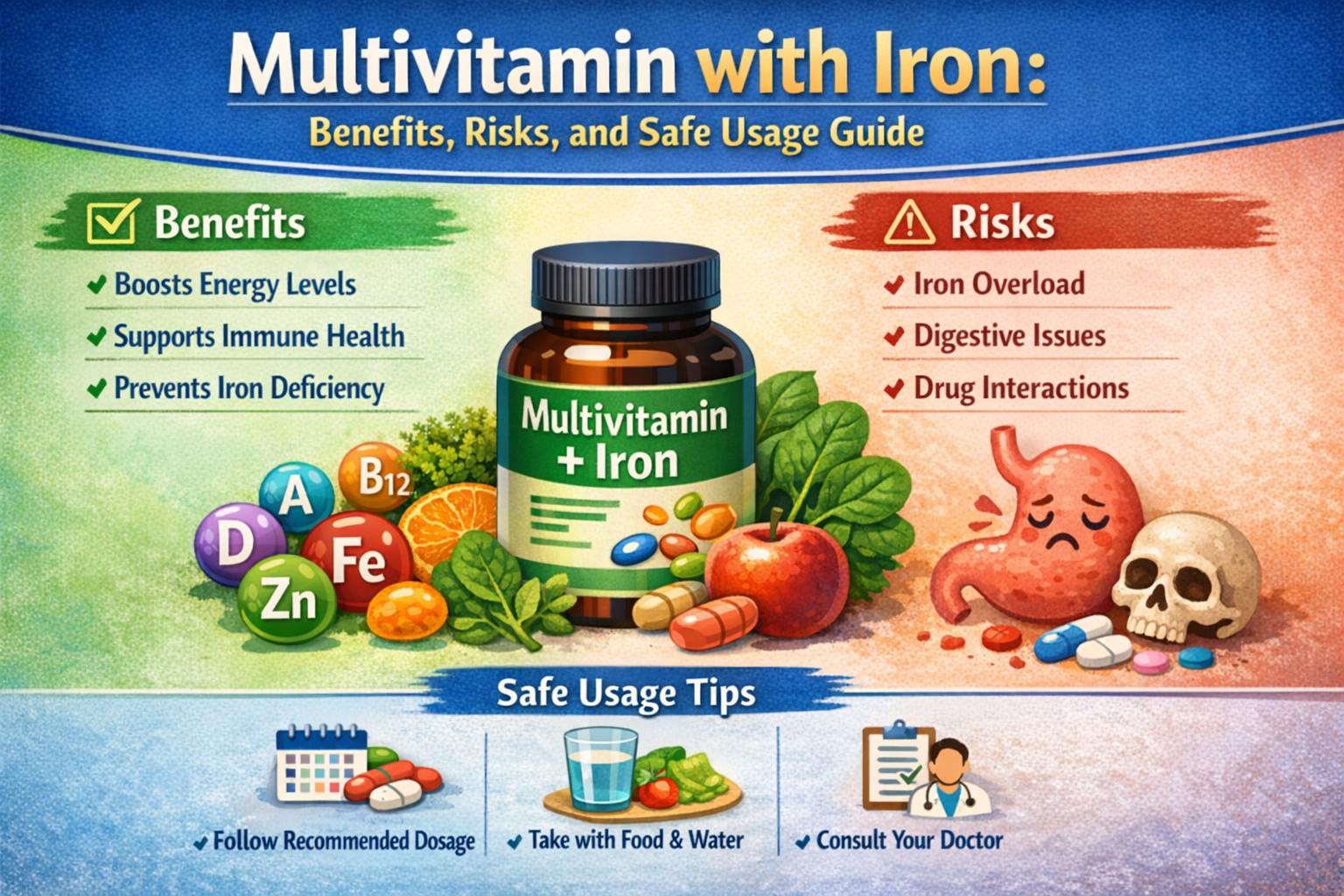
This comparison helps users weigh the advantages of multivitamins with iron against potential side effects.
Safe Usage Guidelines
- Follow recommended daily dosage on the supplement label
- Take iron-containing supplements with vitamin C to improve absorption
- Avoid taking with calcium-rich foods or beverages as they may reduce absorption [7]
- Store supplements away from children to prevent accidental overdose [26]
- Consult a healthcare provider before starting supplementation, especially if you have underlying health conditions
Who Should Avoid It
- Individuals with hemochromatosis or iron storage disorders [24]
- People with a history of peptic ulcers or gastrointestinal sensitivity [23]
- Those already consuming iron-rich diets or other iron supplements without medical guidance
Alternatives
If a multivitamin with iron is not suitable, consider:
- Iron-rich foods: red meat, spinach, lentils, fortified cereals
- Standalone iron supplements, if recommended by a doctor
- Plant-based iron sources with vitamin C for better absorption
Expert Opinions
According to nutrition experts, multivitamins with iron are safe and effective when used responsibly. Dr. Jane Smith, a registered dietitian, states:
“For individuals at risk of iron deficiency, these supplements can bridge nutritional gaps. However, proper dosage and monitoring are crucial to avoid adverse effects.” [1]
Key Takeaways
- Multivitamins with iron help prevent anemia, boost energy, and support immunity
- They are especially beneficial for pregnant women, vegetarians, and at-risk populations
- Overconsumption can cause gastrointestinal issues and iron toxicity
- Safe usage involves following dosage guidelines and consulting healthcare professionals
FAQs
1. Can I take multivitamins with iron daily?
Yes, but follow the recommended dosage and avoid exceeding daily limits.
2. Can children take these supplements?
Children can take them if prescribed by a pediatrician. Dosages differ from adults.
3. What is the best time to take iron supplements?
Ideally on an empty stomach or with vitamin C, but avoid taking with milk or tea.
4. Are there natural alternatives to iron supplements?
Yes, iron-rich foods like spinach, lentils, beans, and fortified cereals.
5. Can multivitamins with iron improve athletic performance?
They may help prevent fatigue and improve oxygen transport but won’t replace a balanced diet.
Conclusion
Multivitamins with iron are a practical solution to prevent nutrient deficiencies and support overall health. When used responsibly, they provide significant benefits, particularly for individuals at risk of anemia or low iron levels. By understanding proper dosage, potential risks, and safe alternatives, you can optimize your health with multivitamins containing iron.
References
- World Health Organization. Iron deficiency anemia: assessment, prevention, and control. 2001.
- McLean E, Cogswell M, Egli I, et al. Worldwide prevalence of anemia. Public Health Nutr. 2009;12:444–454.
- Hallberg L, Brune M, Rossander L. The role of vitamin C in iron absorption. Int J Vitam Nutr Res. 1989;30:103–108.
- Beard JL. Iron requirements in adolescent girls and women. Nutr Rev. 2001;59:166–172.
- Bothwell TH. Iron requirements in pregnancy and lactation. Am J Clin Nutr. 2000;72:257S–264S.
- Killip S, Bennett JM, Chambers MD. Iron deficiency anemia. Am Fam Physician. 2007;75:671–678.
- Hurrell RF. Influence of diet on iron absorption. Nutr Rev. 1997;55:386–397.
- Lynch SR, Cook JD. Interaction of vitamin C and iron absorption. Am J Clin Nutr. 1980;33: 1611–1615.
- Milman N. Iron prophylaxis in pregnancy. J Pregnancy. 2011;2011:1–10.
- WHO. Nutritional anemia. 2015.
- Haider BA, Olofin I, Wang M, et al. Anaemia, prenatal iron supplementation, and birth outcomes. BMC Public Health. 2013;13:S18.
- Andrews NC. Disorders of iron metabolism. N Engl J Med. 1999;341:1986–1995.
- Craig WJ. Iron status of vegetarians. Am J Clin Nutr. 1994;59:1233S–1237S.
- Peeling P, et al. Iron and athletes. Sports Med. 2007;37:946–967.
- De-Regil LM, et al. Daily oral iron supplementation for women during pregnancy. Cochrane Database Syst Rev. 2012;12:CD004736.
- Peña-Rosas JP, et al. Daily oral iron supplementation in children. Cochrane Database Syst Rev. 2012;12:CD009664.
- Wintergerst ES, Maggini S, Hornig DH. Contribution of vitamins and trace elements to immune function. Ann Nutr Metab. 2007;51:301–323.
- Haas JD, Brownlie T. Iron deficiency and reduced work capacity. J Nutr. 2001;131:676S–688S.
- Lozoff B, et al. Iron deficiency and cognitive achievement. J Nutr. 2006;136:2194–2200.
- Milman N. Iron in pregnancy: prophylaxis and treatment. Ann Nutr Metab. 2006;50:123–128.
- Ojukwu JU, et al. Iron supplementation and maternal outcomes. Trop Med Int Health. 2005;10: 311–317.
- Peña-Rosas JP, et al. Effects of daily iron supplementation. Cochrane Database Syst Rev. 2015;CD009205.
- Tolkien Z, et al. Gastrointestinal side effects of iron supplements. Br J Clin Pharmacol. 2015;79:970–979.
- Pietrangelo A. Hemochromatosis: an iron overload disorder. N Engl J Med. 2010;362:146–157.
- Auerbach M, Ballard H. Clinical use of iron supplements. Am J Hematol. 2010;85:315–320.
- Food and Drug Administration. Iron poisoning: facts for parents. FDA.gov. 2020.
- Haider BA, et al. Iron supplementation in pregnancy. BMC Public Health. 2013;13:S18.
- Bruner AB, et al. Iron deficiency and cognitive performance. J Pediatr. 1996;129:382–389.
- World Health Organization. Guideline: Daily iron supplementation in adult women and adolescent girls. 2016.
- Zimmermann MB, Hurrell RF. Nutritional iron deficiency. Lancet. 2007;370:511–520.