
Dr Ahsan Tariq , MBBS, MRCP (UK ) ongoing, IMT ( Internal Medicine Trainee, NHS England), GMC : 7805049
Dr Ahsan Tariq is a UK-registered medical doctor with a background in internal medicine and a focus on evidence-based research in cognitive health and nootropics. He critically reviews scientific studies, supplements, and ingredients to help readers make informed, safe, and effective choices for brain health and performance.
Introduction
If you are searching for a male fertility test near you, you are not alone. Male factor infertility contributes to nearly 40–50 percent of infertility cases worldwide [1]. According to the World Health Organization, infertility affects approximately 17.5 percent of the global adult population [2].
Male fertility testing helps evaluate sperm health, hormone levels, and reproductive function. Early testing can identify treatable causes and significantly improve the chances of conception [3].
This comprehensive guide explains everything you need to know about finding a male fertility test near you, how testing works, benefits, risks, scientific evidence, and expert recommendations.
Understanding Male Fertility Testing
What Is A Male Fertility Test?
A male fertility test evaluates a man’s ability to contribute to conception. The most common test is semen analysis, which measures sperm count, motility, morphology, and volume [4].
Additional tests may include hormone testing, genetic screening, and imaging studies [5].
Why Male Fertility Testing Matters
Male infertility can result from low sperm production, abnormal sperm function, or blockages [6]. Lifestyle factors such as smoking, obesity, alcohol use, and environmental toxins also affect fertility [7].
Early diagnosis improves treatment outcomes and reduces emotional stress for couples [8].
How A Male Fertility Test Near You Works
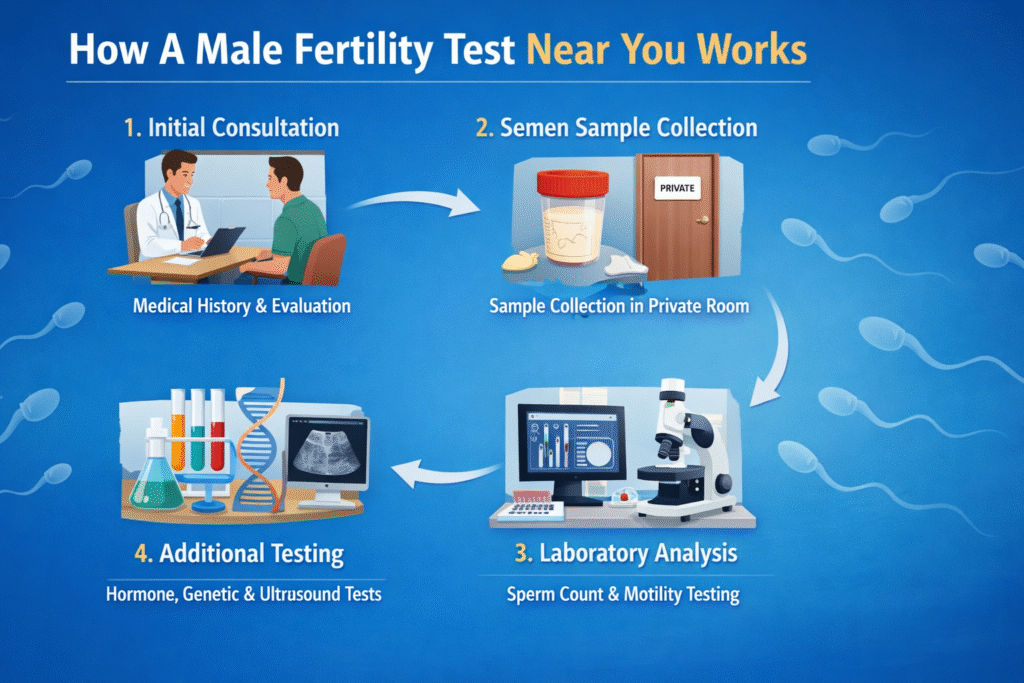
Step 1: Initial Consultation
A healthcare provider reviews medical history, lifestyle habits, medications, and prior reproductive history [9].
Step 2: Semen Sample Collection
Semen is usually collected through masturbation in a private room at a clinic or at home with proper instructions [10]. Samples are analyzed within one hour for accurate results [11].
Step 3: Laboratory Analysis
A semen analysis evaluates:
- Sperm concentration
- Total sperm count
- Motility
- Morphology
- Semen volume
- pH levels
Reference ranges are based on WHO laboratory guidelines [12].
Step 4: Additional Testing If Needed
If abnormalities are detected, doctors may order:
- Hormone testing (FSH, LH, testosterone) [13]
- Genetic tests for chromosomal issues [14]
- Scrotal ultrasound to detect varicocele or obstruction [15]
Importance Of Finding A Male Fertility Test Near You
Early Detection Of Treatable Conditions
Conditions like varicocele, infections, or hormonal imbalance can be treated effectively [16].
Planning For Assisted Reproductive Techniques
Testing helps determine if procedures like in vitro fertilization or intracytoplasmic sperm injection are necessary [17].
Reducing Time To Pregnancy
Early intervention can shorten the time couples spend trying to conceive [18].
Proven Benefits Of Male Fertility Testing
Accurate Diagnosis
Modern semen analysis follows strict laboratory protocols, improving diagnostic reliability [12].
Personalized Treatment Plans
Results allow tailored treatment strategies such as medication, surgery, or assisted reproduction [19].
Emotional Clarity
Testing removes uncertainty and reduces anxiety associated with unexplained infertility [20].
Potential Risks And Limitations
Sample Variability
Semen quality can fluctuate due to stress, illness, or abstinence duration [21].
Psychological Stress
Receiving abnormal results may cause anxiety or relationship strain [22].
False Negatives Or Borderline Results
Some men with normal semen analysis may still experience infertility [23].
Scientific Evidence Supporting Male Fertility Testing
Large clinical studies confirm semen analysis as the cornerstone of male infertility evaluation [24]. Hormonal testing identifies endocrine causes in 2–5 percent of infertile men [25].
Research shows lifestyle changes such as weight loss and smoking cessation significantly improve sperm parameters [26]. Antioxidant supplementation may also improve sperm quality in certain cases [27].
Benefits Vs Risks Comparison
| Benefits | Risks |
|---|---|
| Early detection of fertility issues | Emotional stress |
| Identifies treatable causes | Variability in results |
| Guides assisted reproduction decisions | Possible need for repeat testing |
| Improves pregnancy planning | Financial cost |
Comparison Of Testing Options Near You
| Testing Option | Location | Accuracy | Convenience | Ideal For |
|---|---|---|---|---|
| Clinic Based Semen Analysis | Fertility clinic | High | Moderate | Comprehensive evaluation |
| Hospital Laboratory | Hospital | High | Moderate | Medical supervision |
| At Home Fertility Kits | Home | Moderate | High | Initial screening |
Home kits can be helpful but may not measure morphology or full parameters [28].
Safe Usage Guidelines
Abstinence Period
Maintain 2–7 days of abstinence before testing for accurate results [12].
Avoid Alcohol And Heat Exposure
Heat and alcohol can temporarily reduce sperm quality [29].
Repeat Testing
At least two semen analyses are recommended due to variability [30].
Who Should Avoid Or Delay Testing
Men with recent fever, infection, or surgery should wait at least three months before testing because sperm production cycles last about 74 days [21].
Alternatives To Standard Male Fertility Tests
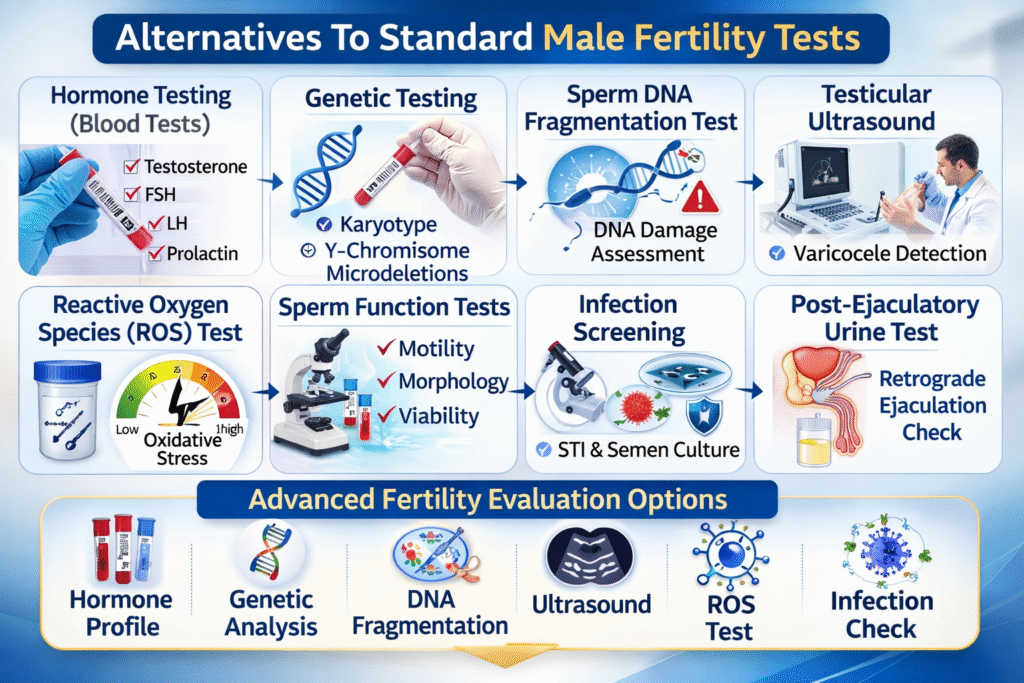
Hormone Testing
Blood tests evaluate endocrine function [13].
Genetic Testing
Identifies chromosomal abnormalities like Klinefelter syndrome [14].
Advanced Sperm Function Tests
DNA fragmentation testing may provide additional insights [23].
Expert Opinions
The World Health Organization considers semen analysis the foundation of male infertility evaluation [12].
The American Society for Reproductive Medicine recommends evaluating both partners simultaneously during infertility assessment [3].
Urology specialists emphasize early testing if pregnancy does not occur after 12 months of unprotected intercourse, or 6 months if the female partner is over 35 [19].
Key Takeaways
- Male infertility contributes to nearly half of infertility cases [1].
- Semen analysis is the primary diagnostic tool [12].
- Lifestyle factors significantly affect sperm health [7].
- Early testing improves treatment success [18].
- Repeat testing ensures accurate assessment [30].
FAQs
How Much Does A Male Fertility Test Near You Cost?
Costs vary by region and facility but typically range from basic semen analysis fees to comprehensive fertility panels. Insurance coverage varies.
How Long Does It Take To Get Results?
Most laboratories provide results within 1–3 days [11].
Can Lifestyle Changes Improve Results?
Yes. Weight management, quitting smoking, and reducing alcohol intake improve sperm quality [26].
Is One Test Enough?
Usually, two tests are recommended to confirm results due to natural variability [30].
Conclusion
Searching for a male fertility test near you is a proactive step toward understanding reproductive health. Male fertility testing provides accurate diagnosis, guides treatment decisions, and helps couples move forward confidently.
With evidence based guidelines from global health authorities, modern diagnostic tools, and personalized treatment strategies, men can address fertility concerns early and effectively. If you have been trying to conceive without success, scheduling a local male fertility evaluation may be the first important step toward building your family.
References
[1] Agarwal A et al. Male infertility prevalence studies.
[2] World Health Organization. Infertility global prevalence report.
[3] American Society for Reproductive Medicine. Infertility evaluation guidelines.
[4] WHO Laboratory Manual for the Examination of Human Semen.
[5] Practice Committee of ASRM. Diagnostic evaluation of infertile male.
[6] National Institute of Child Health and Human Development. Male infertility overview.
[7] Sharma R et al. Lifestyle factors and reproductive health.
[8] Peterson BD et al. Psychological aspects of infertility.
[9] ASRM Committee Opinion. Initial fertility evaluation.
[10] WHO semen collection recommendations.
[11] Clinical Andrology Laboratory Standards.
[12] World Health Organization 2021 Semen Analysis Guidelines.
[13] Handelsman DJ. Hormonal evaluation in male infertility.
[14] Krausz C et al. Genetic causes of male infertility.
[15] European Association of Urology Guidelines on Male Infertility.
[16] Baazeem A et al. Varicocele repair outcomes.
[17] Palermo G et al. Intracytoplasmic sperm injection research.
[18] McLernon DJ et al. Time to pregnancy studies.
[19] American Urological Association Male Infertility Guideline.
[20] Greil AL. Emotional impact of infertility.
[21] Carlsen E et al. Semen variability research.
[22] Cousineau TM et al. Psychological stress and infertility.
[23] Esteves SC et al. Sperm DNA fragmentation studies.
[24] Guzick DS et al. Semen analysis predictive studies.
[25] Jarow JP et al. Endocrine causes of male infertility.
[26] Eisenberg ML et al. Lifestyle and sperm quality.
[27] Showell MG et al. Antioxidants for male infertility.
[28] Agarwal A et al. Home fertility testing accuracy review.
[29] Jung A et al. Heat stress and male fertility.
[30] Keel BA. Within subject semen variability study.