
Dr Ahsan Tariq , MBBS, MRCP (UK ) ongoing, IMT ( Internal Medicine Trainee, NHS England), GMC : 7805049
Dr Ahsan Tariq is a UK-registered medical doctor with a background in internal medicine and a focus on evidence-based research in cognitive health and nootropics. He critically reviews scientific studies, supplements, and ingredients to help readers make informed, safe, and effective choices for brain health and performance.
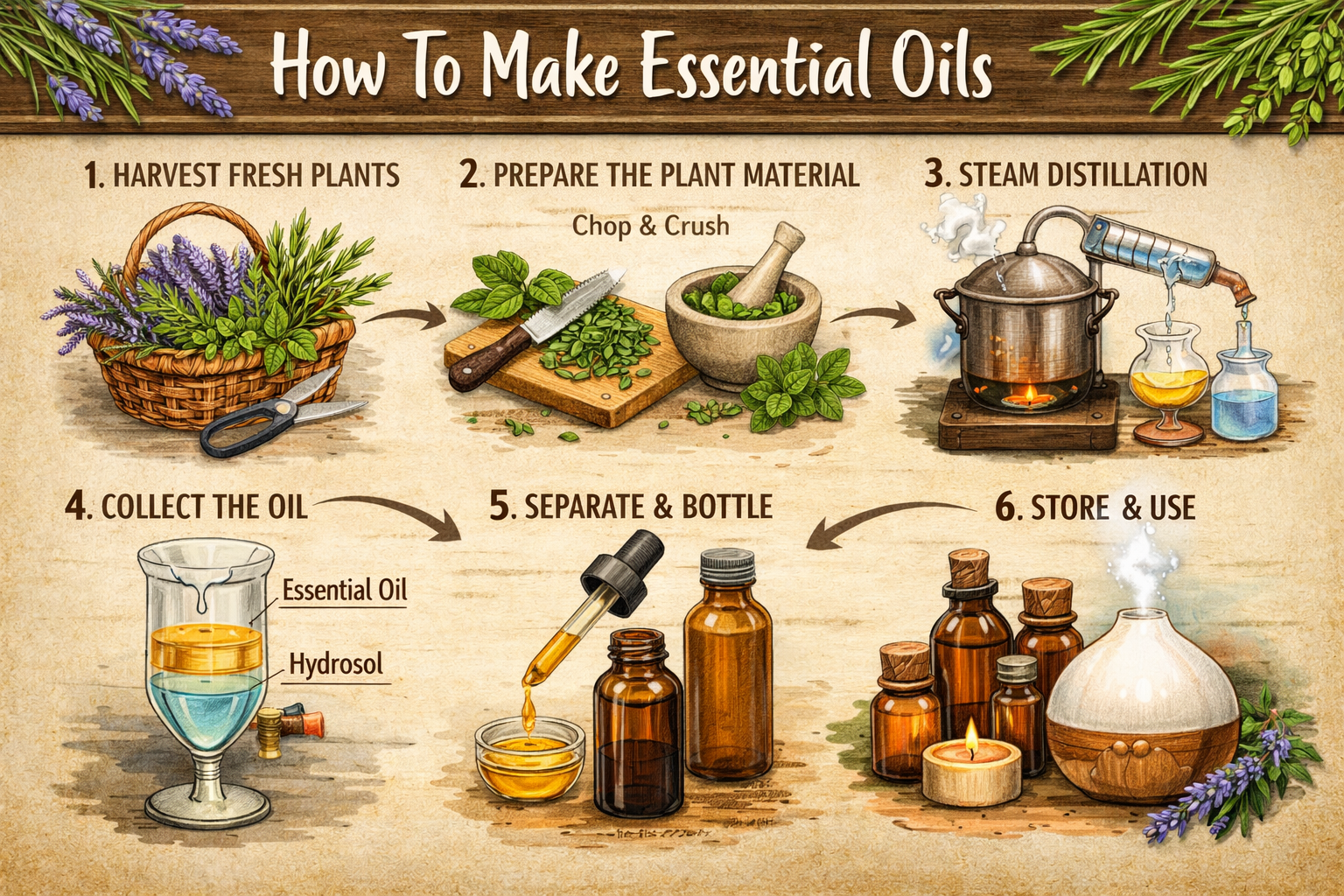
Introduction: How To Make Essential Oils
Interest in natural wellness products has increased dramatically over the past decade, and essential oils have become a central part of this trend. From aromatherapy and personal care to household and wellness applications, essential oils are often associated with plant-based benefits and traditional knowledge. As a result, many people search for information on how to make essential oils to better understand their origin, quality, and safety.
However, essential oils are not simple herbal products. They are highly concentrated substances created through specialized extraction processes that require scientific understanding, technical control, and safety awareness.
Understanding The Topic
Essential oils are volatile aromatic compounds extracted from plants. These compounds are responsible for a plant’s fragrance and many of its biological properties. Essential oils are found in different parts of plants, including flowers, leaves, bark, seeds, roots, and fruit peels [1].
Unlike carrier oils or herbal infusions, essential oils are not fatty oils. They evaporate quickly, are highly concentrated, and can interact with the human body at very low doses. Producing these oils requires methods that separate volatile compounds from plant material while preserving chemical integrity [2].
How It Works
The production of essential oils relies on the physical behavior of volatile organic compounds. When plant material is exposed to controlled heat, pressure, or mechanical force, aromatic molecules are released. These molecules are then captured, condensed, and separated into oil and water phases [3].
Different extraction techniques exist because plant chemistry varies significantly. Factors such as plant species, moisture content, temperature sensitivity, and oil yield determine which method is most effective [4].
Importance
Understanding how essential oils are made is important for several reasons:
- It helps consumers identify pure versus diluted products
- It explains price differences between oils
- It clarifies why some oils are rare or expensive
- It reduces misuse and safety risks
- It supports informed, evidence-based use
Knowledge of production methods also highlights environmental and ethical concerns related to overharvesting and sustainability [5].
Primary Extraction Methods Used To Make Essential Oils
Steam Distillation
Steam distillation is the most widely used method for essential oil production. Steam passes through plant material, causing volatile compounds to evaporate. The vapor is cooled and condensed, separating the essential oil from water [6].
Water Distillation
Water distillation is similar to steam distillation but involves immersing plant material directly in water. This method is often used for delicate flowers that could be damaged by direct steam [7].
Cold Press Extraction
Cold pressing is primarily used for citrus oils. Mechanical pressure ruptures oil glands in the fruit peel, releasing aromatic compounds without heat exposure [8].
Solvent Extraction
Solvent extraction uses food-grade solvents to remove aromatic compounds from plant material. The result is typically an absolute rather than a true essential oil [9].
CO₂ Extraction
Supercritical carbon dioxide extraction uses pressurized CO₂ to extract aromatic compounds at low temperatures. This method preserves heat-sensitive compounds and produces highly concentrated extracts [10].
Comparison Of Essential Oil Extraction Methods
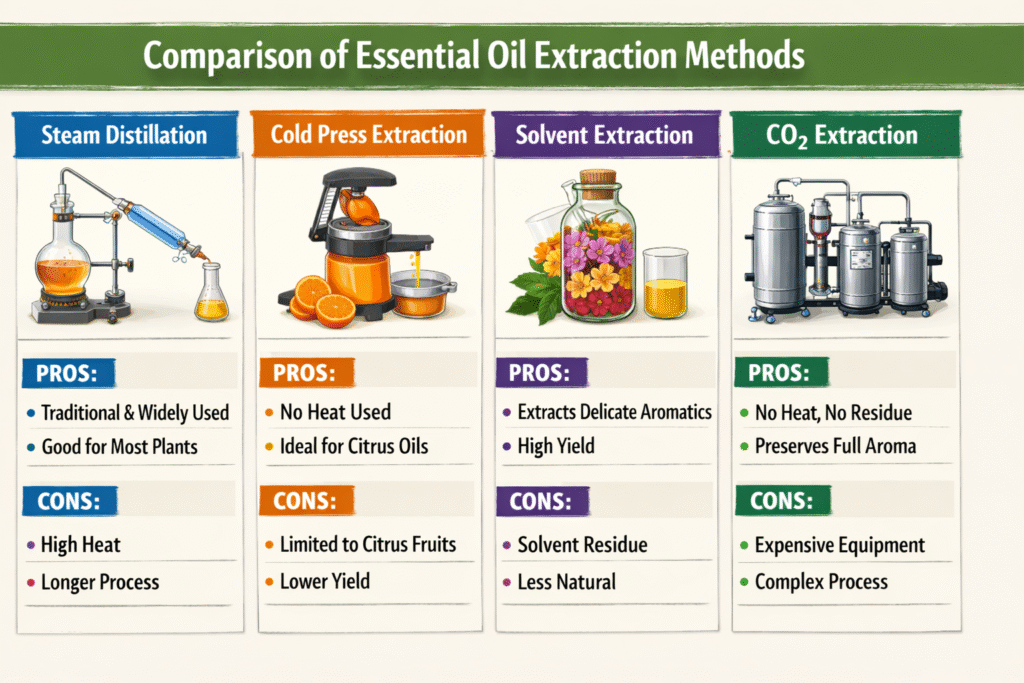
| Method | Heat Exposure | Common Plants | Oil Yield | Purity Level |
|---|---|---|---|---|
| Steam Distillation | Moderate | Lavender, Eucalyptus | Medium | High |
| Water Distillation | Low | Rose, Jasmine | Low | High |
| Cold Press | None | Citrus Peels | High | Moderate |
| Solvent Extraction | None | Delicate Flowers | Very High | Very High |
| CO₂ Extraction | Low | Herbs, Resins | High | Very High |
Importance Of Plant Quality
The chemical profile of an essential oil depends heavily on plant quality. Factors such as soil composition, climate, harvest timing, and storage conditions significantly influence oil composition [11]. Scientific studies show that oils extracted from the same plant species can vary chemically based on geographic origin [12].
Proven Benefits
Research indicates that essential oils may offer several benefits when used appropriately:
- Antimicrobial activity against bacteria and fungi [13]
- Stress and anxiety reduction through inhalation [14]
- Anti-inflammatory effects [15]
- Improved sleep quality [16]
- Support for respiratory comfort [17]
- Enhancement of mood and emotional well-being [18]
Potential Risks
Despite their natural origin, essential oils carry documented risks:
- Skin irritation and sensitization [19]
- Toxic effects if improperly ingested [20]
- Hormonal effects in vulnerable populations [21]
- Respiratory irritation in sensitive individuals [22]
- Environmental damage due to overharvesting [23]
Scientific Evidence
According to a 2017 systematic review, many essential oils exhibit antimicrobial properties in laboratory settings [24]. Clinical studies also suggest aromatherapy may reduce anxiety and improve subjective well-being in specific populations [25]. However, researchers consistently emphasize the importance of controlled use and proper dilution [26].
Benefits Vs Risks Comparison
| Benefits | Risks |
|---|---|
| Plant-derived bioactive compounds | Skin sensitization |
| Aromatherapeutic effects | Toxicity with misuse |
| Antimicrobial potential | Not suitable for everyone |
| Psychological well-being support | Environmental concerns |
Safe Usage Guidelines
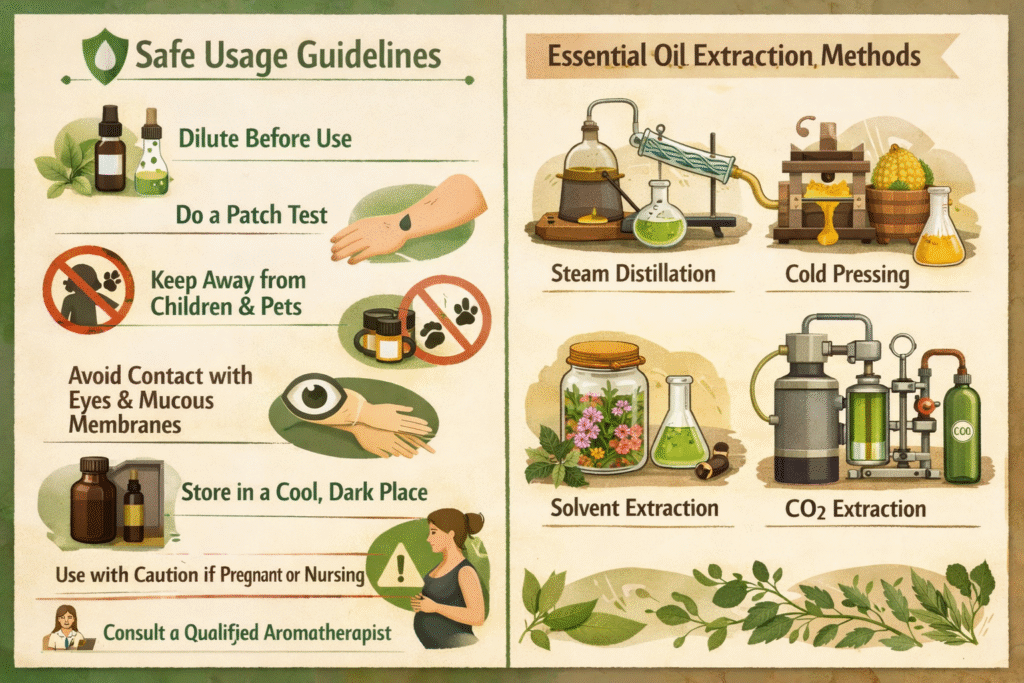
Scientific and professional organizations recommend the following:
- Essential oils should always be diluted before topical use [27]
- Ingestion should only occur under qualified supervision [20]
- Patch testing is necessary to assess skin sensitivity [19]
- Oils should be stored in dark, airtight containers [28]
- Use around children and pets requires special caution [21]
Who Should Avoid It
Essential oils may not be appropriate for:
- Pregnant individuals [29]
- Infants and young children [21]
- People with asthma or chronic respiratory conditions [22]
- Individuals with liver or kidney disorders [30]
Alternatives
For those seeking lower-risk options, alternatives include:
- Herbal infused oils
- Hydrosols
- Botanical extracts
- Professionally formulated aromatherapy products
These options provide aromatic and botanical benefits with reduced concentration risks [11].
Expert Opinions
Aromatherapy experts emphasize that essential oil production is a technical process requiring specialized equipment and training. Professional guidelines advise that educational understanding is more appropriate for consumers than attempting independent production [26].
Key Takeaways
- Essential oils are highly concentrated plant extracts
- Multiple extraction methods exist based on plant chemistry
- Benefits are supported by scientific research
- Risks are real and documented
- Understanding production improves safe and informed use
FAQs
Are essential oils the same as infused oils?
No. Essential oils are volatile extracts, while infused oils contain plant material steeped in carrier oils.
Can essential oils be made without technical equipment?
True essential oils require specialized extraction processes and controlled conditions.
Are essential oils always safe because they are natural?
No. Natural substances can still be potent and require careful handling.
Conclusion
Understanding how to make essential oils involves far more than a simple process. It requires knowledge of plant chemistry, extraction science, safety principles, and environmental responsibility. While essential oils offer scientifically supported benefits, improper handling or misunderstanding of their potency can pose risks. Education, quality awareness, and evidence-based use remain the foundation of safe and effective engagement with essential oils.
References
- Plant Volatile Compounds Review [1]
- Essential Oil Chemistry Overview [2]
- Aromatic Compound Behavior [3]
- Extraction Methodology Analysis [4]
- Sustainable Botanical Harvesting [5]
- Steam Distillation Science [6]
- Water Distillation Techniques [7]
- Citrus Oil Processing Studies [8]
- Solvent Extraction Review [9]
- CO₂ Extraction Technology [10]
- Botanical Quality Studies [11]
- Geographic Chemotype Research [12]
- Antimicrobial Activity Review [13]
- Aromatherapy And Anxiety Meta-Analysis [14]
- Anti-Inflammatory Effects Review [15]
- Sleep Improvement Studies [16]
- Respiratory Health Research [17]
- Mood Enhancement Trials [18]
- Skin Sensitization Evidence [19]
- Essential Oil Toxicology [20]
- Pediatric Safety Research [21]
- Respiratory Sensitivity Studies [22]
- Environmental Impact Reports [23]
- Antimicrobial Review 2017 [24]
- Clinical Aromatherapy Evidence [25]
- Professional Aromatherapy Guidelines [26]
- Dilution Safety Standards [27]
- Storage Stability Research [28]
- Pregnancy Safety Studies [29]
- Organ Toxicity Review [30]