
Dr Ahsan Tariq , MBBS, MRCP (UK ) ongoing, IMT ( Internal Medicine Trainee, NHS England), GMC : 7805049
Dr Ahsan Tariq is a UK-registered medical doctor with a background in internal medicine and a focus on evidence-based research in cognitive health and nootropics. He critically reviews scientific studies, supplements, and ingredients to help readers make informed, safe, and effective choices for brain health and performance.
Introduction
High blood pressure, also known as hypertension, is one of the most common and serious health concerns worldwide. It often develops silently, showing no noticeable symptoms while progressively increasing the risk of heart disease, stroke, kidney failure, and other chronic conditions. According to global health data, millions of adults live with uncontrolled blood pressure without realizing the long-term consequences [1].
Learning how to control blood pressure naturally has become increasingly important as people seek safer, sustainable, and cost-effective approaches alongside or before medication. Natural strategies focus on addressing root causes such as diet, physical inactivity, stress, and poor sleep rather than only managing symptoms.
This comprehensive guide explains how blood pressure works, why natural control matters, and which evidence-based methods are proven to help. The information is presented clearly for beginners while remaining scientifically accurate and aligned with current medical research.
Understanding The Topic
What Is Blood Pressure
Blood pressure is the force exerted by circulating blood against the walls of the arteries. It is measured using two numbers: systolic pressure, which reflects the force during heartbeats, and diastolic pressure, which reflects the force between beats. Normal blood pressure is generally considered to be below 120/80 mmHg [2].
When blood pressure remains elevated over time, it places excessive strain on blood vessels and vital organs, increasing the likelihood of cardiovascular complications.
Types Of High Blood Pressure
Primary hypertension develops gradually over many years and has no single identifiable cause. Secondary hypertension results from underlying conditions such as kidney disease, hormonal disorders, or medication use [3]. Natural control strategies are most effective for primary hypertension and as supportive measures for secondary hypertension under medical supervision.
How It Works
How Lifestyle Influences Blood Pressure
Blood pressure is closely linked to daily habits. Diets high in sodium, low physical activity, chronic stress, excess body weight, and poor sleep all disrupt vascular function and hormonal regulation [4]. These factors cause arteries to stiffen and narrow, forcing the heart to work harder.
Natural blood pressure control works by improving blood vessel flexibility, reducing fluid retention, lowering inflammation, and supporting heart function through sustainable lifestyle adjustments.
Importance Of Controlling Blood Pressure Naturally
Why Natural Management Matters
While medications are effective, they may cause side effects such as dizziness, electrolyte imbalances, or fatigue [5]. Natural methods empower individuals to take control of their health, reduce dependency on drugs, and improve overall well-being.
Early lifestyle intervention can delay or even prevent the need for medication, particularly in individuals with mildly elevated blood pressure [6].
Proven Benefits Of Natural Blood Pressure Control
Cardiovascular Protection
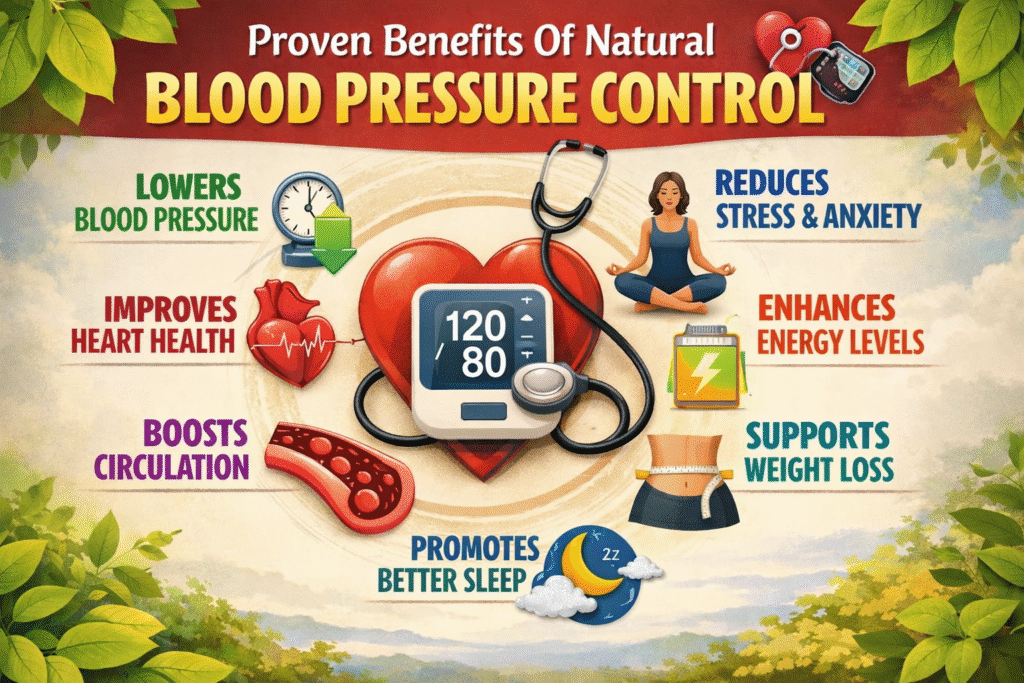
Natural interventions such as improved diet and exercise significantly reduce the risk of heart attacks and strokes by lowering arterial pressure and improving lipid profiles [7].
Improved Kidney Health
Healthy blood pressure preserves kidney function by reducing damage to delicate filtration structures [8].
Better Metabolic Health
Lifestyle-based blood pressure control often leads to improved insulin sensitivity and weight management, lowering the risk of type 2 diabetes [9].
Long-Term Sustainability
Unlike short-term medication use, natural strategies promote habits that support lifelong health and disease prevention [10].
Potential Risks
Delaying Necessary Medical Treatment
Relying solely on natural methods without monitoring can be risky for individuals with severely elevated blood pressure [11].
Inconsistent Results
Lifestyle changes require consistency. Irregular adherence may lead to fluctuating blood pressure levels [12].
Supplement Misuse
Certain supplements marketed for blood pressure control may interact with medications or cause adverse effects if used improperly [13].
Scientific Evidence Supporting Natural Blood Pressure Control
Dietary Approaches
The DASH diet has been shown to significantly lower systolic and diastolic blood pressure in controlled trials [14]. Reducing sodium intake while increasing potassium-rich foods improves vascular balance [15].
Physical Activity
Aerobic exercise such as walking, cycling, and swimming consistently lowers blood pressure by improving heart efficiency and arterial elasticity [16].
Weight Management
Weight loss is strongly correlated with blood pressure reduction, with even modest losses producing measurable benefits [17].
Stress Reduction
Mindfulness, meditation, and breathing exercises lower stress hormones that contribute to hypertension [18].
Comparison Table: Natural Methods Vs Medication
| Aspect | Natural Methods | Medication |
|---|---|---|
| Cost | Low to moderate | Ongoing expense |
| Side effects | Minimal when done correctly | Possible adverse effects |
| Sustainability | Long-term lifestyle change | Requires continuous use |
| Additional health benefits | Improves overall health | Primarily targets blood pressure |
| Medical supervision | Recommended | Required |
Benefits Vs Risks Comparison Table
| Benefits | Risks |
|---|---|
| Improved heart health | Delayed treatment in severe cases |
| Fewer side effects | Requires strong commitment |
| Enhanced quality of life | Supplement misuse |
| Long-term disease prevention | Variable results |
Safe Usage Guidelines
Monitor Blood Pressure Regularly
Home blood pressure monitoring helps track progress and detect dangerous elevations early [19].
Combine Multiple Strategies
Diet, exercise, stress management, and sleep improvement work best when combined rather than used alone [20].
Consult Healthcare Providers
Medical guidance is essential, especially for individuals already diagnosed with hypertension or taking medication [21].
Who Should Avoid Natural-Only Approaches
High-Risk Individuals
People with advanced hypertension, cardiovascular disease, or kidney disorders should not replace prescribed treatment with lifestyle methods alone [22].
Pregnant Individuals
Blood pressure changes during pregnancy require specialized medical care and should not be self-managed [23].
Alternatives And Complementary Options
Medication With Lifestyle Support
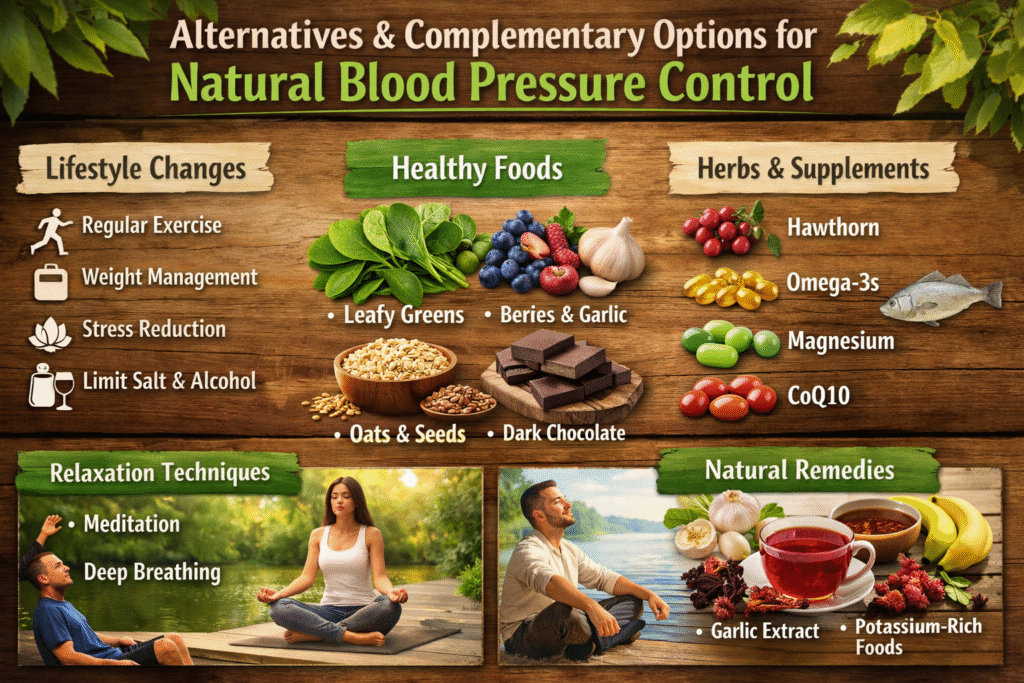
Combining medication with natural strategies often yields superior outcomes compared to either approach alone [24].
Structured Health Programs
Supervised nutrition and exercise programs provide accountability and personalized guidance [25].
Expert Opinions
Cardiology experts consistently emphasize that lifestyle modification is the foundation of hypertension management. According to major cardiovascular organizations, healthy diet and physical activity are first-line interventions for blood pressure control [26].
Clinical researchers highlight that natural strategies not only lower blood pressure but also reduce overall cardiovascular risk more effectively than medication alone [27].
Key Takeaways
- Natural blood pressure control addresses root causes rather than symptoms
- Consistent lifestyle changes can significantly lower blood pressure
- Diet, exercise, stress management, and sleep are essential pillars
- Medical supervision remains crucial for high-risk individuals
- Long-term commitment delivers the best results
FAQs
Can blood pressure be controlled naturally without medication
Mild to moderate hypertension can often be managed through lifestyle changes, but medical evaluation is essential [28].
How long does it take to see results
Some improvements may occur within weeks, while long-term benefits develop over months of consistent effort [29].
Are supplements necessary
Supplements are not required and should only be used under professional guidance [30].
Conclusion
Understanding how to control blood pressure naturally empowers individuals to take proactive steps toward long-term cardiovascular health. Scientific evidence strongly supports lifestyle-based strategies such as dietary improvement, physical activity, stress reduction, and weight management as effective tools for lowering blood pressure.
While natural approaches offer significant benefits, they should be applied responsibly and in coordination with healthcare professionals when necessary. With consistent effort and informed choices, natural blood pressure control can lead to improved health, reduced disease risk, and a better quality of life.
References
- World Health Organization Hypertension Overview
- American Heart Association Blood Pressure Guidelines
- National Heart Lung and Blood Institute Hypertension Types
- Journal of Hypertension Lifestyle Factors
- Mayo Clinic Blood Pressure Medications
- Hypertension Research Early Intervention
- Circulation Cardiovascular Outcomes
- Kidney International Blood Pressure Studies
- Diabetes Care Blood Pressure And Metabolism
- Preventive Medicine Lifestyle Sustainability
- British Medical Journal Hypertension Risks
- American Journal of Medicine Adherence Studies
- Journal of Clinical Pharmacology Supplements
- New England Journal of Medicine DASH Diet
- Hypertension Sodium And Potassium Balance
- Sports Medicine Exercise And Blood Pressure
- Obesity Reviews Weight Loss Effects
- JAMA Internal Medicine Stress Reduction
- American Heart Association Home Monitoring
- Lancet Lifestyle Interventions
- Cleveland Clinic Hypertension Management
- European Heart Journal High Risk Patients
- Obstetrics And Gynecology Blood Pressure
- Annals of Internal Medicine Combined Therapy
- Public Health Nutrition Structured Programs
- American College of Cardiology Expert Consensus
- Nature Reviews Cardiology Lifestyle Evidence
- Family Practice Hypertension Management
- Journal of Human Hypertension Timeline Studies
- National Institutes of Health Dietary Supplements