
Dr Ahsan Tariq , MBBS, MRCP (UK ) ongoing, IMT ( Internal Medicine Trainee, NHS England), GMC : 7805049
Dr Ahsan Tariq is a UK-registered medical doctor with a background in internal medicine and a focus on evidence-based research in cognitive health and nootropics. He critically reviews scientific studies, supplements, and ingredients to help readers make informed, safe, and effective choices for brain health and performance.
Introduction
In today’s fast-paced world, digestive issues like bloating, indigestion, and irregular bowel movements affect millions of people. Many are turning to natural solutions, such as herbal digestive supplements, to alleviate these problems without relying solely on pharmaceutical drugs. These supplements, derived from plants like ginger, peppermint, and fennel, have been used for centuries in traditional medicine systems around the globe. But what exactly makes an herbal digestive supplement effective? This comprehensive guide explores everything you need to know about herbal digestive supplements, from their basic understanding to scientific backing and practical advice.
Herbal digestive supplements are formulated to support the gastrointestinal system, promoting better nutrient absorption, reducing inflammation, and balancing gut flora. With growing interest in holistic health, the market for these products has exploded, but not all supplements are created equal. It’s crucial to approach them with knowledge, especially considering potential interactions and varying quality standards. According to a 2015 study [4], many consumers use herbal digestive supplements without full awareness of their implications, highlighting the need for education.
This article will guide you through the awareness stage by explaining what these supplements are, how they work, and their importance. We’ll then delve into benefits and risks, supported by evidence, and provide actionable tips for safe use. By the end, you’ll have a clear picture of whether an herbal digestive supplement is right for you.
Understanding the Topic
Herbal digestive supplements encompass a wide range of plant-based products designed to aid digestion. These can include single herbs like turmeric or blends combining multiple ingredients for synergistic effects. Common forms are capsules, teas, powders, or tinctures, making them accessible for daily use.
For beginners, digestion involves breaking down food into nutrients the body can absorb. The process starts in the mouth and continues through the stomach, small intestine, and colon, involving enzymes, acids, and beneficial bacteria. When this system is disrupted due to diet, stress, or illness symptoms like constipation or acid reflux arise. An herbal digestive supplement aims to restore balance naturally.
Key herbs in these supplements include ginger (Zingiber officinale), which soothes nausea; peppermint (Mentha piperita), known for relaxing intestinal muscles; and fennel (Foeniculum vulgare), which reduces gas. These plants contain bioactive compounds like gingerols, menthol, and anethole, respectively, that interact with the digestive tract. A review from 2023 [1] emphasizes how these compounds modulate gut function without the harsh side effects of some synthetic drugs.
It’s important to note that while herbal digestive supplements are natural, they aren’t inherently safe for everyone. Quality varies, and contamination can occur, as noted in a US perspective study. Understanding labels, sourcing from reputable brands, and consulting healthcare providers are essential steps.
How it Works
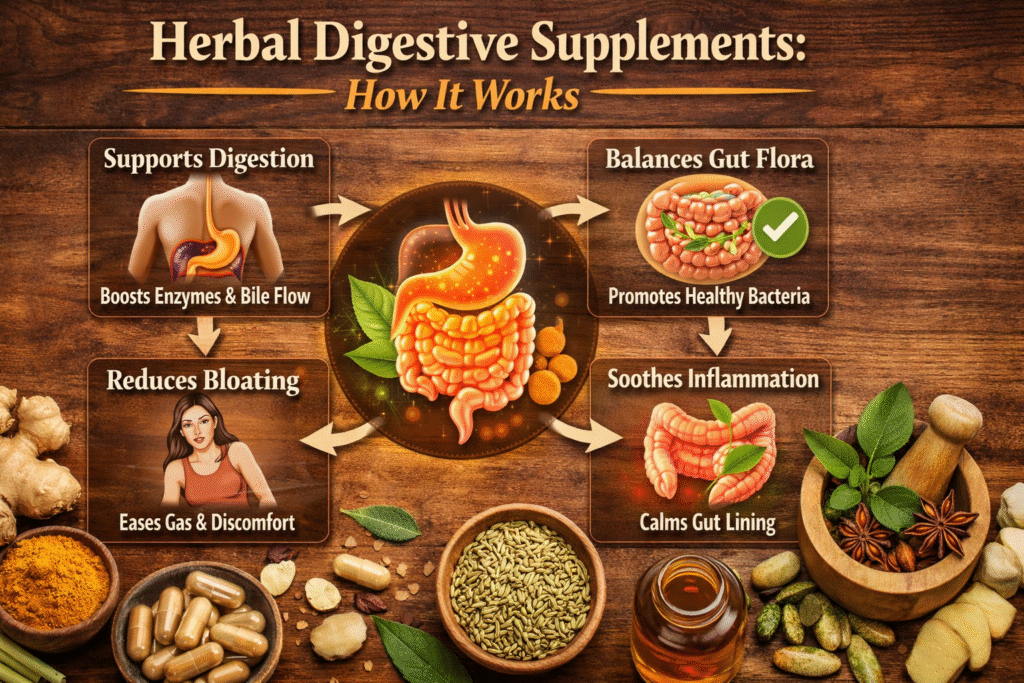
Herbal digestive supplements work through multiple mechanisms to support gut health. Primarily, they enhance enzyme production, reduce inflammation, and promote microbial balance in the intestines.
For instance, enzymes in herbs like papaya or pineapple (containing papain and bromelain) help break down proteins and fats, easing digestion. Anti-inflammatory agents in turmeric (curcumin) inhibit pathways that cause gut irritation, as shown in a 2023 frontier study [1]. Probiotic-like effects from prebiotic herbs, such as slippery elm, foster beneficial bacteria growth, improving overall microbiome health [13].
On a cellular level, these supplements interact with receptors in the gut lining, modulating motility and secretion. Ginger, for example, stimulates gastric emptying, reducing bloating [12]. Licorice root soothes mucous membranes, protecting against acid damage [5].
Scientific accuracy is key: while traditional use supports these actions, modern studies confirm them via in vitro and in vivo models. A 2018 PMC article [13] details how herbs like triphala alter gut bacterial communities, increasing short-chain fatty acid production for better colon health.
Importance
The importance of herbal digestive supplements lies in their role in preventive health and managing chronic issues. With digestive disorders affecting up to 70 million Americans annually, natural options offer a gentler alternative [2].
They address root causes rather than just symptoms, promoting long-term wellness. For example, in a world of processed foods, these supplements can replenish depleted nutrients and support detoxification. Their antioxidant properties combat oxidative stress in the gut, linked to diseases like IBS [3].
Moreover, as antibiotic resistance rises, herbal digestive supplements provide antimicrobial benefits without disrupting flora, as per a 2023 review [7]. Economically, they reduce healthcare costs by minimizing doctor visits for minor ailments [6].
Proven Benefits
Herbal digestive supplements offer numerous proven benefits, backed by research. They improve motility, reduce inflammation, and enhance nutrient uptake.
One key benefit is alleviating IBS symptoms. Peppermint oil has shown in RCTs to reduce abdominal pain by 40-50% [20]. Ginger aids nausea and vomiting, effective for motion sickness and pregnancy [23].
For constipation, psyllium increases fiber intake, softening stools [21]. Turmeric’s anti-inflammatory effects help with ulcerative colitis, improving remission rates [24].
Probiotic-enhancing herbs like chamomile support microbiome diversity, boosting immunity [18]. A meta-analysis [16] found ginseng and similar herbs lower blood sugar, aiding diabetic digestion.
Overall, these benefits make herbal digestive supplements a valuable tool for gut health [14].
Potential Risks
Despite benefits, potential risks exist. Hepatotoxicity is a concern; green tea extract has caused liver injury in high doses [4].
Interactions with medications are common. St. John’s wort affects drug metabolism [6]. Allergic reactions, like to chamomile, can occur [22].
Contamination with heavy metals or adulterants poses risks [3]. Overuse leads to dependency or electrolyte imbalance [26].
Pregnant women face specific dangers; some herbs induce contractions [5]. A 2022 review [11] highlights increasing DILI from multi-ingredient supplements.
Scientific Evidence
Scientific evidence for herbal digestive supplements is growing. A systematic review [16] on glycemic control found positive effects from herbs like American ginseng.
For gut disorders, a 2020 PMC study [20] showed herbal preparations control FGID targets safely. Prebiotic potential was confirmed in a 2018 study [13], with herbs altering microbiota beneficially.
Hepatotoxicity risks are documented [4], with case series on ashwagandha [4]. Efficacy in non-life-threatening ailments was reviewed in 2023 [1], showing over 80% positive outcomes for GI issues.
Multiple RCTs support peppermint for IBS [20], and triphala for microbial balance [13].
Benefits vs Risks Comparison
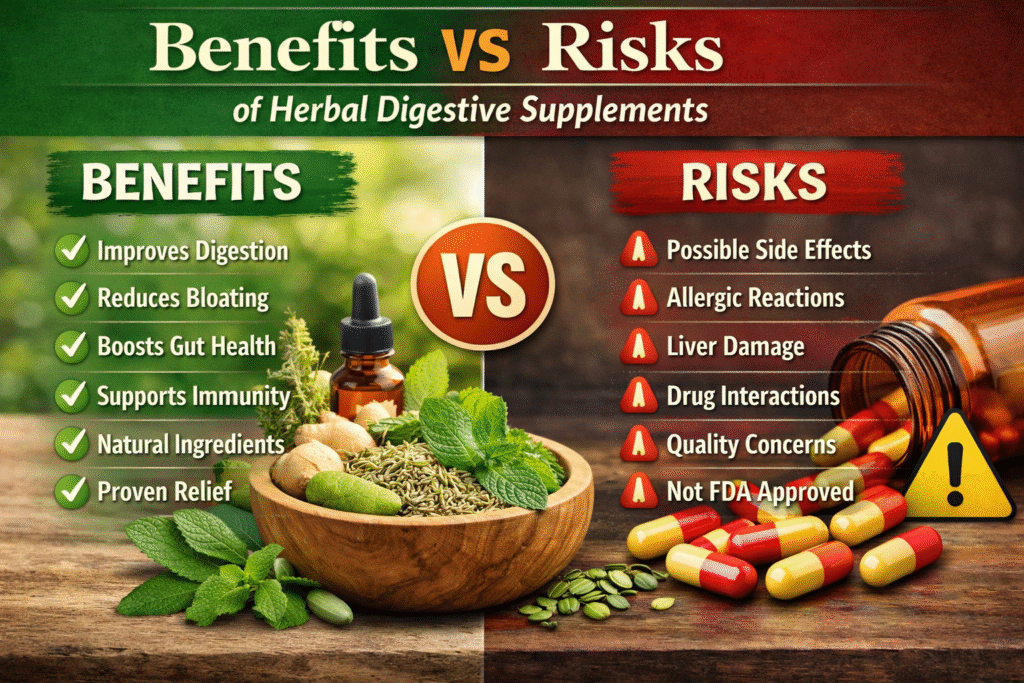
Here’s a benefits vs risks table for common herbal digestive supplements:
| Herb | Benefits | Risks |
|---|---|---|
| Ginger | Reduces nausea, improves motility [12] | Stomach upset in high doses [8] |
| Peppermint | Relieves IBS pain, relaxes muscles [20] | Heartburn aggravation [9] |
| Fennel | Reduces gas, bloating [21] | Allergic reactions [22] |
| Turmeric | Anti-inflammatory for colitis [24] | Liver issues at high doses [4] |
| Chamomile | Soothes gut, aids sleep [18] | Interactions with blood thinners [5] |
This table illustrates the need for balanced use [10].
Safe Usage Guidelines
For safe use of herbal digestive supplements, start low and go slow. Consult a doctor, especially if on medications.
Choose third-party tested products for purity [2]. Dosage: Follow labels; e.g., 1g ginger daily [12].
Monitor for side effects; discontinue if adverse [8]. Combine with diet: High-fiber meals enhance effects [14].
Store properly to maintain potency [7].
Who Should Avoid It
Certain groups should avoid herbal digestive supplements. Pregnant or breastfeeding women, due to risks like uterine stimulation [5].
Those with liver disease; hepatotoxic herbs exacerbate issues [4]. Allergy sufferers to Asteraceae family avoid chamomile [22].
Children under 12, unless prescribed [15]. People on anticoagulants skip ginkgo or garlic [6].
Alternatives

Alternatives include probiotics, which restore gut bacteria [27]. Fiber supplements like psyllium are non-herbal options [21].
Lifestyle changes: Yoga for motility [19]. Prescription meds for severe cases [20].
Enzyme supplements like lactase for intolerances [17].
Expert Opinions
Experts like Dr. Melissa Young emphasize caution with interactions [8]. NIH notes insufficient evidence for some claims [2].
Gastroenterologists recommend evidence-based herbs like peppermint [20]. A 2023 review [7] highlights integrating tradition with science.
Key Takeaways
- Herbal digestive supplements aid gut health naturally [1].
- Benefits include reduced bloating; risks involve interactions [3].
- Consult professionals for safe use [2].
- Evidence supports specific herbs [16].
FAQs
What is the best herbal digestive supplement? Determining the best herbal digestive supplement depends on individual needs, but peppermint oil stands out for its efficacy in managing irritable bowel syndrome (IBS) symptoms. According to clinical trials, it relaxes intestinal muscles, reducing pain and bloating by up to 50% in participants [20]. For general digestion, ginger is another top choice, as it accelerates gastric emptying and combats nausea effectively [12]. Always select products from reputable brands with third-party testing to ensure purity and potency, and consult a healthcare provider to match the supplement to your specific digestive concerns [2].
Are herbal digestive supplements safe for daily use? Herbal digestive supplements can be safe for daily use when taken in recommended doses, but individual tolerance varies based on health status and interactions. Studies indicate that herbs like fennel and chamomile support ongoing gut health without significant issues for most adults [21, 18]. However, monitoring for side effects such as mild stomach upset is essential, and long-term use should be supervised by a professional [8]. Quality control is key; opting for certified organic or USP-verified products minimizes risks of contamination [3].
Can herbal digestive supplements replace prescription medications? Herbal digestive supplements should not replace prescription medications but can complement them under medical guidance. For conditions like acid reflux or IBS, herbs like turmeric may reduce inflammation similarly to some drugs, but they lack the potency for severe cases [24, 20]. Research shows they work best as adjunct therapies, potentially lowering reliance on synthetics over time [6]. Discuss with your doctor to avoid interactions, as some herbs can alter drug metabolism [5].
Do herbal digestive supplements help with weight loss? Some herbal digestive supplements may aid weight loss indirectly by improving digestion and reducing bloating, but they are not a primary solution. For instance, berberine has been linked to better blood sugar control and fat metabolism in studies, potentially supporting weight management [28]. Herbs like psyllium increase fiber intake, promoting satiety and regular bowel movements [21]. However, sustainable weight loss requires a balanced diet and exercise; supplements alone yield modest results and should be part of a holistic approach [14].
What are the common side effects of herbal digestive supplements? Common side effects of herbal digestive supplements include gastrointestinal discomfort such as heartburn, diarrhea, or nausea, particularly with overuse. For example, high doses of ginger or peppermint can exacerbate acid reflux in sensitive individuals [9, 12]. Allergic reactions are possible, especially with herbs from the Asteraceae family like chamomile [22]. To minimize risks, start with low doses and track symptoms, discontinuing if adverse effects occur, as highlighted in safety reviews [4, 11].
Conclusion
Herbal digestive supplements offer a promising natural approach to digestive health, with benefits outweighing risks for many when used wisely. From understanding their mechanisms to weighing evidence, this guide equips you for informed decisions. Always prioritize safety and consult experts.
References
[1] Current State of Research on the Clinical Benefits of Herbal Medicines for Non-Life-Threatening Ailments. Frontiers in Pharmacology.
[2] Herbal Supplements. StatPearls, NCBI Bookshelf.
[3] Health Risks of Herbal Medicine in the US: Recommendations to Improve Awareness and Advance Safety.
[4] Hidden Dangers: Herbal and Dietary Supplement Induced Hepatotoxicity.
[5] Safety Concerns of Dietary and Herbal Supplements for Typical Patients.
[6] Exploring the Benefits, Risks, and Clinical Implications of Herbal Supplements. Pharmacy Times.
[7] Exploring the Safety, Efficacy, and Bioactivity of Herbal Medicines: Bridging Traditional Wisdom and Modern Science in Healthcare.
[8] Herbal Supplements: Are They Safe? Cleveland Clinic.
[9] Herbal Remedies and Their Gastrointestinal Side Effects: An In-Depth Analysis.
[10] Impact of Herbal Medicine on Human Health.
[11] A Comprehensive Review on the Use of Herbal Dietary Supplements in the USA and Potential Hepatotoxicity.
[12] Herbal Digestive Powder: A Comprehensive Review on Composition, Mechanisms, and Clinical Efficacy.
[13] Prebiotic Potential of Herbal Medicines Used in Digestive Health and Disease.
[14] Dietary Supplements: A Critical Review of Their Benefits and Risks in the Public Health Context.
[15] The Use of Medicinal Plants in Digestive System Related Disorders: A Systematic Review.
[16] Systematic Review of Herbs and Dietary Supplements for Glycemic Control in Diabetes.
[17] A Multi-Digestive Enzyme and Herbal Dietary Supplement Reduces Bloating in Healthy Adults.
[18] Herbal Medicine for Gut Health: Integrating Traditional Practices with Modern Science.
[19] Dietary Supplements: Are These 14 Common Vitamins and Supplements Beneficial or a Waste of Money?
[20] Herbal Therapies in Functional Gastrointestinal Disorders: A Narrative Review and Clinical Implication.
[21] Medicinal Plants in Food Supplements for Gastrointestinal Disorders: Critical Assessment of Health Claims.
[22] Parents’ Preferences for Herbal Supplements in Managing Functional Gastrointestinal Disorders.
[23] 9 Popular Herbal Medicines: Benefits and Uses.
[24] Herbal Approaches to Gastrointestinal Disorders: Integrating Tradition and Science.
[25] Clinical Implications of Herbal Supplements in Conventional Medical Practice: A US Perspective.
[26] Should You Try a Parasite Cleanse? The Truth About This Gut Health Trend.
[27] The Role of Probiotics in Digestive Health.
[28] What to Know About Berberine, the So-Called “Nature’s Ozempic”.
[29] Clinical Implications of Herbal Supplements in Conventional Medical Practice: A US Perspective (PMC).