
Dr Ahsan Tariq , MBBS, MRCP (UK ) ongoing, IMT ( Internal Medicine Trainee, NHS England), GMC : 7805049
Dr Ahsan Tariq is a UK-registered medical doctor with a background in internal medicine and a focus on evidence-based research in cognitive health and nootropics. He critically reviews scientific studies, supplements, and ingredients to help readers make informed, safe, and effective choices for brain health and performance.
Introduction: Glucose Monitor For Dogs
Diabetes mellitus is one of the most common endocrine disorders in dogs, particularly affecting middle-aged and older pets. It is a chronic condition where the dog’s body cannot properly regulate blood glucose due to insufficient insulin production or poor insulin response [1]. High blood glucose levels can cause serious complications if left unmanaged, including cataracts, kidney issues, nerve damage, and diabetic ketoacidosis a life-threatening condition [2].
Monitoring blood glucose is essential for preventing these complications and ensuring a diabetic dog maintains a good quality of life. Just like in humans, early detection and careful monitoring allow for better insulin management and help reduce hospital visits. According to the American Animal Hospital Association (AAHA), home monitoring of blood glucose in dogs is now considered standard practice for effective diabetes management [3].
A glucose monitor for dogs can be a portable glucometer, a continuous glucose monitoring system (CGM), or a flash glucose monitor. Each device provides insights into a dog’s glucose patterns, allowing owners and veterinarians to make informed decisions about insulin dosing, diet, and lifestyle. In this guide, we’ll explore everything a pet owner needs to know about glucose monitoring in dogs, including how it works, benefits, potential risks, safe usage, alternatives, expert advice, and FAQs.
Understanding Glucose Monitoring in Dogs
What is Canine Diabetes?
Canine diabetes mellitus is primarily an insulin-dependent condition. Unlike most humans who develop Type 2 diabetes, dogs usually develop a condition similar to human Type 1 diabetes, where the pancreas does not produce enough insulin due to beta-cell destruction [4].
Symptoms of canine diabetes include:
- Excessive thirst and urination (polydipsia and polyuria)
- Increased appetite with weight loss
- Lethargy
- Cloudy eyes due to cataract formation
If unmanaged, diabetes can lead to complications such as diabetic ketoacidosis (DKA), infections, neuropathy, and organ damage [5].
Why Monitoring Matters
Glucose monitoring helps:
- Prevent hypoglycemia (dangerously low blood sugar) caused by insulin overdosing.
- Avoid hyperglycemia (high blood sugar) which can damage organs over time.
- Adjust insulin doses precisely for individual dogs.
- Reduce stress caused by frequent veterinary visits for glucose curves.
Research demonstrates that dogs whose owners actively monitor glucose at home achieve better glycemic control, fewer emergency hospitalizations, and improved life expectancy [6].
Types of Glucose Monitoring
- Traditional Blood Glucometers – Handheld devices measuring glucose from a small blood sample, usually taken from the ear or paw pad.
- Continuous Glucose Monitors (CGMs) – Sensors inserted under the skin that continuously measure interstitial glucose and provide real-time data.
- Flash Glucose Monitoring – Similar to CGM but requires the owner to scan the sensor to get readings.
Veterinary-calibrated glucometers are preferred because human meters may be inaccurate for dogs due to differences in hematocrit levels and plasma distribution [7].
How a Glucose Monitor for Dogs Works
Traditional Blood Glucometers
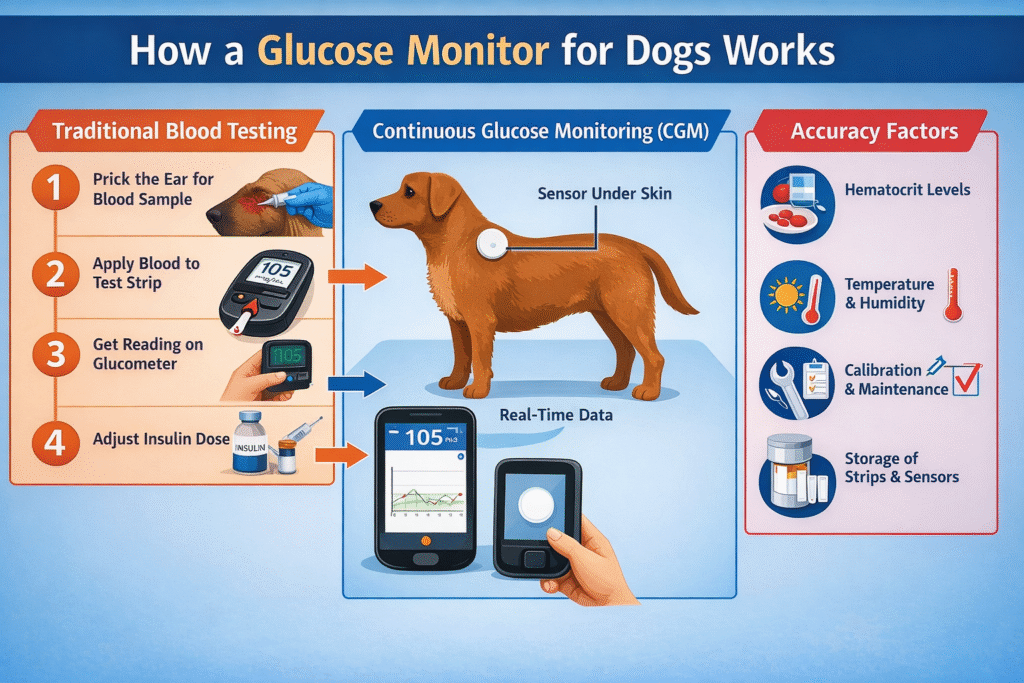
Traditional monitoring involves pricking a small area (ear or lip) to collect a drop of blood, placing it on a test strip, and inserting it into the glucometer. The device uses enzymatic reactions to measure glucose levels [8].
- Step 1: Prepare the lancet and glucometer.
- Step 2: Gently prick the ear or paw pad.
- Step 3: Place a drop of blood on the test strip.
- Step 4: Wait a few seconds for the device to display the reading.
Repeated sampling allows the owner and veterinarian to track trends and adjust insulin accordingly.
Continuous Glucose Monitoring (CGM)
CGMs use a small sensor inserted under the dog’s skin, typically between the shoulder blades. The sensor measures interstitial glucose every few minutes, transmitting data to a handheld device or smartphone. CGMs are especially helpful for dogs with unstable diabetes or those prone to hypoglycemia.
- Pros: Provides detailed glucose trends, alerts for high/low levels, reduces stress.
- Cons: Higher cost, occasional skin irritation, requires calibration.
Studies show that CGMs allow better long-term glycemic control than traditional spot checks [9].
Accuracy Considerations
Accuracy can be influenced by:
- Hematocrit variations in dogs.
- Environmental conditions like temperature and humidity.
- Proper storage of test strips or sensors.
Veterinary-specific meters minimize these errors, making them more reliable for canine diabetes management [10].
Importance of Monitoring Glucose in Dogs
Preventing Hypoglycemia
Hypoglycemia can occur if insulin dosing is too high or feeding is missed. Early detection of low blood glucose prevents seizures, collapse, and potentially death [11].
Preventing Hyperglycemia and Complications
Persistent high blood sugar damages organs over time, causing cataracts, kidney disease, and nerve problems. Consistent monitoring allows for early intervention before permanent damage occurs [12].
Improving Quality of Life
Dogs with well-controlled diabetes can live near-normal lifespans. Research indicates that dogs monitored consistently at home experience fewer emergency episodes, fewer hospitalizations, and better energy levels [13].
Reducing Veterinary Visits
Home glucose monitoring reduces stress for dogs who may be anxious during clinic visits. It also lowers costs for frequent glucose curves while still providing accurate data for insulin management [14].
Proven Benefits of Glucose Monitoring
- Early Detection of Glycemic Fluctuations – Spot checks and CGMs identify trends that may be missed by periodic vet visits, allowing early intervention [15].
- Improved Insulin Dosing Accuracy – Continuous data allows precise adjustments to insulin doses, preventing dangerous highs and lows [16].
- Better Long-Term Health – Longitudinal studies show that dogs with consistent monitoring have lower rates of complications such as cataracts and ketoacidosis [17].
- Enhanced Owner Engagement – Owners trained to use glucometers or CGMs demonstrate better adherence to insulin therapy, diet, and exercise regimens [18].
- Reduced Stress for Dogs – Minimizes repeated clinic visits, which can cause stress-induced hyperglycemia and inaccurate readings [19].
Potential Risks and Limitations
While glucose monitoring is highly beneficial, some risks exist:
- Misinterpretation of Results – Inexperienced owners may misread glucose data and incorrectly adjust insulin [20].
- Skin Irritation – CGM sensors can cause mild redness, itching, or inflammation at insertion sites [21].
- Device Errors – Temperature, humidity, or expired test strips can lead to inaccurate readings [22].
- Financial Cost – CGMs and veterinary-specific meters are more expensive than traditional glucometers [23].
Proper training, veterinary supervision, and careful device handling minimize these risks.
Scientific Evidence
Research supports the use of glucose monitoring in dogs:
- Studies comparing intermittent blood sampling to CGM show that CGM provides more accurate glycemic profiles [24].
- Long-term monitoring reduces emergency hospitalizations for diabetic crises and prevents complications [25].
- Clinical trials demonstrate that structured glucose monitoring improves life expectancy and reduces complications in diabetic dogs [26].
Benefits vs Risks Table
| Benefits | Risks | Mitigation |
|---|---|---|
| Early detection of glucose changes | Misinterpretation by owners | Proper training and veterinary guidance |
| Better insulin dosing accuracy | Skin irritation (CGM) | Rotate sensor sites, proper hygiene |
| Reduced emergency complications | Device malfunction | Regular calibration, follow manufacturer instructions |
| Improved life expectancy | High cost | Compare options and choose based on budget |
Comparison of Monitoring Methods
| Feature | Traditional Glucometer | Continuous Glucose Monitor |
|---|---|---|
| Frequency | Spot checks | Continuous |
| Data trends | Limited | Detailed glucose trends |
| Stress | Moderate | Minimal after initial training |
| Accuracy for dogs | High (vet meter) | High |
| Cost | Moderate | High |
| Ease of use | Simple | Requires some training |
Safe Usage Guidelines
- Veterinary Supervision – Always start monitoring under guidance to determine target glucose ranges [3].
- Proper Sampling Technique – Use recommended sites such as ear margins for minimal discomfort [10].
- Maintain Hygiene – Clean pricked areas to avoid infections.
- Keep Logs – Track all readings to identify patterns for insulin adjustments [27].
- Device Care – Store strips and sensors properly and follow calibration instructions.
Who Should Avoid Using a Glucose Monitor
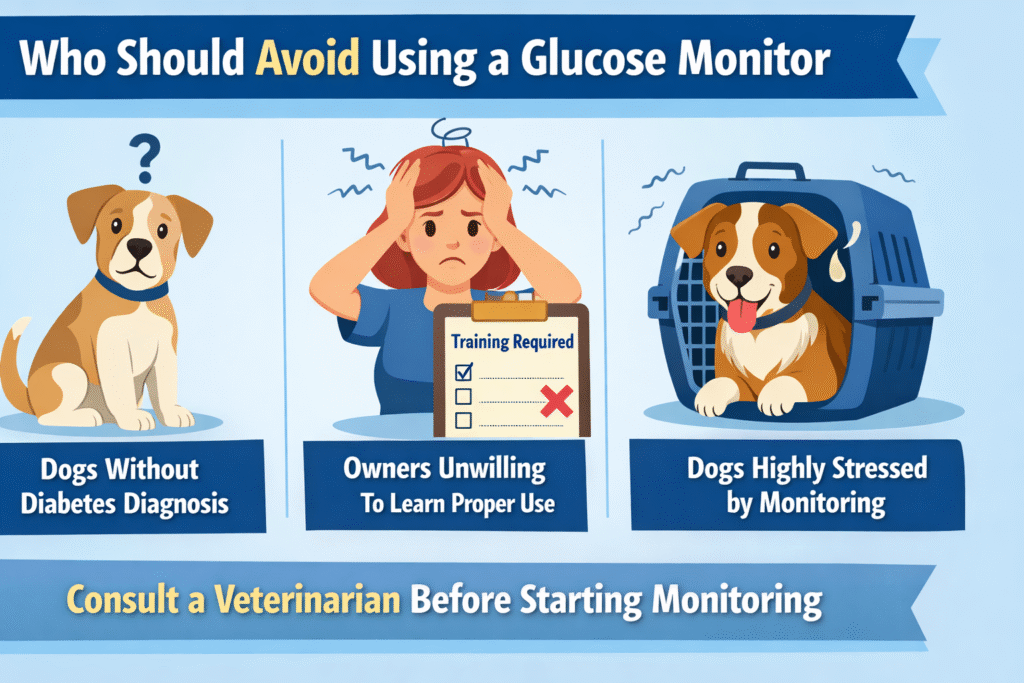
- Dogs without a confirmed diabetes diagnosis.
- Owners unwilling to receive proper training.
- Situations where monitoring causes excessive stress.
Professional consultation is always recommended before initiating home monitoring [28].
Alternatives
- Fructosamine Testing – Measures average glucose over 2–3 weeks [4].
- Urine Glucose Testing – Less precise but useful for screening [6].
- In-Clinic Glucose Curves – Periodic evaluations by a veterinarian for insulin adjustments.
Expert Opinions
Veterinary endocrinologists recommend home glucose monitoring as a standard component of diabetes management. AAHA and ACVIM guidelines emphasize individualized insulin therapy guided by glucose readings, owner education, and consistent monitoring [1][3].
Key Takeaways
- Home glucose monitoring is critical for safe diabetes management in dogs.
- Continuous or frequent monitoring provides detailed trend analysis.
- Proper training reduces risks and improves outcomes.
- Scientific evidence confirms better glycemic control, fewer complications, and improved survival.
FAQs
1. How often should I check my dog’s glucose?
Frequency depends on insulin type, stability, and health status. Typically, dogs are checked twice daily, before meals and at peak insulin times. CGMs provide continuous readings, which is especially helpful for dogs with unstable glucose levels [18].
2. Can human glucometers be used for dogs?
Human glucometers may work but are often inaccurate due to differences in hematocrit and glucose distribution. Veterinary-specific meters are recommended for precise dosing [13].
3. Is continuous monitoring better than traditional spot checks?
CGMs offer detailed glucose trends and early alerts for hypo- or hyperglycemia, making them superior for dogs prone to fluctuations. However, they are more expensive and may require some training [9].
4. Can glucose monitoring cure diabetes?
No. Glucose monitoring does not cure diabetes but allows effective management, preventing complications and improving life expectancy [5].
5. What are common mistakes owners make when monitoring?
Common errors include misinterpreting readings, not recording trends, improper sampling techniques, and skipping veterinary consultations. Regular training and logging readings mitigate these issues [20][27].
Conclusion
Glucose monitors for dogs are scientifically proven tools that enhance diabetic management. They allow accurate insulin dosing, early detection of fluctuations, reduce emergencies, and improve life expectancy. While costs and minor skin irritation are considerations, these are manageable with veterinary guidance and proper training. Home monitoring, when combined with veterinary care, diet management, and exercise, ensures that diabetic dogs live a healthy and fulfilling life.
References
[1] Behrend EN et al., ACVIM Consensus Statement on Diabetes
[2] Nelson RW, Canine Diabetes Mellitus Review
[3] Rucinsky R et al., AAHA Diabetes Management Guidelines
[4] Feldman EC & Nelson RW, Canine Endocrinology Textbook
[5] Catchpole B et al., Pathogenesis of Canine Diabetes
[6] Hess RS, Complications of Canine Diabetes
[7] Cohen TA et al., Veterinary Glucometer Evaluation
[8] Clarke WL, Glucose Measurement Technology Review
[9] Corradini S et al., CGM Accuracy Study
[10] Ford RB, Practical Blood Sampling in Dogs
[11] Reusch CE, Hypoglycemia in Dogs
[12] Cook AK, Diabetic Ketoacidosis in Dogs
[13] Zini E et al., Accuracy of Blood Glucose Meters
[14] Roomp K & Rand J, Intensive Glucose Monitoring
[15] Del Baldo F et al., Stress Hyperglycemia in Dogs
[16] Casella M et al., CGM Comparative Study
[17] Beam S et al., Cataract Formation in Diabetic Dogs
[18] Niessen SJM et al., Survival in Diabetic Dogs
[19] Davison LJ, Long-Term Outcomes in Diabetic Dogs
[20] Hoenig M, Insulin Dosing Errors
[21] Shea A, CGM Sensor Site Reactions
[22] ISO Standards for Glucose Meter Accuracy
[23] Veterinary Economic Analysis of CGM Use
[24] American College of Veterinary Internal Medicine Guidelines
[25] Deiting V et al., Glycemic Variability Research
[26] American Veterinary Medical Association Diabetes Advisory
[27] Peterson ME, Importance of Glucose Logs
[28] European Society of Veterinary Endocrinology Recommendations
[29] Reusch CE, Importance of Glucose Curves
[30] Clarke WL, Glucose Meter Performance in Dogs