
Dr Ahsan Tariq , MBBS, MRCP (UK ) ongoing, IMT ( Internal Medicine Trainee, NHS England), GMC : 7805049
Dr Ahsan Tariq is a UK-registered medical doctor with a background in internal medicine and a focus on evidence-based research in cognitive health and nootropics. He critically reviews scientific studies, supplements, and ingredients to help readers make informed, safe, and effective choices for brain health and performance.
Introduction
Gillette reproductive health is an increasingly searched topic as consumers become more aware of how personal grooming products may influence overall wellness. As one of the world’s most recognized shaving brands, Gillette manufactures razors, shaving creams, gels, and related grooming tools used in intimate and non-intimate areas. With growing public interest in hormonal health, fertility, skin safety, and chemical exposure, many individuals want to understand whether shaving practices and grooming products impact reproductive health.
Reproductive health refers to the well-being of the reproductive system at all stages of life, encompassing hormonal balance, fertility, sexual function, and protection from infections [1]. Grooming behaviors, including shaving pubic hair, have become more common globally, particularly among younger adults [2]. This shift raises important questions about hygiene, infection risk, microtrauma, and exposure to cosmetic ingredients.
This comprehensive guide explores Gillette reproductive health from awareness to benefits, risks, scientific evidence, and safe usage practices. It explains how shaving products work, evaluates potential impacts on reproductive organs and fertility, reviews research findings, and provides actionable tips for safe grooming. The goal is to present scientifically accurate information in a clear, beginner-friendly format while maintaining expert-level depth.
Understanding Gillette Reproductive Health
What Does Gillette Reproductive Health Mean?
Gillette reproductive health refers to the relationship between shaving products such as razors and shaving creams and reproductive system well-being. This includes considerations such as:
- Skin barrier integrity
- Risk of infections
- Hormonal safety of ingredients
- Fertility implications
- Microbiome balance
Reproductive health is defined by the World Health Organization as complete physical, mental, and social well-being in matters relating to the reproductive system [1].
Why Grooming Practices Matter
Pubic hair grooming has become widespread, with studies showing that a significant percentage of adults engage in trimming or complete removal [2]. While grooming can enhance hygiene perception and comfort, improper techniques may lead to cuts, irritation, or infections [3].
The skin in the genital area is thinner and more sensitive than other body regions, making it more susceptible to injury [4]. Microabrasions may increase susceptibility to sexually transmitted infections (STIs) [5].
How Gillette Products Work
Razor Technology and Skin Interaction
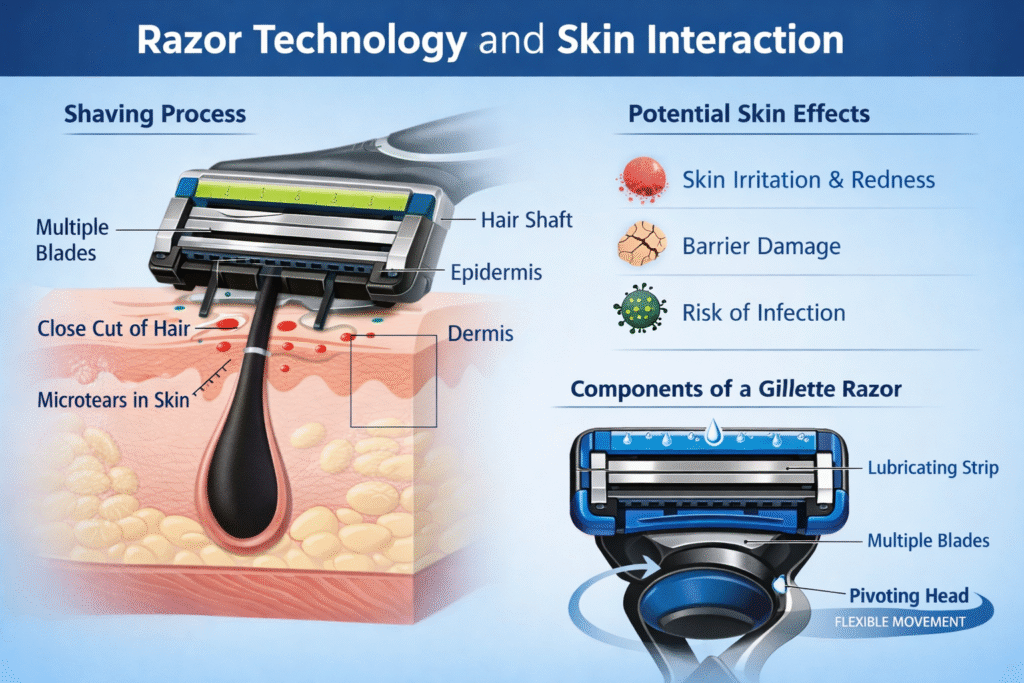
Gillette razors use multi-blade systems designed to cut hair below skin level for smoothness. Modern cartridges include lubricating strips containing polymers to reduce friction [6]. Reduced friction decreases razor burn and microtears [7].
Shaving removes hair by cutting the shaft at the surface. However, close shaving can create microscopic skin disruptions [3]. These small injuries may compromise the protective skin barrier [8].
Shaving Cream and Gel Formulations
Shaving creams typically contain:
- Surfactants for lather formation
- Emollients for lubrication
- Preservatives
- Fragrance compounds
Cosmetic ingredients used in regulated markets must meet safety standards set by agencies such as the U.S. Food and Drug Administration [9].
While most ingredients are considered safe for topical use, some fragrance compounds have been studied for potential endocrine-disrupting properties [10]. However, exposure levels in shaving products are generally below regulatory thresholds [11].
Importance of Gillette Reproductive Health Awareness
Infection Prevention
Research shows that grooming injuries are associated with increased risk of skin infections [12]. The genital region contains a complex microbiome that protects against harmful pathogens [13]. Disruption of this barrier may increase vulnerability.
Fertility Concerns
Some individuals worry that chemicals in grooming products may affect sperm quality or hormonal balance. Endocrine-disrupting chemicals (EDCs) have been shown to influence reproductive hormones in high or chronic exposures [14]. However, topical exposure from shaving products is typically low [15].
Psychological and Social Factors
Grooming practices are often influenced by cultural norms and body image perceptions [16]. Understanding the health implications allows individuals to make informed decisions without fear-based assumptions.
Proven Benefits
Improved Hygiene Perception
While pubic hair does not inherently cause poor hygiene, some individuals report feeling cleaner after grooming [17].
Reduced Odor Retention
Hair can trap moisture and bacteria, contributing to odor [18]. Trimming may reduce odor retention.
Enhanced Sexual Confidence
Body grooming has been linked to increased body confidence and sexual satisfaction in some populations [19].
Medical Procedure Preparation
Healthcare providers may recommend trimming before certain procedures to reduce contamination risk [20].
Reduced Lice Risk
Pubic hair removal can eliminate environments for lice infestation [21].
Potential Risks
Microcuts and Skin Irritation
Shaving frequently causes minor injuries [3]. These cuts can allow bacterial entry [12].
Increased STI Risk
Observational studies suggest grooming injuries may correlate with higher STI prevalence [5].
Folliculitis
Hair removal can inflame follicles, leading to painful bumps [22].
Contact Dermatitis
Fragrance and preservatives may cause allergic reactions in sensitive individuals [23].
Ingrown Hairs
Close shaving increases likelihood of hair re-entering the skin [24].
Scientific Evidence Overview
Studies on pubic grooming show high prevalence among adults [2]. Research indicates grooming injuries are common, particularly among frequent groomers [3].
A 2017 study found associations between extreme grooming and increased STI risk [5]. However, causation has not been definitively established.
Research on cosmetic ingredient safety demonstrates that regulated products undergo toxicological evaluation [9]. Endocrine effects are dose-dependent, and typical exposure from shaving creams is minimal [15].
Dermatological literature confirms that shaving can impair the skin barrier temporarily [8]. Barrier recovery typically occurs within days [25].
Comparison Table: Grooming vs No Grooming
| Factor | Grooming (Shaving) | No Grooming |
|---|---|---|
| Hygiene perception | Often increased [17] | Neutral |
| Microinjury risk | Higher [3] | Minimal |
| STI susceptibility | Possibly elevated if injured [5] | Baseline |
| Odor retention | Reduced [18] | Slightly higher |
| Skin irritation | Possible [23] | Rare |
Benefits vs Risks Table
| Benefits | Supporting Evidence | Risks | Supporting Evidence |
|---|---|---|---|
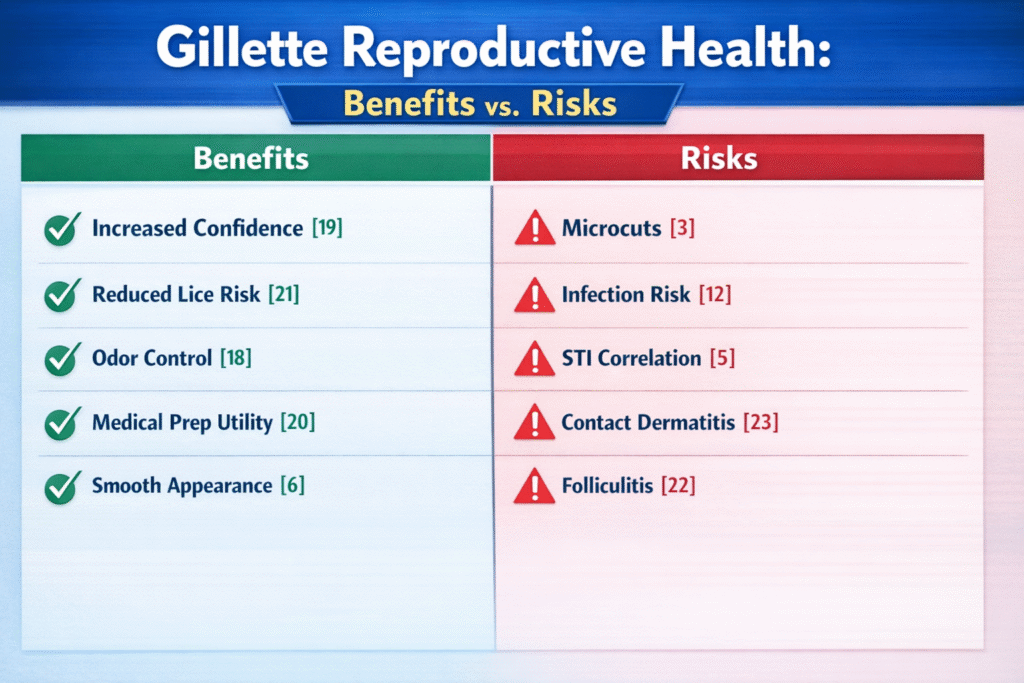
| Increased confidence | [19] | Microcuts | [3] |
| Reduced lice risk | [21] | Infection risk | [12] |
| Odor control | [18] | STI correlation | [5] |
| Medical prep utility | [20] | Contact dermatitis | [23] |
| Smooth appearance | [6] | Folliculitis | [22] |
Safe Usage Guidelines
Use Clean, Sharp Razors
Dull blades increase friction and injury risk [7].
Avoid Sharing Razors
Sharing can transmit infections [26].
Use Fragrance-Free Products
Sensitive individuals should choose hypoallergenic formulations [23].
Shave in Direction of Hair Growth
Reduces ingrown hairs [24].
Allow Skin Recovery
Frequent shaving increases irritation risk [3].
Who Should Avoid Intimate Shaving?
- Individuals with active skin infections [12]
- People prone to severe dermatitis [23]
- Those with compromised immune systems [27]
- Individuals recovering from genital surgery [20]
Alternatives to Shaving
Trimming
Electric trimmers reduce skin contact injury [3].
Laser Hair Removal
Laser treatments offer long-term reduction but carry their own risks [28].
Depilatory Creams
Chemical hair removal may irritate sensitive genital skin [29].
Waxing
Removes hair from root but may cause trauma [30].
Expert Opinions
Dermatologists emphasize proper technique and hygiene to reduce complications [22]. Public health experts note that grooming is a personal choice but should be done safely [1].
Toxicologists state that regulated cosmetic products are generally safe when used as directed [9].
Key Takeaways
- Gillette reproductive health concerns focus on skin safety and infection risk.
- Scientific evidence shows grooming injuries are common but preventable.
- Hormonal risks from shaving products are minimal at regulated exposure levels.
- Safe practices significantly reduce complications.
FAQs
Does shaving affect fertility?
No strong evidence shows that shaving directly affects fertility [15].
Can shaving increase STI risk?
Injuries may increase susceptibility, but grooming alone is not a direct cause [5].
Are shaving creams hormonally disruptive?
Regulated products meet safety standards [9].
Is trimming safer than shaving?
Trimming reduces skin contact injuries [3].
Should adolescents shave?
Medical guidance suggests careful hygiene and education [1].
Conclusion
Gillette reproductive health encompasses awareness of how shaving practices and products interact with sensitive genital skin and broader reproductive wellness. Current scientific evidence indicates that while grooming can cause minor injuries and potential infection risks, these outcomes are largely preventable through proper technique and hygiene.
Regulated shaving products from companies like Gillette comply with safety standards established by authorities such as the World Health Organization and the U.S. Food and Drug Administration. Hormonal or fertility risks from topical exposure remain low under normal use conditions.
Ultimately, grooming is a personal decision. By understanding the benefits, risks, and scientific evidence, individuals can make informed choices that prioritize reproductive health, skin safety, and overall well-being.
References
[1] World Health Organization definition of reproductive health
[2] Pubic hair grooming prevalence study
[3] Grooming injury study
[4] Genital skin sensitivity research
[5] Grooming and STI association study
[6] Razor blade technology dermatology review
[7] Friction and razor sharpness study
[8] Skin barrier disruption research
[9] FDA cosmetic safety regulations
[10] Endocrine disrupting chemical review
[11] Cosmetic exposure safety thresholds
[12] Skin infection risk study
[13] Genital microbiome research
[14] Endocrine disruptor fertility study
[15] Dose-response toxicology analysis
[16] Cultural grooming norms research
[17] Hygiene perception study
[18] Hair and odor retention research
[19] Grooming and confidence study
[20] Pre-surgical hair removal guidelines
[21] Pubic lice management research
[22] Folliculitis dermatology review
[23] Contact dermatitis cosmetic study
[24] Ingrown hair prevention study
[25] Skin barrier recovery research
[26] Razor sharing infection study
[27] Immunocompromised infection risk research
[28] Laser hair removal safety review
[29] Depilatory cream irritation study
[30] Waxing trauma research