
Dr Ahsan Tariq , MBBS, MRCP (UK ) ongoing, IMT ( Internal Medicine Trainee, NHS England), GMC : 7805049
Dr Ahsan Tariq is a UK-registered medical doctor with a background in internal medicine and a focus on evidence-based research in cognitive health and nootropics. He critically reviews scientific studies, supplements, and ingredients to help readers make informed, safe, and effective choices for brain health and performance.
Introduction
Fat loss is one of the most discussed yet most misunderstood topics in health and fitness. Every year, millions of people search for new diets, supplements, workouts, and shortcuts that promise rapid fat loss. Unfortunately, many of these strategies fail, leading to frustration, health risks, and weight regain. Understanding which fat loss strategies truly work and which consistently fail is essential for long-term success.
This comprehensive, evidence-based guide explains fat loss in simple language while grounding every claim in scientific research. It builds awareness, explains proven methods, exposes ineffective approaches, and highlights the physical and mental benefits of sustainable fat loss. The goal is not quick fixes, but realistic strategies you can maintain for life.
Understanding Fat Loss: The Science Explained Simply
Fat Loss vs Weight Loss
Weight loss refers to a reduction in overall body weight, which can come from water, muscle, and fat. Fat loss, however, specifically targets stored body fat while preserving lean muscle mass. According to [1], people who focus on fat loss rather than scale weight achieve better metabolic health and long-term outcomes.
Losing muscle slows metabolism and increases the likelihood of regaining fat. Therefore, any effective fat loss strategy must protect muscle tissue while reducing fat stores.
How the Body Burns Fat
The human body stores excess energy as triglycerides inside fat cells. When you consume fewer calories than your body needs, hormonal signals trigger the release of fatty acids, which are used as fuel. This process is regulated by insulin, cortisol, leptin, and other hormones [2].
Fat loss is not instant. It requires consistency, patience, and a supportive lifestyle that includes proper nutrition, movement, sleep, and stress control.
Proven Fat Loss Strategies That Work
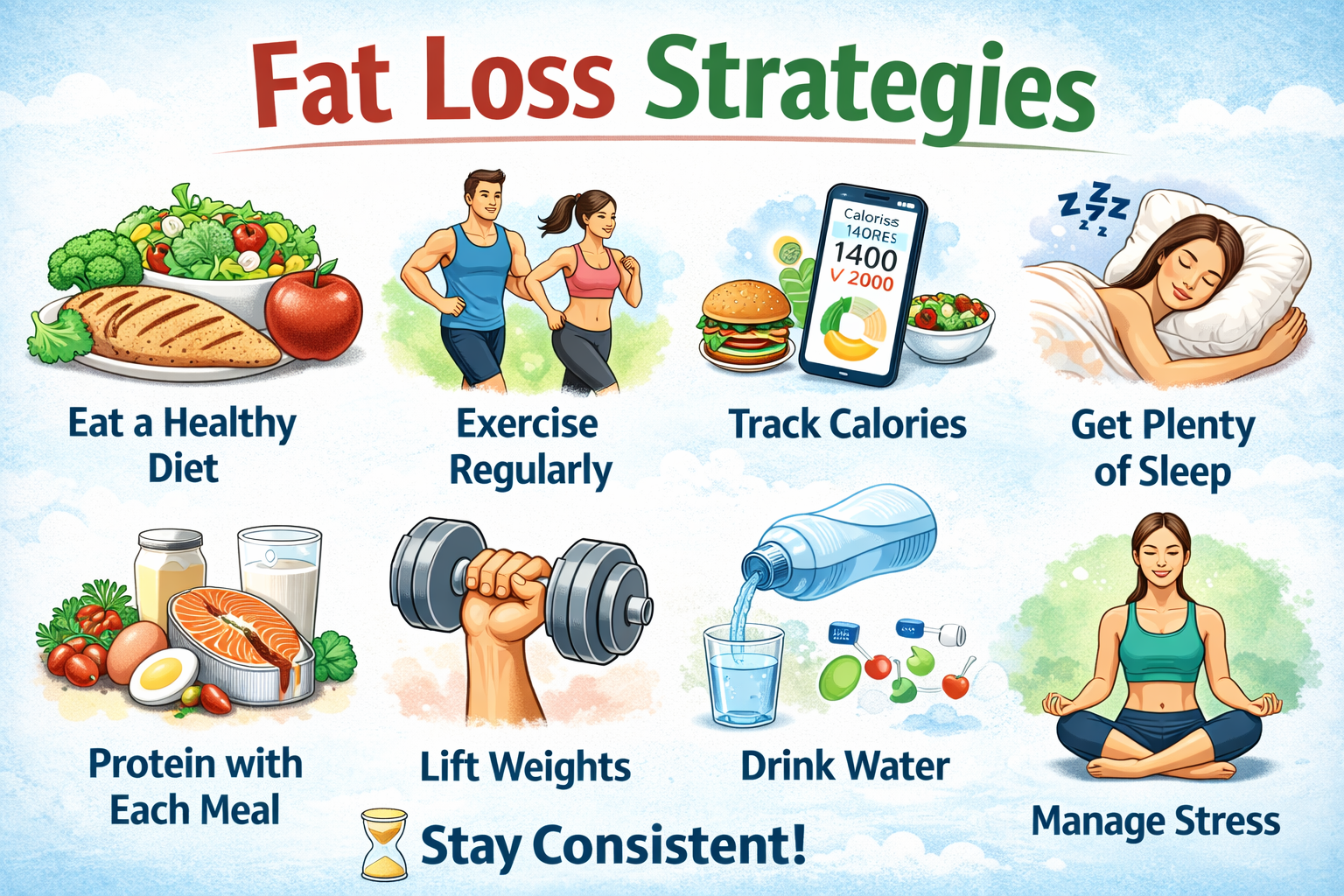
1. Creating a Sustainable Calorie Deficit
A calorie deficit is the foundation of fat loss. Research shows that a moderate deficit of 300–500 calories per day leads to steady fat loss without triggering metabolic slowdown [3]. Severe restriction, on the other hand, increases muscle loss and hormonal disruption.
Why This Strategy Works
- Encourages steady fat burning
- Preserves lean muscle
- Reduces binge–restrict cycles
According to long-term studies, moderate calorie control is significantly more successful than extreme dieting [4].
2. High-Protein, Balanced Nutrition
Protein is a critical nutrient for fat loss. High-protein diets increase satiety, reduce cravings, and preserve muscle mass during calorie restriction [5].
Benefits of Higher Protein Intake
- Boosts metabolism via thermic effect
- Reduces hunger hormones
- Improves body composition
Studies show that individuals consuming higher protein during fat loss retain more muscle and lose more fat compared to low-protein diets [6].
3. Strength Training and Resistance Exercise
Strength training is one of the most effective tools for long-term fat loss. According to [7], resistance training increases resting metabolic rate and improves insulin sensitivity.
Why Strength Training Is Essential
- Builds lean muscle mass
- Increases daily calorie burn
- Improves bone density
Combining resistance training with proper nutrition produces superior fat loss results compared to cardio alone [8].
4. Daily Movement and NEAT
Non-exercise activity thermogenesis (NEAT) includes all movement outside formal exercise, such as walking, standing, and household tasks. Research suggests NEAT can account for up to 20% of daily energy expenditure [9].
Small lifestyle changes like increasing step count or reducing sitting time can significantly enhance fat loss without additional stress.
5. Sleep Optimization and Stress Management
Sleep plays a crucial role in fat loss. According to a controlled study, individuals sleeping less than six hours per night lost significantly less fat despite similar calorie intake [10].
Chronic stress elevates cortisol, which promotes fat storage, particularly around the abdomen [11].
Benefits of Proper Sleep
- Regulates hunger hormones
- Improves recovery
- Enhances fat oxidation
Fat Loss Strategies That Fail Consistently
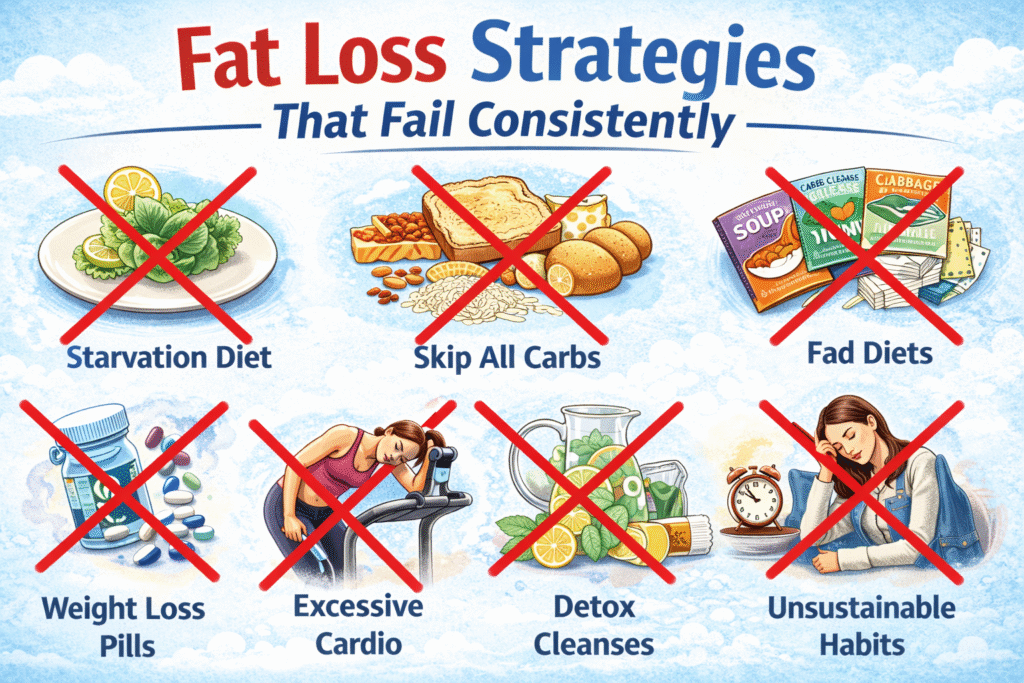
1. Crash Diets and Starvation Plans
Crash diets promise rapid fat loss but often result in muscle loss, nutrient deficiencies, and metabolic slowdown. Research shows most crash dieters regain lost weight within one year [12].
Why Crash Diets Fail
- Unsustainable hunger
- Hormonal imbalance
- High relapse rates
2. Spot Reduction Myths
Targeting fat loss in specific areas through exercises like crunches is ineffective. Scientific reviews confirm that fat loss occurs systemically, not locally [13].
3. Overuse of Fat Burners and Detox Products
Most fat-burning supplements produce minimal results and may carry health risks. According to regulatory reviews, lifestyle changes outperform supplements by a wide margin [14].
4. Excessive Cardio Without Strength Training
Too much cardio without resistance training can lead to muscle loss and metabolic adaptation. Balanced training programs result in better body composition outcomes [15].
5. Ignoring Mental and Emotional Health
Emotional eating, chronic stress, and unrealistic expectations sabotage fat loss. Studies link psychological stress to increased abdominal fat accumulation [16].
Comparison Table: Effective vs Ineffective Fat Loss Strategies
| Strategy | Fat Loss Effect | Sustainability | Health Risk |
|---|---|---|---|
| Moderate Calorie Deficit | High | High | Low |
| High-Protein Diet | High | High | Low |
| Strength Training | High | High | Low |
| Crash Dieting | Low | Very Low | High |
| Fat Burners | Very Low | Low | Medium |
| Spot Reduction | None | None | None |
Building a Long-Term Fat Loss Plan
Step 1: Set Realistic Expectations
Experts recommend losing 0.5–1% of body weight per week for sustainable fat loss [17]. Faster rates increase muscle loss and rebound risk.
Step 2: Focus on Habits Over Hacks
Habit-based approaches outperform short-term interventions. According to behavioral research, consistency is the strongest predictor of fat loss success [18].
Step 3: Track Progress Beyond the Scale
Measurements, strength levels, energy, and sleep quality are better indicators of fat loss than scale weight alone [19].
Long-Term Benefits of Sustainable Fat Loss
Physical Benefits
- Reduced cardiovascular disease risk [20]
- Improved insulin sensitivity [21]
- Lower inflammation markers [22]
Mental and Emotional Benefits
- Improved self-esteem
- Reduced anxiety and depression symptoms
- Healthier relationship with food [23]
Common Fat Loss Mistakes to Avoid
- Skipping meals regularly
- Eliminating entire food groups
- Comparing progress to others
- Expecting rapid transformation
Research shows these mistakes significantly increase dropout rates [24].
Frequently Asked Questions
Can fat loss happen without exercise?
Yes, but combining diet with exercise improves body composition and maintenance [25].
Are carbohydrates bad for fat loss?
No. Balanced carbohydrate intake supports performance and adherence [26].
How long does sustainable fat loss take?
Fat loss is gradual and depends on long-term consistency rather than speed [27].
Conclusion
True fat loss success comes from evidence-based strategies, not extremes or shortcuts. Global health authorities emphasize that sustainable fat loss improves longevity, metabolic health, and quality of life when approached holistically [28]. Leading academic institutions also confirm that consistent lifestyle changes outperform short-term diets for maintaining fat loss [29].
Systematic reviews of weight loss interventions further support that combining nutrition, movement, sleep, and behavior change delivers the most reliable long-term outcomes [30]. By focusing on sustainable nutrition, strength training, daily movement, sleep, and stress management and avoiding common pitfalls you can achieve lasting fat loss while improving overall health and quality of life.
References
- Hall KD et al., Energy balance and body composition, 2012
- Hill JO et al., Mechanisms of obesity, 2003
- National Institutes of Health, Calorie reduction guidelines, 2015
- Mann T et al., Diet failure rates, 2007
- Leidy HJ et al., Protein and satiety, 2015
- Pasiakos SM et al., Protein intake and muscle preservation, 2013
- Westcott WL, Resistance training benefits, 2012
- Willis LH et al., Aerobic vs resistance training, 2012
- Levine JA, NEAT research, 2005
- Nedeltcheva AV et al., Sleep and fat loss, 2010
- Epel ES et al., Stress and cortisol, 2000
- Anderson JW et al., Weight regain studies, 2001
- Ramirez-Campillo R, Spot reduction review, 2013
- FDA, Dietary supplement safety review, 2018
- Schoenfeld BJ et al., Cardio vs resistance, 2016
- Torres SJ et al., Stress and obesity, 2007
- American College of Sports Medicine, Fat loss guidelines, 2016
- Lally P et al., Habit formation research, 2010
- Wing RR et al., Weight maintenance studies, 2005
- Lavie CJ et al., Fat loss and heart health, 2015
- Knowler WC et al., Diabetes prevention program, 2002
- Hotamisligil GS, Inflammation and obesity, 2006
- Teixeira PJ et al., Psychology of weight loss, 2010
- Herman CP et al., Dieting behavior studies, 2012
- Donnelly JE et al., Exercise and weight control, 2009
- Slavin JL, Carbohydrates and health, 2013
- Jensen MD et al., Obesity management guidelines, 2014
- World Health Organization, Obesity fact sheet
- Harvard Health Publishing, Fat loss science overview
- Cochrane Database of Systematic Reviews, Weight loss interventions