
Dr Ahsan Tariq , MBBS, MRCP (UK ) ongoing, IMT ( Internal Medicine Trainee, NHS England), GMC : 7805049
Dr Ahsan Tariq is a UK-registered medical doctor with a background in internal medicine and a focus on evidence-based research in cognitive health and nootropics. He critically reviews scientific studies, supplements, and ingredients to help readers make informed, safe, and effective choices for brain health and performance.
Introduction
Intermittent fasting has become one of the most widely discussed nutrition strategies in recent years. Unlike traditional diets that focus on what foods to eat, intermittent fasting focuses on when to eat. This timing-based approach to eating has gained attention from researchers, healthcare professionals, and individuals seeking sustainable ways to improve health, manage weight, and support metabolic function. According to growing scientific literature, intermittent fasting may influence hormone regulation, cellular repair, and energy metabolism in ways that traditional calorie-restricted diets do not [1].
This article provides a comprehensive, research-based explanation of the benefits of intermittent fasting. It is designed for beginners while maintaining scientific accuracy. The discussion progresses from awareness and understanding to benefits, risks, evidence, and practical guidance to help readers make informed decisions.
Understanding The Topic
What Is Intermittent Fasting
Intermittent fasting refers to eating patterns that alternate between periods of eating and voluntary fasting. It does not prescribe specific foods but instead defines time windows during which food is consumed. Common fasting schedules include daily time-restricted eating and extended fasting intervals spread across the week [2].
How Intermittent Fasting Differs From Traditional Diets
Traditional diets typically focus on reducing calories or eliminating food groups. Intermittent fasting shifts attention to eating timing, allowing the body to experience longer periods without caloric intake. This distinction is important because metabolic processes respond differently to fasting than to constant calorie restriction [3].
How It Works
Metabolic Switching
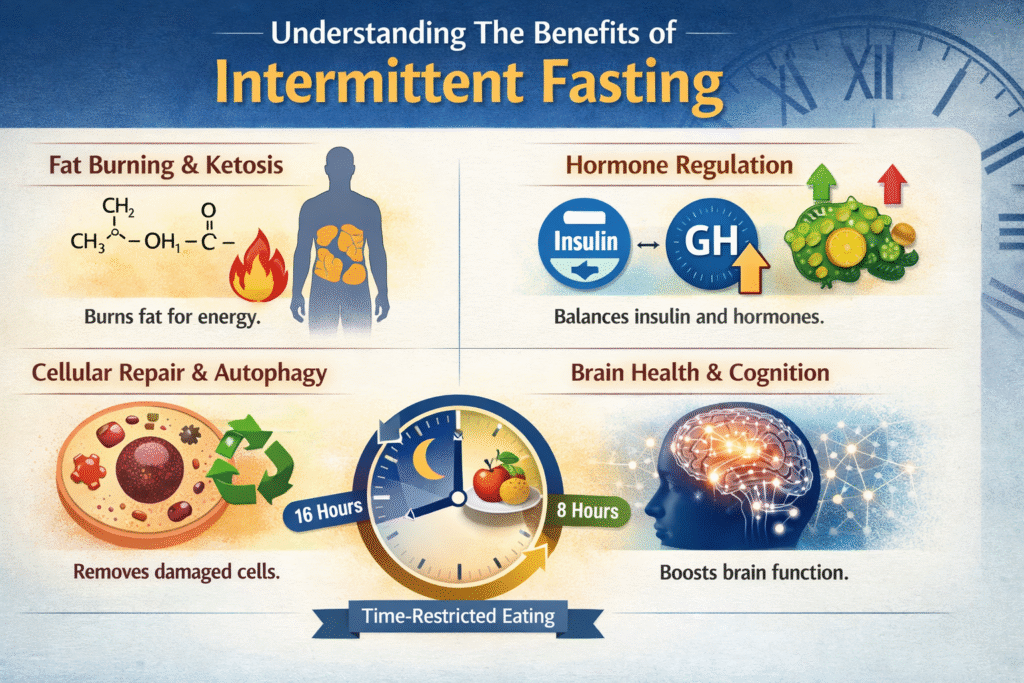
One of the core mechanisms behind intermittent fasting is metabolic switching. After several hours without food, the body transitions from using glucose as its primary fuel to burning stored fat and producing ketones. Research indicates this switch typically occurs after 12 to 24 hours of fasting, depending on individual metabolism [4].
Hormonal Regulation
Fasting periods influence hormones such as insulin, growth hormone, and norepinephrine. Lower insulin levels during fasting allow fat stores to be released more efficiently, while growth hormone levels increase to preserve muscle mass and promote fat burning [5].
Cellular Repair And Autophagy
Autophagy is a cellular cleaning process that removes damaged components and supports cellular renewal. Studies suggest fasting can activate autophagy pathways, contributing to improved cellular health and longevity [6].
Importance Of Intermittent Fasting
Addressing Modern Lifestyle Challenges
Frequent snacking, late-night eating, and constant calorie intake have become common in modern lifestyles. Intermittent fasting reintroduces natural eating rhythms that align more closely with human evolutionary patterns [7].
Metabolic Health Concerns
Rising rates of obesity, insulin resistance, and metabolic syndrome have prompted interest in dietary strategies that improve metabolic flexibility. Evidence suggests intermittent fasting may help counter these trends by improving insulin sensitivity and lipid metabolism [8].
Proven Benefits Of Intermittent Fasting
Weight Loss And Fat Reduction
Multiple studies show intermittent fasting can support weight loss by reducing overall calorie intake and enhancing fat oxidation. A 2017 clinical trial found participants practicing time-restricted eating experienced significant fat loss without intentional calorie counting [9].
Improved Insulin Sensitivity
Improved insulin sensitivity allows cells to use glucose more effectively, reducing the risk of type 2 diabetes. Research demonstrates intermittent fasting can lower fasting insulin levels and improve glucose regulation [10].
Cardiovascular Health
Intermittent fasting has been associated with improvements in blood pressure, cholesterol levels, and triglycerides. These changes collectively reduce cardiovascular disease risk [11].
Brain Health And Cognitive Function
Fasting may promote brain-derived neurotrophic factor production, which supports learning and memory. Animal and human studies suggest intermittent fasting may protect against neurodegenerative conditions [12].
Reduced Inflammation
Chronic inflammation contributes to many diseases. Evidence indicates fasting can lower inflammatory markers such as C-reactive protein and oxidative stress indicators [13].
Potential Risks Of Intermittent Fasting
Nutrient Deficiencies
If poorly planned, intermittent fasting may result in inadequate intake of essential nutrients. Skipping meals without focusing on nutrient-dense foods can increase deficiency risks [14].
Hormonal Disruptions
Some individuals, particularly those sensitive to calorie restriction, may experience hormonal changes that affect energy levels and mood [15].
Disordered Eating Patterns
For individuals with a history of eating disorders, intermittent fasting may exacerbate unhealthy relationships with food. Medical supervision is strongly recommended in such cases [16].
Scientific Evidence Supporting Intermittent Fasting
Human Clinical Trials
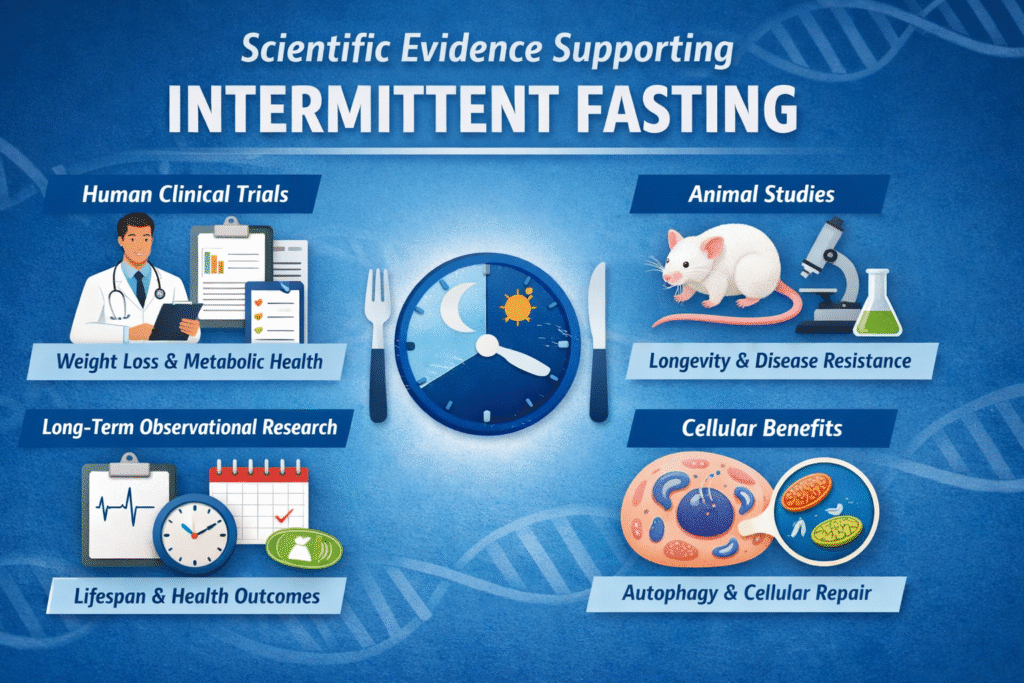
Randomized controlled trials have demonstrated intermittent fasting’s effectiveness in weight management and metabolic improvement. A 2019 review concluded that intermittent fasting produces comparable or superior results to continuous calorie restriction [17].
Long-Term Observational Studies
Long-term studies indicate potential longevity benefits associated with fasting-mimicking eating patterns, though more research is needed to establish causation [18].
Animal Research Insights
Animal models consistently show lifespan extension and disease resistance associated with fasting protocols, providing mechanistic insights into human applications [19].
Benefits Vs Risks Comparison
| Benefits | Risks |
|---|---|
| Improved insulin sensitivity | Possible nutrient deficiencies |
| Enhanced fat burning | Fatigue during adaptation |
| Cardiovascular support | Hormonal imbalance in some individuals |
| Cellular repair activation | Risk for disordered eating |
Safe Usage Guidelines
Gradual Adaptation
Beginners should start with shorter fasting windows to allow the body to adapt. Sudden extended fasting may increase side effects such as dizziness or fatigue [20].
Nutrient-Dense Eating
Meals should prioritize protein, fiber, healthy fats, and micronutrients to support overall health during eating windows [21].
Hydration And Electrolytes
Adequate hydration is essential during fasting periods to prevent dehydration and maintain electrolyte balance [22].
Who Should Avoid Intermittent Fasting
Pregnant And Breastfeeding Individuals
Fasting may interfere with increased nutritional demands during pregnancy and lactation [23].
Individuals With Medical Conditions
People with diabetes, eating disorders, or chronic illnesses should consult healthcare professionals before attempting intermittent fasting [24].
Adolescents And Growing Individuals
Fasting during growth phases may negatively impact development and nutritional status [25].
Alternatives To Intermittent Fasting
Balanced Calorie Control
Traditional calorie-controlled diets focusing on whole foods remain effective for many individuals [26].
Mediterranean-Style Eating
The Mediterranean diet emphasizes nutrient-dense foods and has strong evidence supporting long-term health benefits [27].
Mindful Eating Approaches
Mindful eating focuses on hunger cues and portion awareness without structured fasting schedules [28].
Expert Opinions
Nutrition experts emphasize that intermittent fasting is not universally superior but can be effective when individualized. According to clinical nutrition reviews, adherence and sustainability are more important than the specific diet structure [29].
Key Takeaways
Intermittent fasting is a flexible eating strategy that can support metabolic health, weight management, and cellular repair when practiced responsibly. Its success depends on individual health status, food quality, and consistency.
Frequently Asked Questions
Is Intermittent Fasting Safe Long Term
Current evidence suggests it can be safe for healthy adults when properly planned and monitored [30].
Does Intermittent Fasting Require Special Foods
No specific foods are required, but nutrient-dense choices improve outcomes.
How Long Does It Take To See Benefits
Some metabolic improvements may appear within weeks, while long-term benefits require consistent practice.
Conclusion
The benefits of intermittent fasting extend beyond weight loss, influencing metabolic health, cardiovascular function, and cellular repair. While scientific evidence supports its effectiveness for many individuals, it is not a one-size-fits-all solution. Understanding how intermittent fasting works, recognizing potential risks, and following safe usage guidelines are essential for achieving sustainable health benefits. When approached thoughtfully and supported by scientific evidence, intermittent fasting can be a valuable tool within a balanced, health-focused lifestyle.
References
[1] Anton SD et al., 2018
[2] Patterson RE et al., 2015
[3] Mattson MP et al., 2014
[4] Cahill GF, 2006
[5] Ho KY et al., 1988
[6] Mizushima N et al., 2010
[7] Longo VD et al., 2016
[8] de Cabo R et al., 2019
[9] Gabel K et al., 2017
[10] Sutton EF et al., 2018
[11] Harvie MN et al., 2011
[12] Mattson MP et al., 2017
[13] Faris MA et al., 2012
[14] Tinsley GM et al., 2015
[15] Heilbronn LK et al., 2005
[16] Treasure J et al., 2020
[17] Harris L et al., 2018
[18] Brandhorst S et al., 2015
[19] Anson RM et al., 2003
[20] Moro T et al., 2016
[21] Leidy HJ et al., 2015
[22] Popkin BM et al., 2010
[23] King JC, 2000
[24] American Diabetes Association, 2020
[25] Story M et al., 2002
[26] Hall KD et al., 2016
[27] Estruch R et al., 2013
[28] Kristeller JL et al., 2014
[29] Johnston BC et al., 2014
[30] National Institute on Aging, 2022