
Dr Ahsan Tariq , MBBS, MRCP (UK ) ongoing, IMT ( Internal Medicine Trainee, NHS England), GMC : 7805049
Dr Ahsan Tariq is a UK-registered medical doctor with a background in internal medicine and a focus on evidence-based research in cognitive health and nootropics. He critically reviews scientific studies, supplements, and ingredients to help readers make informed, safe, and effective choices for brain health and performance.
Introduction
Ergonomic health has become a critical focus in modern lifestyles where prolonged sitting, screen exposure, and repetitive movements are common. From office workers and students to healthcare professionals and industrial laborers, poor ergonomics can silently contribute to chronic pain, reduced productivity, and long-term musculoskeletal disorders. Ergonomic health emphasizes designing workspaces, tools, and daily habits to fit the human body rather than forcing the body to adapt to harmful environments [1].
As awareness of occupational health grows, ergonomics is no longer limited to corporate offices. It now plays an essential role in home offices, schools, healthcare settings, and even daily activities such as smartphone use and sleeping posture [2]. This article provides a comprehensive, science-backed guide to ergonomic health, covering its mechanisms, benefits, risks, evidence, and practical implementation.
Understanding Ergonomic Health
Ergonomic health refers to the optimization of physical environments and behaviors to support the body’s natural alignment, movement, and limitations [3]. The term “ergonomics” originates from the Greek words ergon meaning work and nomos meaning natural laws, highlighting its foundation in human-centered design [4].
Ergonomics addresses three primary domains. Physical ergonomics focuses on posture, repetitive movements, and workstation design [5]. Cognitive ergonomics examines mental workload, stress, and decision-making processes [6]. Organizational ergonomics deals with systems, schedules, and workflows that influence overall health and efficiency [7].
How Ergonomic Health Works
Ergonomic health works by reducing biomechanical stress on muscles, joints, and connective tissues. Proper alignment minimizes uneven load distribution, preventing microtrauma that accumulates over time [8]. For example, maintaining a neutral spine while sitting reduces compressive forces on intervertebral discs [9].
Ergonomic adjustments also improve circulation and nerve function. Incorrect positioning can compress nerves and blood vessels, leading to numbness, tingling, or fatigue [10]. By aligning joints and supporting natural movement patterns, ergonomics enhances neuromuscular efficiency and reduces unnecessary energy expenditure [11].
Importance of Ergonomic Health
The importance of ergonomic health extends beyond comfort. Musculoskeletal disorders are among the leading causes of work-related disability worldwide [12]. Poor ergonomics contributes significantly to conditions such as lower back pain, neck strain, and carpal tunnel syndrome [13].
Ergonomic health also influences productivity and mental well-being. Studies show that ergonomic interventions reduce fatigue, improve focus, and lower absenteeism [14]. In educational settings, ergonomic furniture improves student concentration and reduces discomfort during prolonged study sessions [15].
Proven Benefits of Ergonomic Health
Ergonomic health offers measurable physical and psychological benefits. One major benefit is pain reduction. Proper workstation setup significantly lowers the incidence of neck, shoulder, and back pain [16].
Another benefit is injury prevention. Ergonomic interventions reduce repetitive strain injuries by minimizing awkward postures and excessive force [17]. Improved posture also enhances respiratory function by allowing optimal lung expansion [18].
Cognitive benefits are equally important. Comfortable and well-designed environments reduce mental fatigue and stress, leading to better decision-making and job satisfaction [19].
Potential Risks of Ergonomic Health
While ergonomic health is generally safe, improper implementation can pose risks. Over-correction of posture or excessive reliance on ergonomic aids may lead to muscle deconditioning [20]. For example, prolonged use of lumbar supports without active engagement can weaken core muscles [21].
Another risk involves poorly designed ergonomic products. Not all chairs, keyboards, or standing desks suit every body type [22]. Incorrect adjustments may worsen existing musculoskeletal issues rather than alleviate them [23].
Scientific Evidence Supporting Ergonomic Health
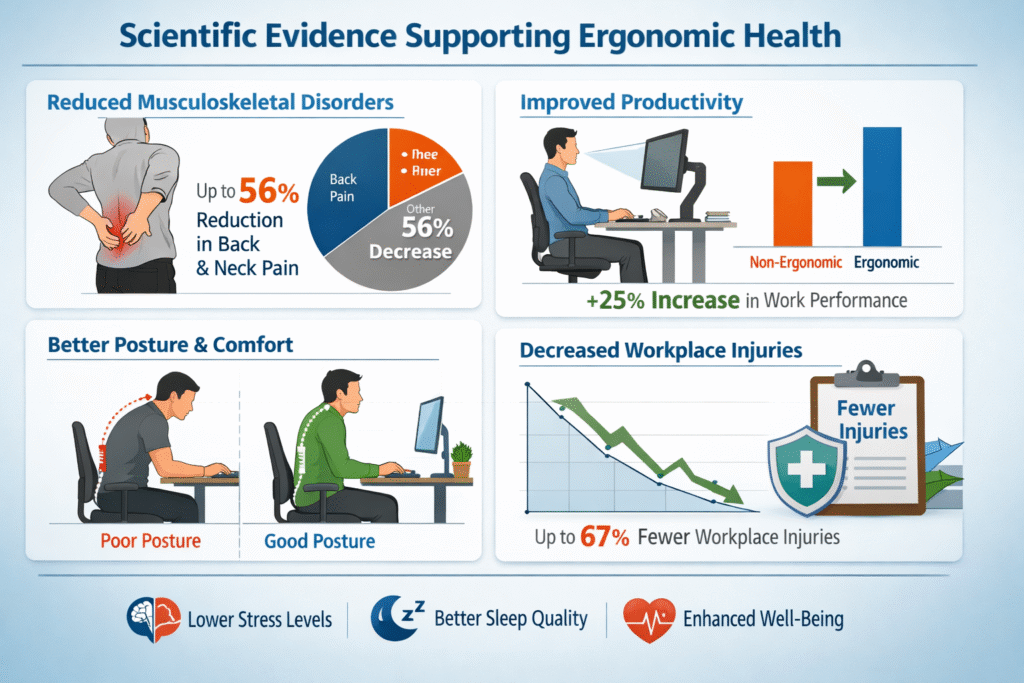
Scientific research strongly supports ergonomic interventions. A randomized controlled trial found that ergonomic workstation adjustments reduced musculoskeletal pain by over 50 percent in office workers [24]. Another study demonstrated improved productivity and reduced error rates following ergonomic training programs [25].
Longitudinal studies indicate that early ergonomic interventions lower long-term healthcare costs associated with chronic pain management [26]. Occupational health guidelines worldwide recognize ergonomics as a foundational preventive strategy [27].
Benefits vs Risks Comparison
| Aspect | Benefits | Risks |
|---|---|---|
| Posture correction | Reduced spinal stress and pain [16] | Over-reliance on supports [20] |
| Ergonomic tools | Lower injury rates [17] | Poor fit for body type [22] |
| Productivity | Improved focus and efficiency [14] | Adjustment learning curve [23] |
Safe Usage Guidelines for Ergonomic Health
Safe implementation of ergonomic health begins with proper assessment. Workstations should be adjusted to individual body dimensions rather than generic standards [28]. Chairs should support the lower back while allowing feet to rest flat on the floor.
Regular movement is essential. Even the best ergonomic setup cannot replace frequent posture changes and breaks [29]. Experts recommend micro-breaks every 30 to 60 minutes to reduce static load on muscles [30].
Training and education are equally important. Understanding correct posture and equipment use ensures long-term benefits without unintended strain [25].
Who Should Avoid Certain Ergonomic Interventions
Individuals with specific medical conditions should exercise caution. Those with spinal injuries or post-surgical conditions may require customized ergonomic solutions under medical supervision [31].
Pregnant individuals also need specialized ergonomic adjustments due to changes in posture and center of gravity [32]. In such cases, standard ergonomic setups may not provide adequate support.
Alternatives to Traditional Ergonomic Health Approaches
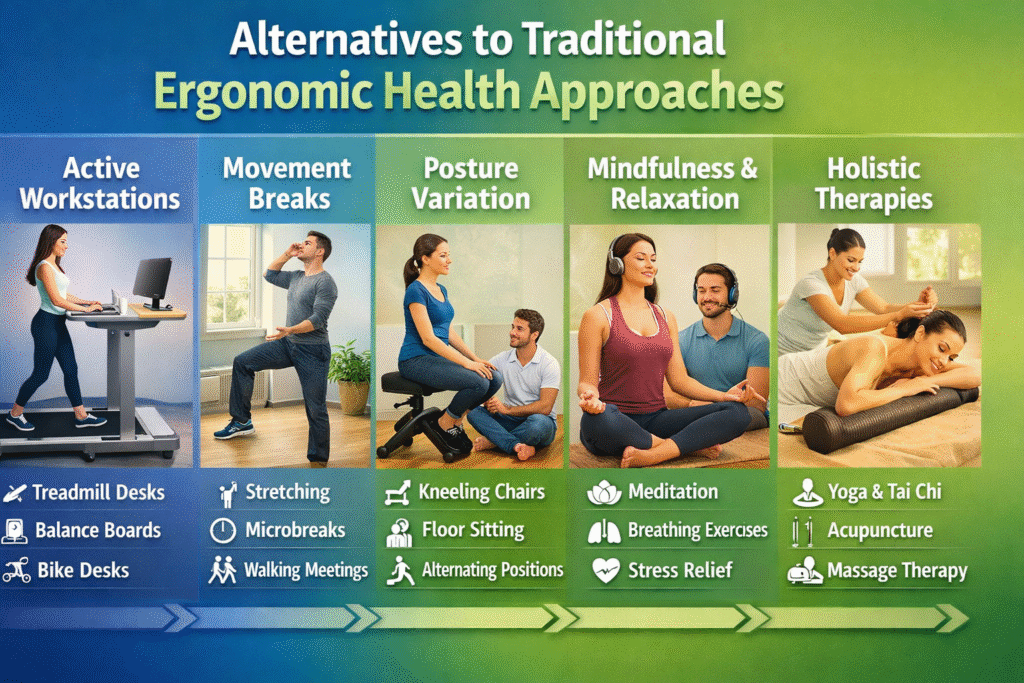
Alternative approaches complement ergonomic health rather than replace it. Movement-based strategies such as yoga, stretching, and strength training improve posture awareness and muscular balance [33].
Sit-stand work patterns offer another alternative, reducing prolonged static postures associated with sitting or standing alone [34]. Wearable posture feedback devices are emerging tools that promote ergonomic awareness through real-time cues [35].
Expert Opinions on Ergonomic Health
Occupational health experts emphasize that ergonomics is not a one-time fix but an ongoing process [27]. According to ergonomists, individual variability must guide ergonomic design rather than rigid standards [28].
Healthcare professionals highlight the importance of integrating ergonomics with physical activity and lifestyle changes for optimal outcomes [36]. This holistic approach ensures sustainable benefits and reduced injury risk.
Key Takeaways
Ergonomic health focuses on aligning environments with human physiology to reduce strain and improve well-being. It offers proven benefits for pain reduction, injury prevention, and productivity. However, improper implementation or over-reliance on aids can pose risks. Personalized adjustments, regular movement, and education are essential for safe and effective ergonomic practices.
Frequently Asked Questions
What is ergonomic health in simple terms?
Ergonomic health involves designing workspaces and habits that support natural body posture and movement to prevent pain and injuries [3].
Can ergonomic health prevent back pain?
Yes, proper ergonomic adjustments significantly reduce spinal stress and lower back pain risk [16].
Are ergonomic chairs necessary?
Ergonomic chairs are helpful but must be correctly adjusted and combined with regular movement for best results [22].
How often should I take breaks?
Experts recommend short breaks every 30 to 60 minutes to reduce muscle fatigue and static strain [29].
Is ergonomic health only for office workers?
No, ergonomic principles apply to students, healthcare workers, manual laborers, and daily activities such as smartphone use [2].
Conclusion
Ergonomic health is a scientifically supported approach to improving physical comfort, preventing injuries, and enhancing productivity in modern life. By understanding how ergonomics works and applying personalized, evidence-based strategies, individuals can protect their musculoskeletal health and overall well-being. When combined with movement, education, and expert guidance, ergonomic health becomes a powerful tool for long-term quality of life.
References
- Occupational Safety and Health Administration guidelines
- World Health Organization workplace health reports
- International Ergonomics Association definition
- Historical ergonomics research review
- Physical ergonomics framework study
- Cognitive ergonomics analysis
- Organizational ergonomics systems review
- Biomechanical stress mechanisms study
- Spinal alignment and disc pressure research
- Nerve compression and posture study
- Neuromuscular efficiency findings
- Global musculoskeletal disorder statistics
- Occupational injury epidemiology report
- Productivity and ergonomics meta-analysis
- Educational ergonomics research
- Posture correction clinical trial
- Repetitive strain injury prevention study
- Posture and respiratory function research
- Ergonomics and mental health review
- Muscle deconditioning risk analysis
- Lumbar support usage study
- Ergonomic product fit assessment
- Improper adjustment injury case review
- Randomized ergonomic intervention trial
- Ergonomic training effectiveness study
- Long-term healthcare cost analysis
- International occupational health guidelines
- Individualized ergonomic assessment research
- Micro-break and fatigue study
- Static posture load reduction evidence