
Dr Ahsan Tariq , MBBS, MRCP (UK ) ongoing, IMT ( Internal Medicine Trainee, NHS England), GMC : 7805049
Dr Ahsan Tariq is a UK-registered medical doctor with a background in internal medicine and a focus on evidence-based research in cognitive health and nootropics. He critically reviews scientific studies, supplements, and ingredients to help readers make informed, safe, and effective choices for brain health and performance.
Introduction
Cold Exposure Therapy is a scientifically recognized wellness practice that involves deliberately exposing the body to cold temperatures for controlled durations to trigger adaptive physiological responses. While at first glance cold exposure may seem uncomfortable or even counterproductive, a growing body of research suggests that short, intentional cold stress can strengthen the body, improve resilience, and support long-term health. From elite athletes using ice baths for recovery to researchers studying cold-induced metabolic activation, this therapy has moved far beyond tradition into evidence-based health science.
In modern society, humans are largely insulated from natural environmental stressors. Climate-controlled homes, heated water, and constant comfort reduce the body’s need to adapt. While comfort has clear benefits, the lack of mild stress may weaken adaptive systems over time. Cold Exposure Therapy works on the principle of hormesis, where low-dose stress activates repair mechanisms, improves efficiency, and increases resilience at the cellular, metabolic, and neurological levels [1].
This comprehensive guide explores Cold Exposure Therapy in depth. It explains what it is, how it works, why it matters, and how it can be used safely. The article is written for beginners while remaining scientifically accurate, making it suitable for readers seeking both practical guidance and research-backed understanding.
Understanding Cold Exposure Therapy
Definition And Scope
Cold Exposure Therapy refers to the intentional and controlled exposure of the body to cold temperatures, typically below 15°C, for short periods. Unlike accidental exposure, therapeutic cold exposure is planned, repeated, and designed to provoke beneficial physiological adaptations rather than harm [2]. The duration, frequency, and intensity are carefully managed to stimulate positive stress responses.
Forms Of Cold Exposure
Cold Exposure Therapy can be practiced in several forms, each with unique characteristics and levels of intensity. Common methods include cold showers, ice baths, cold water immersion, outdoor cold exposure, and whole-body cryotherapy. Facial cold exposure is also used for nervous system regulation. While the methods differ, the underlying biological mechanisms are largely similar [3].
Historical And Cultural Origins
Cold exposure has deep historical roots. Ancient Greek physicians used cold water for pain relief and recovery. Nordic cultures practiced ice bathing to improve circulation and resilience. In Japan, misogi rituals involved cold waterfall immersion to enhance mental discipline. These traditional practices demonstrate that cold exposure has long been associated with physical and mental strengthening [4].
How Cold Exposure Therapy Works
Nervous System Activation
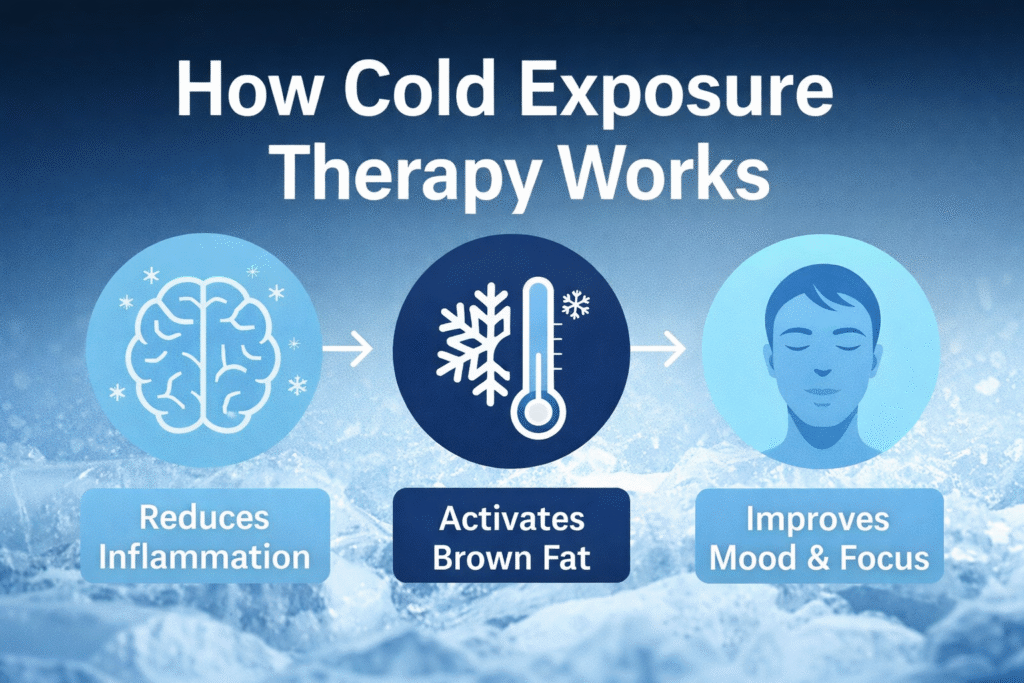
Cold exposure immediately stimulates the sympathetic nervous system. This response triggers the release of norepinephrine, a neurotransmitter that increases alertness, focus, and energy. Norepinephrine also plays a role in reducing inflammation and modulating pain perception, which explains the calming and energizing effects many individuals report after cold exposure [5].
Hormonal And Neurochemical Changes
In addition to norepinephrine, cold exposure increases dopamine levels, a neurotransmitter associated with motivation, mood, and reward. Research suggests dopamine levels can remain elevated for hours after cold exposure, contributing to sustained mental clarity and emotional stability [6]. Cortisol levels may rise temporarily, but repeated exposure improves stress tolerance over time.
Brown Adipose Tissue Activation
One of the most significant discoveries in cold exposure research is its effect on brown adipose tissue. Brown fat generates heat through non-shivering thermogenesis by burning calories. Regular cold exposure increases brown fat activity, improving metabolic efficiency, insulin sensitivity, and energy expenditure [7].
Vascular And Circulatory Response
Cold exposure causes vasoconstriction, reducing blood flow to the skin and extremities. Upon rewarming, vasodilation occurs, increasing circulation and nutrient delivery. This cycle improves vascular flexibility and may support cardiovascular health when practiced safely [8].
Importance Of Cold Exposure Therapy
Cold Exposure Therapy is increasingly important in addressing modern health challenges such as chronic inflammation, metabolic disorders, mental stress, and sedentary lifestyles. Unlike pharmaceutical interventions, cold exposure leverages the body’s innate adaptive systems to promote long-term resilience rather than short-term symptom relief [9].
By reintroducing controlled environmental stress, cold exposure helps restore metabolic flexibility and stress tolerance that modern comfort has reduced.
Proven Benefits Of Cold Exposure Therapy
Improved Metabolic Health
Cold exposure enhances insulin sensitivity and glucose uptake, reducing the risk of metabolic disorders such as type 2 diabetes. Activation of brown fat increases basal metabolic rate, supporting healthy weight management and energy balance [10].
Enhanced Physical Recovery
Cold water immersion is widely used in sports medicine to reduce muscle soreness and inflammation after intense exercise. Research shows that short-term cold exposure can decrease delayed onset muscle soreness and perceived fatigue when applied correctly [11].
Mental Resilience And Mood Regulation
Cold exposure significantly increases dopamine and norepinephrine levels, improving mood, focus, and stress resilience. Many individuals report reduced anxiety and improved emotional regulation with consistent practice [12].
Immune System Modulation
Some studies suggest regular cold exposure may enhance immune response by increasing white blood cell activity and reducing the frequency of upper respiratory infections [13].
Cardiovascular Adaptation
Repeated cold exposure improves vascular tone and endothelial function. Over time, this adaptation may support cardiovascular efficiency when practiced within safe limits [14].
Potential Risks Of Cold Exposure Therapy
Cold Shock Response
Sudden immersion in cold water can cause rapid breathing, elevated heart rate, and an involuntary gasp reflex. This response can be dangerous for individuals with cardiovascular conditions or poor swimming ability [15].
Hypothermia And Overexposure
Excessive or prolonged cold exposure increases the risk of hypothermia, particularly in cold water. Proper duration limits and gradual adaptation are essential for safety [16].
Skin And Nerve Injury
Extreme cold exposure may cause frostbite or nerve irritation if protective measures are not followed [17].
Excessive Physiological Stress
Overuse of cold exposure without adequate recovery may increase stress hormones rather than provide benefits, especially in already fatigued individuals [18].
Scientific Evidence Supporting Cold Exposure Therapy
Scientific research on cold exposure has expanded significantly over the past two decades. Studies demonstrate benefits in metabolic health, inflammation reduction, mood enhancement, and recovery outcomes. However, results vary based on individual health, exposure duration, frequency, and method [19][20][21]. The strongest evidence supports moderate, consistent exposure rather than extreme practices.
Benefits Vs Risks Comparison
| Benefits | Risks |
|---|---|
| Improved insulin sensitivity | Cold shock response |
| Enhanced recovery | Hypothermia |
| Mood and focus improvement | Cardiovascular strain |
| Immune modulation | Skin or nerve injury |
Safe Usage Guidelines
Start Gradually
Beginners should start with cool showers lasting 30 to 60 seconds and gradually reduce water temperature over time [22].
Control Duration
Most benefits occur within 1 to 5 minutes of cold exposure. Longer durations increase risks without proportional benefits [23].
Focus On Breathing
Slow, controlled breathing helps manage the initial shock response and supports nervous system regulation [24].
Monitor Body Signals
Persistent numbness, confusion, or uncontrollable shivering indicate overexposure and require immediate warming.
Who Should Avoid Cold Exposure Therapy
Individuals with cardiovascular disease, uncontrolled hypertension, Raynaud’s disease, respiratory disorders, or cold hypersensitivity should avoid cold exposure therapy unless supervised by a healthcare professional [25]. Pregnant individuals should also seek medical advice.
Alternatives To Cold Exposure Therapy
Contrast Therapy
Alternating hot and cold exposure improves circulation while reducing the intensity of cold stress [26].
Whole Body Cryotherapy
Cryotherapy chambers provide controlled cold exposure under professional supervision, though accessibility and cost may limit use [27].
Non-Cold Recovery Methods
Stretching, low-intensity movement, compression therapy, adequate sleep, and nutrition support recovery without cold exposure [28].
Expert Opinions
Health experts emphasize that Cold Exposure Therapy should complement foundational health practices such as exercise, nutrition, sleep, and stress management. When used responsibly, it can enhance resilience and recovery but should not be viewed as a standalone solution [29].
Key Takeaways
Cold Exposure Therapy uses controlled cold stress to improve metabolic health, mental resilience, immune function, and physical recovery. Proper application and individual consideration are essential for safety and effectiveness.
FAQs
Is Cold Exposure Therapy Safe For Beginners
Yes, when started gradually and practiced responsibly, it is generally safe for healthy individuals [30].
How Often Should Cold Exposure Be Practiced
Most studies suggest two to four sessions per week provide benefits without increasing risks.
Can Cold Exposure Replace Exercise Or Diet
No, cold exposure should complement, not replace, healthy nutrition and physical activity.
Conclusion
Cold Exposure Therapy represents a powerful yet accessible approach to improving human resilience and health. By understanding its mechanisms, benefits, and risks, individuals can safely integrate cold exposure into a balanced wellness routine. As scientific research continues to grow, cold exposure remains a promising tool for long-term health optimization.
References
[1] Ristow M, Nature
[2] Tipton MJ, Journal of Physiology
[3] Huttunen P, Arctic Medical Research
[4] Shevchuk NA, Medical Hypotheses
[5] Kox M, PNAS
[6] Leppäluoto J, Journal of Applied Physiology
[7] Cypess AM, New England Journal of Medicine
[8] Brenner IK, Sports Science
[9] Ristow M, Nature
[10] Hanssen MJ, Diabetes
[11] Bleakley CM, Sports Medicine
[12] Shevchuk NA, Medical Hypotheses
[13] Buijze GA, PLOS One
[14] Tei C, Circulation
[15] Tipton MJ, Extreme Physiology
[16] Castellani JW, Wilderness Medicine
[17] Mills WJ, Cold Injury Research
[18] Meeusen R, Sports Medicine
[19] Lombardi G, Frontiers in Physiology
[20] Costello JT, Sports Medicine
[21] Dupuy O, Sports Medicine
[22] American College of Sports Medicine
[23] International Journal of Circumpolar Health
[24] Jerath R, Medical Hypotheses
[25] Mayo Clinic Proceedings
[26] Higgins TR, Journal of Strength Conditioning
[27] Lombardi G, Frontiers in Physiology
[28] Dupuy O, Sports Medicine
[29] Harvard Health Publishing
[30] Cleveland Clinic Journal of Medicine