
Dr Ahsan Tariq , MBBS, MRCP (UK ) ongoing, IMT ( Internal Medicine Trainee, NHS England), GMC : 7805049
Dr Ahsan Tariq is a UK-registered medical doctor with a background in internal medicine and a focus on evidence-based research in cognitive health and nootropics. He critically reviews scientific studies, supplements, and ingredients to help readers make informed, safe, and effective choices for brain health and performance.
Introduction: Cognitive Behavioral Therapy (CBT)
Cognitive Behavioral Therapy (CBT) is one of the most widely researched and commonly used psychological treatments in modern mental health care. It is recommended by major health organizations worldwide for conditions such as anxiety disorders, depression, post-traumatic stress disorder, obsessive-compulsive disorder, and chronic stress. According to clinical guidelines, CBT focuses on identifying and changing unhelpful thought patterns and behaviors that negatively affect emotions and daily functioning [1].
As mental health awareness continues to grow, more individuals seek therapies that are structured, goal-oriented, and supported by scientific evidence. CBT stands out because it is practical, time-limited, and adaptable to a wide range of age groups and psychological conditions [2]. This article provides a comprehensive, beginner-friendly explanation of Cognitive Behavioral Therapy, covering how it works, its importance, proven benefits, potential risks, scientific evidence, and safe usage guidelines.
Understanding Cognitive Behavioral Therapy (CBT)
What Is Cognitive Behavioral Therapy
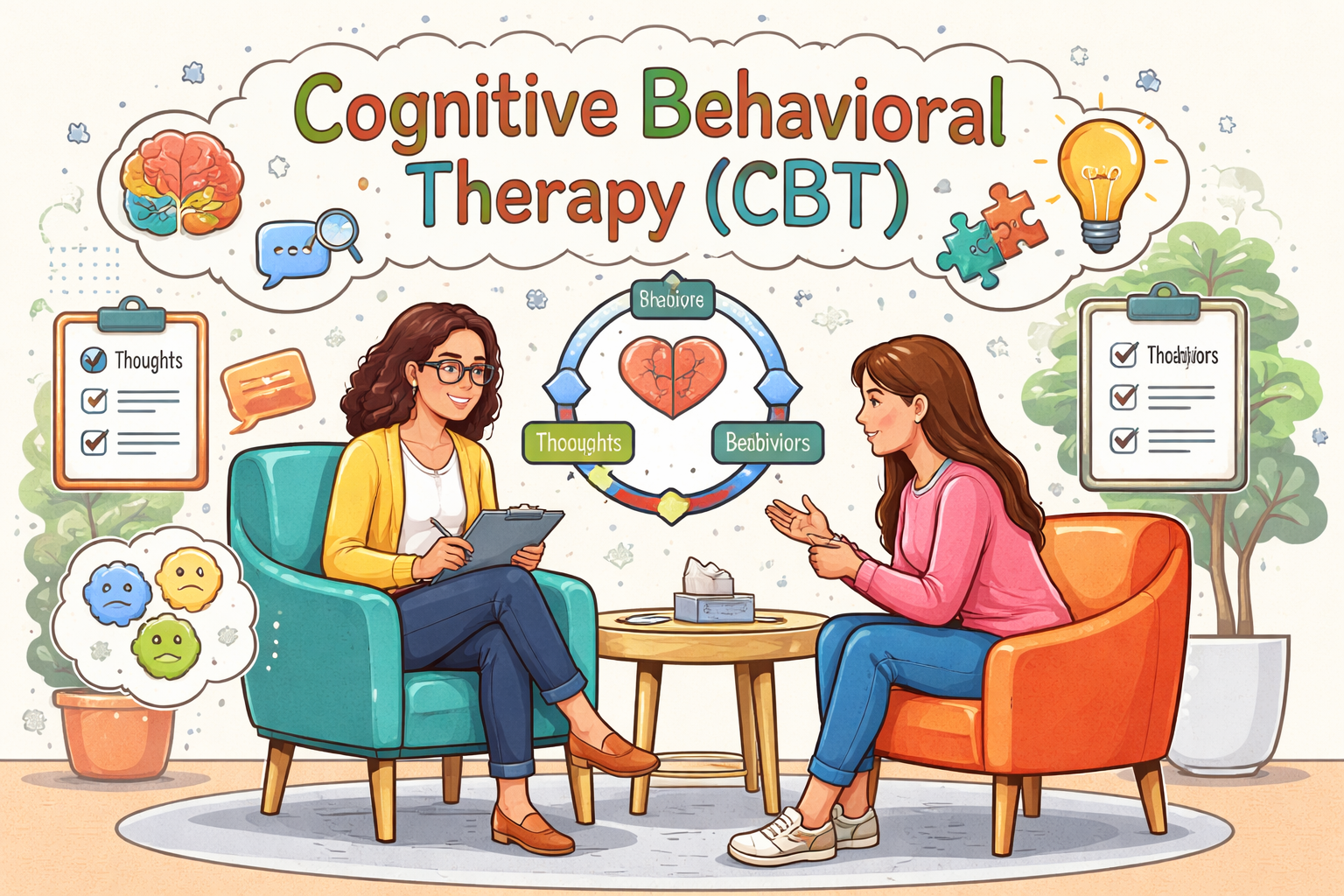
Cognitive Behavioral Therapy is a form of psychotherapy that helps individuals understand how their thoughts, emotions, and behaviors are interconnected. The core principle of CBT is that psychological distress is often maintained by distorted or unhelpful thinking patterns rather than external situations alone [3]. By changing these patterns, individuals can improve emotional regulation and develop healthier coping strategies.
CBT is typically structured, collaborative, and focused on present-day challenges rather than extensive exploration of past experiences. Therapy sessions involve active participation, homework exercises, and skill development [4].
Core Concepts Of CBT
CBT is built on several foundational concepts:
- Thoughts influence emotions and behaviors
- Negative automatic thoughts can be identified and challenged
- Behavioral changes can improve emotional well-being
- Skills learned in therapy can be applied independently
These principles make CBT particularly effective for individuals seeking practical tools to manage mental health concerns [5].
How Cognitive Behavioral Therapy Works
The CBT Model Explained
CBT operates on a simple but powerful model: situations trigger thoughts, thoughts influence emotions, and emotions guide behaviors. When thoughts are inaccurate or overly negative, they can intensify emotional distress and reinforce unhelpful behaviors [6].
Therapists help clients recognize these thought patterns and test their accuracy through evidence-based techniques. Over time, this process leads to more balanced thinking and healthier emotional responses.
Common CBT Techniques
CBT uses a variety of techniques depending on the individual’s needs:
- Cognitive restructuring to challenge distorted thoughts
- Behavioral activation to increase positive activities
- Exposure techniques for anxiety-related conditions
- Problem-solving skills training
According to clinical research, these techniques are effective when applied consistently under professional guidance [7].
Importance Of Cognitive Behavioral Therapy
Why CBT Is Widely Recommended
CBT is considered a first-line treatment for many mental health conditions because it is evidence-based, structured, and adaptable [8]. Unlike some therapies that may require long-term commitment, CBT often produces measurable results within a limited number of sessions.
Healthcare systems favor CBT due to its cost-effectiveness and strong research support. It is also suitable for individual therapy, group therapy, and digital mental health programs [9].
Role In Modern Mental Health Care
CBT plays a critical role in reducing symptom severity, preventing relapse, and improving quality of life. It empowers individuals by teaching lifelong coping skills rather than promoting dependence on therapy alone [10].
Proven Benefits Of Cognitive Behavioral Therapy
Mental Health Benefits
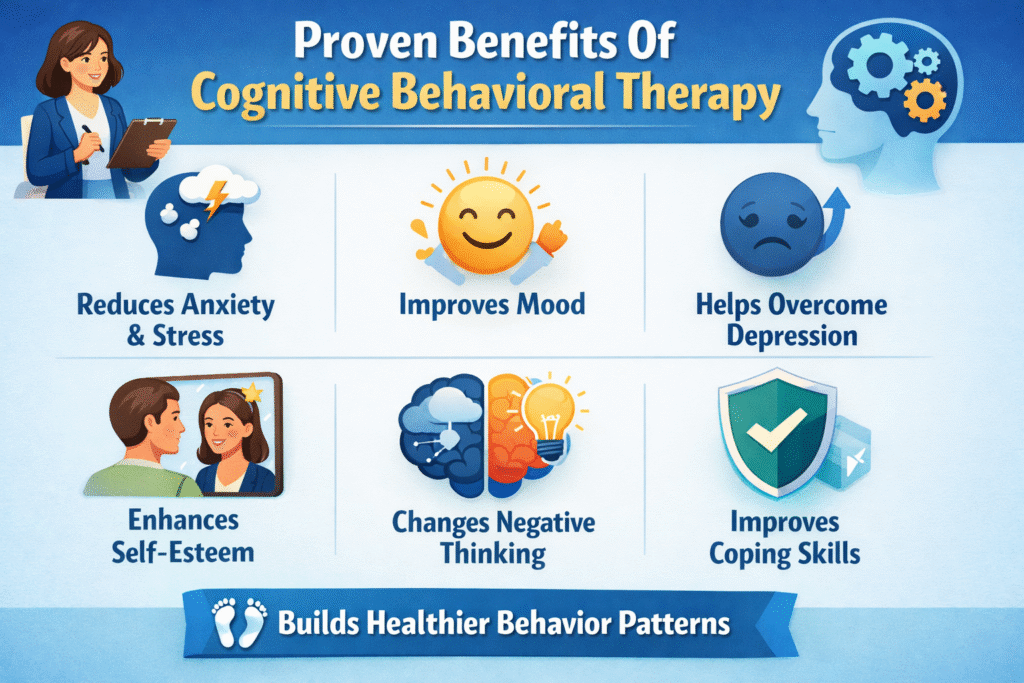
CBT has demonstrated effectiveness in treating a wide range of psychological conditions. Research shows significant symptom reduction in anxiety disorders, depression, panic disorder, and phobias [11]. It is also effective for stress management and emotional regulation.
Behavioral And Lifestyle Improvements
Beyond symptom relief, CBT helps individuals develop healthier habits, improve problem-solving skills, and enhance self-confidence. Studies indicate that CBT can improve sleep quality, work performance, and interpersonal relationships [12].
Long-Term Effectiveness
One of CBT’s strongest advantages is its long-term impact. Skills learned during therapy continue to benefit individuals even after treatment ends, reducing the likelihood of symptom recurrence [13].
Potential Risks And Limitations
Emotional Discomfort During Therapy
CBT may involve discussing distressing thoughts or facing feared situations, which can temporarily increase discomfort [14]. This is a normal part of the therapeutic process and is typically managed carefully by trained professionals.
Not Suitable For Everyone
While CBT is highly effective, it may not be ideal for individuals who prefer unstructured therapy or those with severe cognitive impairments that limit engagement with structured exercises [15].
Risk Of Oversimplification
Critics note that CBT may sometimes oversimplify complex emotional experiences by focusing primarily on thoughts and behaviors [16]. For some individuals, deeper emotional or relational work may be necessary.
Scientific Evidence Supporting CBT
Research And Clinical Trials
CBT is one of the most extensively studied psychological treatments. Randomized controlled trials consistently show its effectiveness across diverse populations and conditions [17]. Meta-analyses confirm that CBT performs as well as or better than other therapeutic approaches for many disorders [18].
Comparison With Medication
Studies suggest that CBT can be as effective as medication for mild to moderate depression and anxiety, with lower relapse rates when used alone or in combination with medication [19].
CBT Compared With Other Therapies
Comparison Table
| Therapy Type | Focus Area | Structure | Evidence Strength |
|---|---|---|---|
| Cognitive Behavioral Therapy | Thoughts and behaviors | Highly structured | Very strong |
| Psychodynamic Therapy | Unconscious processes | Less structured | Moderate |
| Humanistic Therapy | Self-growth | Non-directive | Moderate |
| Mindfulness-Based Therapy | Awareness and acceptance | Semi-structured | Growing evidence |
According to comparative studies, CBT remains the most consistently supported therapy across clinical guidelines [20].
Benefits Vs Risks Comparison
Benefits And Risks Table
| Benefits | Risks |
|---|---|
| Evidence-based effectiveness | Temporary emotional discomfort |
| Skill-focused and practical | Requires active participation |
| Time-limited approach | May not suit all personalities |
| Long-term relapse prevention | Can feel structured or rigid |
Clinical experts emphasize that benefits generally outweigh risks when CBT is delivered appropriately [21].
Safe Usage Guidelines
Choosing A Qualified Therapist
CBT should be conducted by trained mental health professionals who follow ethical and clinical standards [22]. Proper assessment ensures that CBT is suitable for the individual’s needs.
Commitment And Practice
Active participation, including homework assignments, is essential for successful outcomes. Consistency significantly improves therapy effectiveness [23].
Who Should Avoid Cognitive Behavioral Therapy
Situations Where CBT May Be Limited
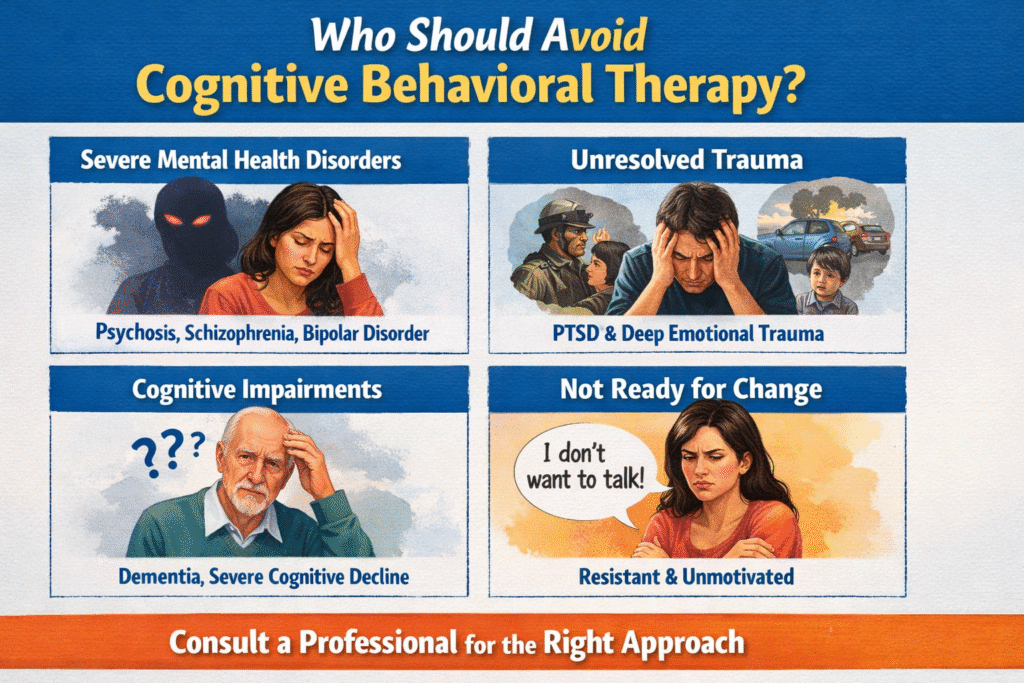
CBT may not be appropriate for individuals experiencing severe cognitive impairments, acute psychosis, or those unwilling to engage in structured therapy [24]. In such cases, alternative or complementary approaches may be recommended.
Need For Integrated Care
Some individuals benefit more from combined treatment approaches, including medication or other therapeutic models alongside CBT [25].
Alternatives To Cognitive Behavioral Therapy
Other Evidence-Based Therapies
Alternatives include psychodynamic therapy, acceptance and commitment therapy, dialectical behavior therapy, and interpersonal therapy. Each approach targets mental health challenges from different perspectives [26].
When Alternatives May Be Better
Individuals seeking deeper emotional exploration or relational insight may prefer non-CBT approaches. Mental health professionals often tailor therapy based on personal preferences and clinical needs [27].
Expert Opinions On CBT
Clinical Psychologist Perspectives
Experts consistently highlight CBT’s strong evidence base and adaptability. According to mental health professionals, CBT’s structured nature allows measurable progress and skill development [28].
Global Health Organization Views
Organizations such as the World Health Organization and national health services recommend CBT as a primary treatment for common mental health disorders [29].
Key Takeaways
Summary Of Core Points
CBT is a structured, evidence-based therapy focused on changing unhelpful thought patterns and behaviors. It is widely recommended due to its effectiveness, safety, and long-term benefits.
Practical Value
CBT empowers individuals with practical tools that extend beyond therapy sessions, supporting long-term mental well-being [30].
Frequently Asked Questions (FAQs)
Is CBT Suitable For Beginners
Yes, CBT is beginner-friendly and designed to be easily understood with guidance from a therapist.
How Long Does CBT Take
CBT typically lasts between 6 to 20 sessions, depending on the condition and individual progress.
Can CBT Be Used Online
Research supports the effectiveness of online and digital CBT programs when properly designed and supervised.
Conclusion
Cognitive Behavioral Therapy (CBT) remains one of the most effective and trusted psychological treatments available today. Its structured approach, strong scientific backing, and practical skill development make it a cornerstone of modern mental health care. While it may not be suitable for everyone, CBT offers significant benefits for those seeking evidence-based, goal-oriented therapy. When delivered by qualified professionals and practiced consistently, CBT can lead to lasting improvements in emotional well-being and quality of life.
References
- Beck AT, 1976
- National Institute for Health and Care Excellence, 2011
- American Psychological Association, 2017
- Hofmann SG et al., 2012
- Clark DA, 2014
- Ellis A, 1994
- Butler AC et al., 2006
- World Health Organization, 2019
- Andersson G, 2016
- Cuijpers P et al., 2013
- DeRubeis RJ et al., 2005
- Morin CM et al., 2006
- Hollon SD et al., 2005
- Kazantzis N et al., 2010
- Davidson K, 2008
- Shedler J, 2010
- Hofmann SG, 2014
- Cuijpers P et al., 2016
- Dimidjian S et al., 2006
- Wampold BE, 2015
- National Alliance on Mental Illness, 2020
- British Psychological Society, 2018
- Kazantzis N, 2018
- Morrison AP, 2014
- Gelenberg AJ et al., 2010
- Hayes SC et al., 2011
- Norcross JC, 2011
- Beck JS, 2011
- NHS England, 2021
- Barlow DH, 2014
One thought on “Cognitive Behavioral Therapy (CBT): Proven Benefits, Risks, And Uses in 2026”