
Dr Ahsan Tariq is a UK-registered medical doctor with a background in internal medicine and a focus on evidence-based research in cognitive health and nootropics. He critically reviews scientific studies, supplements, and ingredients to help readers make informed, safe, and effective choices for brain health and performance.
Introduction:
What Is Somatic Breathwork? Somatic breathwork is gaining massive attention across wellness communities, trauma-healing circles, and even clinical psychology spaces. Supporters claim it can release stored trauma, calm the nervous system, and unlock deep emotional healing. Critics argue it’s overstated, emotionally intense, and lacks enough scientific backing.
So what is somatic breathwork really?
Is it a powerful healing modality or just another wellness trend dressed in neuroscience language?
This in-depth guide breaks it all down clearly, honestly, and with evidence.
Understanding Somatic Breathwork
What Does “Somatic” Mean?
The word somatic comes from the Greek word soma, meaning “the living body.” Somatic practices focus on felt bodily sensations rather than thoughts alone. According to somatic psychology, trauma and stress are stored not just in the mind, but in the body itself [1].
Somatic breathwork works on the idea that breathing patterns directly influence the nervous system, emotional regulation, and physical tension.
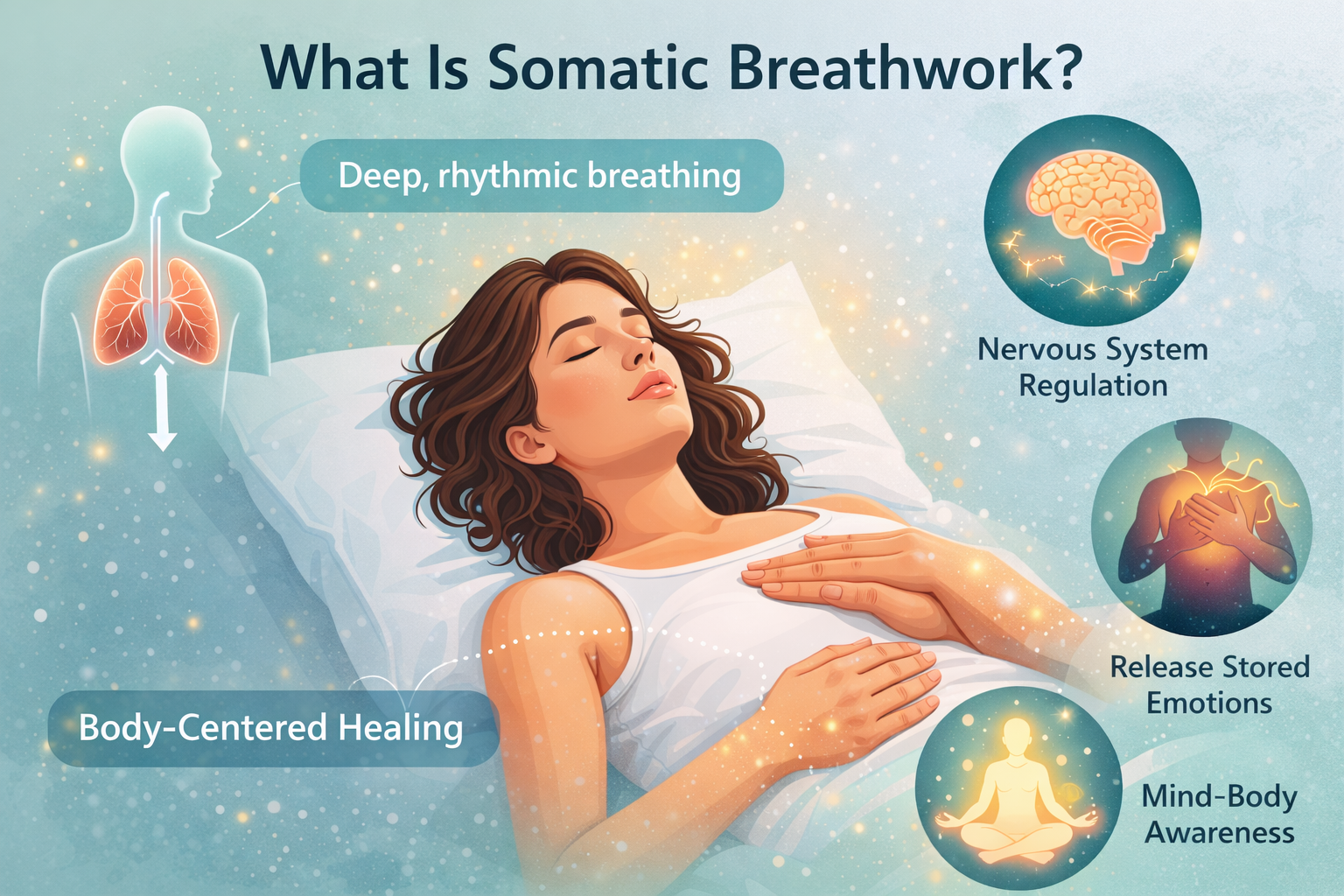
What Is Somatic Breathwork?
Somatic breathwork is a body-based breathing practice designed to:
- Regulate the nervous system
- Release stored emotional tension
- Increase mind-body awareness
- Support trauma processing
Unlike simple deep breathing, somatic breathwork often involves rhythmic, intentional breathing patterns guided by a facilitator or audio session [2].
The Science Behind Breath And The Nervous System
How Breathing Affects The Brain
Breathing is one of the few bodily functions that is both automatic and voluntary. This makes it a powerful gateway to the nervous system.
Research shows that controlled breathing can directly influence:
- Heart rate variability (HRV)
- Stress hormone levels
- Brainwave activity
- Emotional regulation centers in the brain [3]
Sympathetic vs Parasympathetic Response
| Nervous System State | Effect On Body | Breath Pattern |
|---|---|---|
| Sympathetic (Fight/Flight) | Anxiety, tension | Shallow, rapid |
| Parasympathetic (Rest/Digest) | Calm, healing | Slow, rhythmic |
Somatic breathwork aims to shift the body from fight-or-flight into safety, where healing can occur [4].
How Somatic Breathwork Sessions Work
Typical Session Structure
A somatic breathwork session usually includes:
- Grounding and intention setting
- Guided breathing cycles (10–45 minutes)
- Emotional or physical release
- Integration and rest
Sessions may be done one-on-one, in groups, or online [5].
Common Breathing Styles Used
Somatic breathwork may integrate techniques such as:
- Circular breathing
- Connected breath
- Conscious rhythmic breathing
- Slow nasal breathing for regulation
Each style affects the nervous system differently [6].
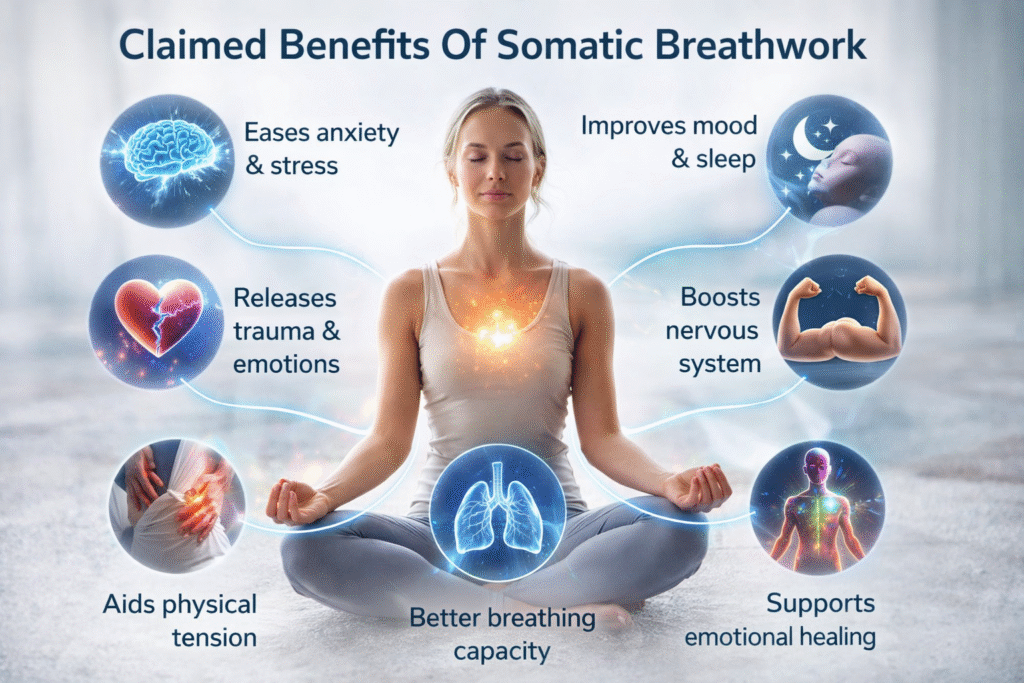
Claimed Benefits Of Somatic Breathwork
Emotional Healing And Trauma Release
Many practitioners report emotional releases such as crying, shaking, or sudden insights. According to trauma research, allowing the body to complete stress responses may reduce stored trauma symptoms [7].
A trauma study found that body-based interventions were effective when talk therapy alone was insufficient [8].
Stress And Anxiety Reduction
Controlled breathing has been shown to reduce cortisol levels and improve emotional resilience [9]. Somatic breathwork may help individuals who struggle with chronic stress or burnout.
Improved Body Awareness
Somatic practices enhance interoception the ability to sense internal bodily states. Higher interoceptive awareness is linked to improved emotional regulation [10].
Better Sleep And Relaxation
Slow rhythmic breathing can improve sleep quality by activating the parasympathetic nervous system [11].
Physical Effects On The Body
Oxygen And Carbon Dioxide Balance
Contrary to popular belief, breathing isn’t just about oxygen. CO₂ levels play a major role in blood pH and oxygen delivery. Poor breathing patterns can disrupt this balance [12].
Muscle Relaxation And Tension Release
Breath-led movement and awareness may help release chronic muscle tension, particularly in the jaw, shoulders, and diaphragm [13].
Is Somatic Breathwork Scientifically Proven?
What Research Supports
Breathing interventions have been studied extensively in:
- Anxiety disorders
- PTSD symptom management
- Stress regulation
- Pain perception [14]
A clinical review found that breath-based practices improved emotional regulation and autonomic balance [15].
Where Evidence Is Still Limited
While breathwork itself is well-studied, somatic breathwork as a branded modality has fewer large-scale randomized controlled trials. Critics argue that anecdotal experiences are often overstated [16].
Potential Risks And Criticisms
Emotional Overwhelm
Some participants experience intense emotional releases. Without proper guidance, this can feel destabilizing rather than healing [17].
Hyperventilation Symptoms
Fast or forceful breathing may cause:
- Dizziness
- Tingling sensations
- Lightheadedness
These effects are usually temporary but can be alarming [18].
Not Suitable For Everyone
Somatic breathwork may not be recommended for individuals with:
- Severe cardiovascular conditions
- Epilepsy
- Certain psychiatric disorders
Medical screening is advised before deep breathwork practices [19].
Somatic Breathwork vs Other Breath Practices
| Practice | Focus | Intensity |
|---|---|---|
| Somatic Breathwork | Trauma + nervous system | Medium to High |
| Box Breathing | Stress control | Low |
| Pranayama | Energy balance | Variable |
| Holotropic Breathwork | Altered states | Very High |
Each approach serves a different purpose [20].
Who Can Benefit Most?
Somatic breathwork may be helpful for:
- People with chronic stress
- Individuals seeking body-based healing
- Those who feel “stuck” in talk therapy
- Wellness practitioners
However, it should complement not replace professional care [21].
Role Of A Trained Facilitator
A trained practitioner helps:
- Regulate session intensity
- Ensure emotional safety
- Guide integration afterward
Trauma-informed facilitation significantly reduces adverse effects [22].
Integration After Breathwork
Why Integration Matters
After emotional release, the nervous system needs time to stabilize. Journaling, gentle movement, and rest support long-term benefits [23].
Long-Term Practice Effects
Regular breathwork practice may improve emotional resilience, self-awareness, and stress tolerance over time [24].
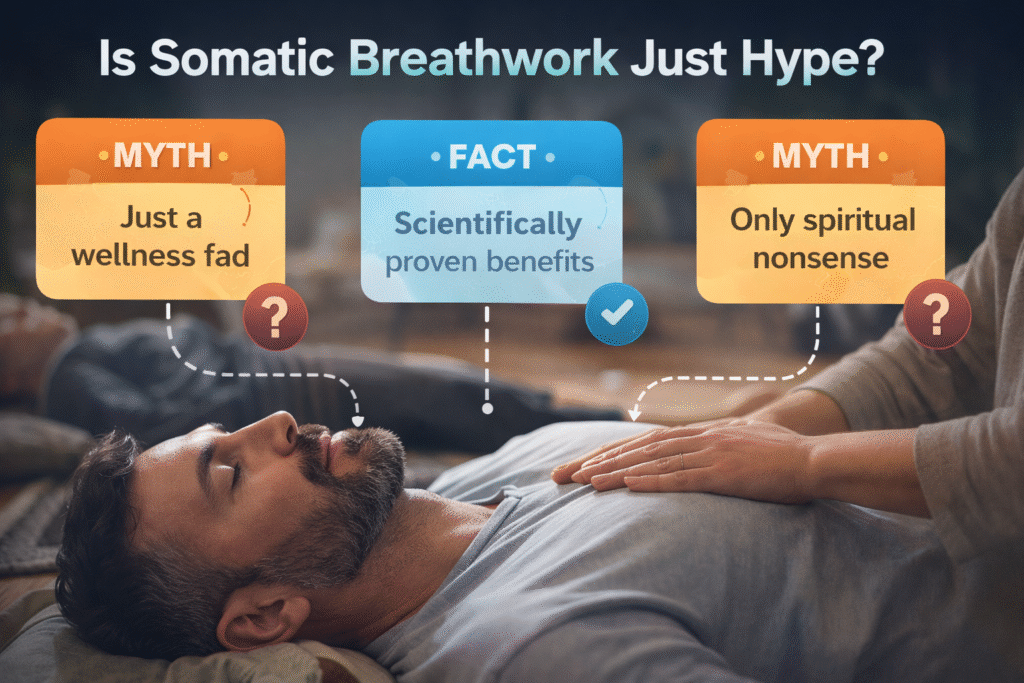
Is Somatic Breathwork Just Hype?
Why It Feels So Powerful
Breathing directly affects survival systems in the brain. When done intentionally, the effects can feel dramatic and transformative [25].
Where Marketing Goes Too Far
Some claims such as “instant trauma cure” are misleading. Healing is often gradual and multifaceted [26].
Final Verdict: Healing Tool Or Overhyped Trend?
Somatic breathwork is neither magic nor meaningless.
It is a legitimate body-based regulation tool supported by neuroscience, but it requires:
- Proper guidance
- Realistic expectations
- Integration with other therapies
Used responsibly, it can be a powerful complement to mental and emotional well-being not a replacement for medical or psychological care [27].
Frequently Asked Questions (FAQs)
Is somatic breathwork safe?
Generally yes, when guided properly and adjusted for individual needs [28].
How long does it take to see benefits?
Some feel immediate calm, while deeper benefits develop over weeks or months [29].
Can beginners try somatic breathwork?
Yes, but starting with gentle sessions is recommended [30].
References
- According to somatic psychology research
- Breath-based healing overview
- Neuroscience of breathing
- Autonomic nervous system studies
- Clinical breathwork models
- Breath technique classifications
- Trauma release theory
- Body-based trauma studies
- Cortisol regulation research
- Interoception and emotions
- Sleep and breathing studies
- Respiratory physiology review
- Muscle tension and breathing
- Anxiety intervention trials
- Breathwork clinical review
- Wellness trend analysis
- Emotional regulation risks
- Hyperventilation research
- Medical screening guidelines
- Comparative breath practices
- Complementary therapy research
- Trauma-informed care studies
- Integration psycholog
- Long-term nervous system adaptation
- Brain survival systems
- Healing marketing ethics
- Holistic therapy evaluation
- Safety guidelines review
- Habit formation studies
- Beginner breathwork research