
Dr Ahsan Tariq , MBBS, MRCP (UK ) ongoing, IMT ( Internal Medicine Trainee, NHS England), GMC : 7805049
Dr Ahsan Tariq is a UK-registered medical doctor with a background in internal medicine and a focus on evidence-based research in cognitive health and nootropics. He critically reviews scientific studies, supplements, and ingredients to help readers make informed, safe, and effective choices for brain health and performance.
Introduction: Why Work-Life Balance Matters More Than Ever
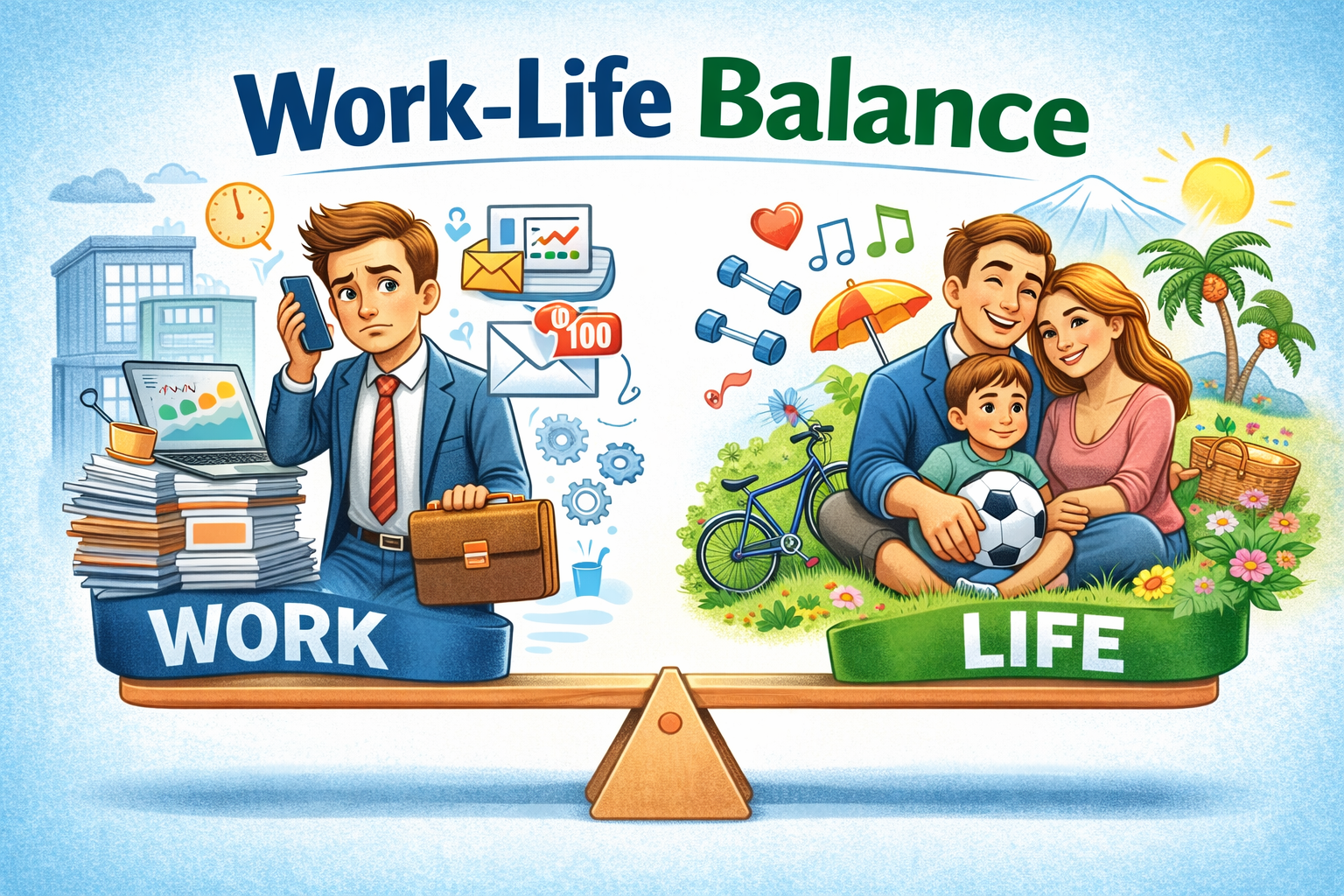
Work-Life Balance Examples In 2026, work-life balance is no longer a luxury it is a survival skill. With remote work, digital overload, AI-driven workflows, and rising burnout levels, people across the world are searching for proven work-life balance examples that actually improve happiness. Studies consistently show that individuals with balanced lives experience higher productivity, better mental health, and stronger personal relationships [1].
This article explores real, practical, and proven work-life balance examples that help people reclaim time, reduce stress, and live happier lives without sacrificing career growth.
Understanding Work-Life Balance
What Is Work-Life Balance?
Work-life balance refers to the ability to manage professional responsibilities while still having time and energy for personal life, health, family, and rest. It does not mean equal hours but intentional boundaries [2].
Why Work-Life Balance Directly Impacts Happiness
Happiness is closely tied to autonomy, rest, and meaningful relationships. Poor balance leads to chronic stress, emotional exhaustion, and dissatisfaction [3]. Balanced routines improve dopamine and serotonin regulation, leading to long-term emotional wellbeing [4].
The Cost Of Poor Work-Life Balance
Burnout And Mental Health Risks
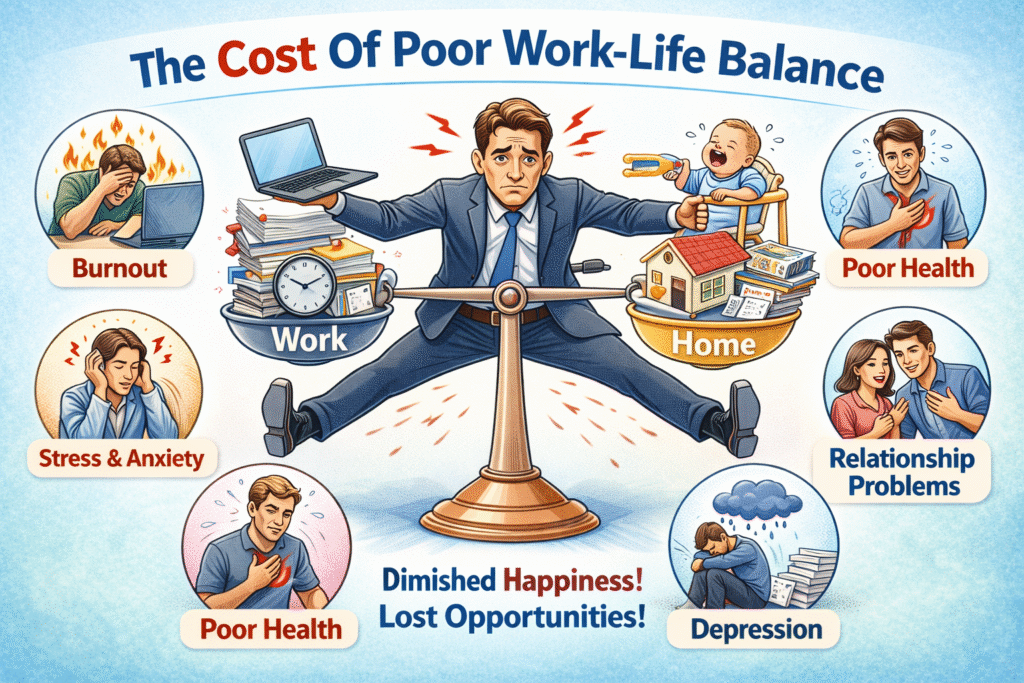
Burnout is officially recognized by the World Health Organization as an occupational phenomenon [5]. Long working hours are linked to anxiety, depression, and sleep disorders [6].
Productivity Loss And Career Damage
Ironically, overworking reduces performance. Research shows productivity drops sharply after 50 hours per week [7]. Employees with poor balance are more likely to quit or disengage [8].
Proven Work-Life Balance Examples That Work In Real Life
Example 1: Fixed Work Hours With Hard Stop Boundaries
Professionals who set strict work end-times report higher satisfaction and better sleep quality [9]. A “hard stop” prevents work from bleeding into personal time.
Why It Works:
- Protects mental energy
- Encourages efficiency
- Reduces evening stress
Example 2: Time Blocking For Work And Personal Life
Time blocking assigns specific hours for focused work, family, exercise, and rest. This method improves task completion and reduces overwhelm [10].
Example 3: Remote Or Hybrid Work Models
Hybrid workers report better happiness scores than fully onsite employees [11]. Flexibility allows people to design life around energy levels rather than rigid schedules.
Example 4: Daily Movement And Micro-Breaks
Short breaks and light movement during the workday reduce fatigue and improve mood [12]. Even 5–10 minute breaks restore focus [13].
Example 5: Digital Detox After Work Hours
Limiting email and social media after work improves sleep quality and emotional wellbeing [14].
Table: Proven Work-Life Balance Examples And Their Benefits
| Work-Life Balance Example | Key Benefit | Happiness Impact |
|---|---|---|
| Fixed Work Hours | Less Burnout | High |
| Time Blocking | Better Focus | High |
| Hybrid Work | Flexibility | Very High |
| Daily Breaks | Reduced Stress | Moderate |
| Digital Detox | Better Sleep | High |
Work-Life Balance Examples For Different Lifestyles
For Office Professionals
- No-email policy after work hours [15]
- Scheduled lunch breaks away from desk
- Weekly planning rituals
For Remote Workers
- Separate workspace at home [16]
- Morning and evening routines
- Clear “work shutdown” habits
For Entrepreneurs And Freelancers
- Setting client boundaries
- Limiting daily work hours
- Outsourcing low-value tasks [17]
Psychological Science Behind Work-Life Balance And Happiness
The Role Of Autonomy
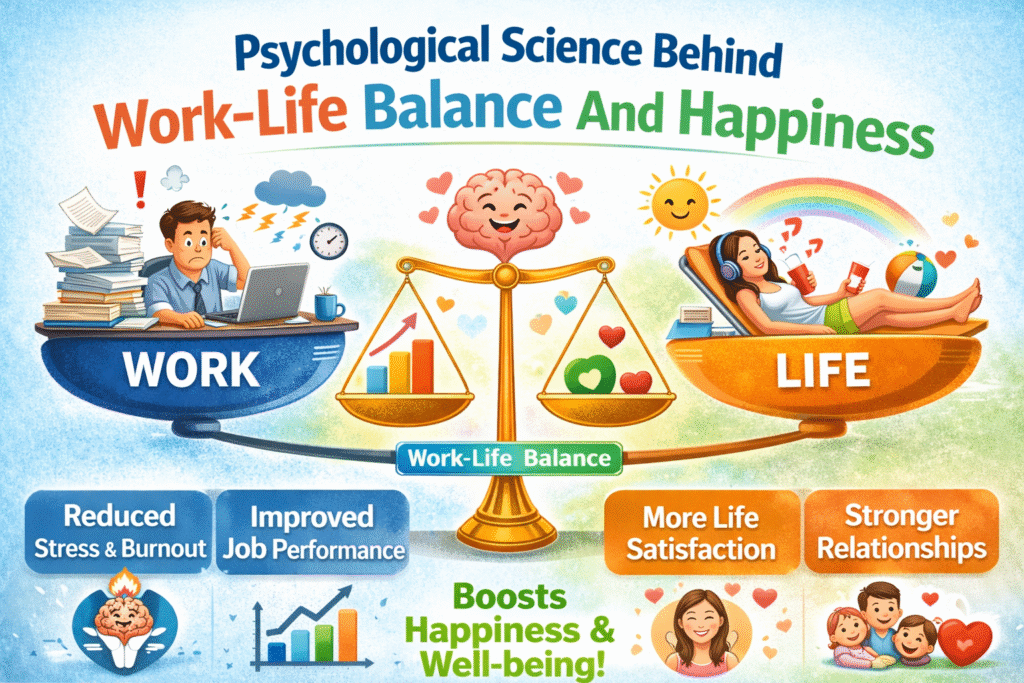
Autonomy is a core driver of happiness. When people control their time, stress decreases and motivation increases [18].
Recovery Theory Explained
Recovery theory states that mental recovery after work is essential for wellbeing [19]. Without recovery, stress accumulates.
How Work-Life Balance Improves Physical Health
- Lower blood pressure [20]
- Improved immune response [21]
- Reduced risk of heart disease [22]
Balanced individuals are more likely to exercise regularly and maintain healthier diets [23].
Social And Family Benefits Of Work-Life Balance
Stronger Relationships
Quality time strengthens emotional bonds and increases life satisfaction [24].
Better Parenting Outcomes
Parents with balanced work schedules report stronger connections with children [25].
Common Myths About Work-Life Balance
Myth 1: Balance Means Less Ambition
Reality: Balanced people perform better long-term [26].
Myth 2: Hustle Equals Success
Reality: Chronic hustle leads to burnout and reduced creativity [27].
How To Build Your Own Work-Life Balance System
Step 1: Audit Your Time
Track work, rest, and personal time for one week [28].
Step 2: Define Non-Negotiables
Sleep, exercise, and family time should be protected [29].
Step 3: Adjust Gradually
Small changes are more sustainable than drastic ones [30].
The Long-Term Benefits Of Proven Work-Life Balance
- Sustainable happiness
- Career longevity
- Emotional resilience
- Better health outcomes
Balanced living is not about doing less it is about living better.
Frequently Asked Questions (FAQs)
What Are The Best Proven Work-Life Balance Examples?
The best proven work-life balance examples include setting fixed work hours, practicing time blocking, taking regular breaks, limiting after-hours communication, and adopting flexible or hybrid work models. These strategies are supported by research showing improved happiness and reduced burnout [9][10][11].
How Does Work-Life Balance Increase Happiness?
Work-life balance increases happiness by reducing chronic stress, improving sleep quality, strengthening personal relationships, and giving individuals more control over their time. According to psychological studies, autonomy and recovery time are key drivers of long-term happiness [18][19].
Can Work-Life Balance Improve Career Success?
Yes, work-life balance can improve career success. Employees with healthy balance show higher productivity, creativity, and job satisfaction. Research indicates that balanced workers are more engaged and less likely to experience burnout or quit their jobs [7][26].
Is Work-Life Balance Possible In High-Pressure Jobs?
Work-life balance is possible even in high-pressure jobs when boundaries are clearly defined. Techniques like prioritization, delegation, digital detox, and structured schedules help professionals manage workload without sacrificing wellbeing [17][27].
How Many Hours Should You Work For A Healthy Balance?
Studies suggest that productivity significantly declines after 50 hours per week. Most experts recommend working between 35–45 hours weekly while ensuring proper rest and recovery to maintain both performance and happiness [7][28].
Does Remote Work Improve Work-Life Balance?
Remote and hybrid work often improve work-life balance by reducing commute time and increasing flexibility. Surveys show remote workers report higher life satisfaction and better control over daily routines compared to fully onsite workers [11][16].
What Is The Biggest Mistake People Make About Work-Life Balance?
The biggest mistake is believing work-life balance means working less. In reality, it means working smarter, setting boundaries, and protecting personal wellbeing to sustain long-term success and happiness [26][29].
How Long Does It Take To Feel The Benefits Of Work-Life Balance?
Many people notice reduced stress and better mood within a few weeks of making small changes. Long-term benefits like improved health and sustained happiness usually develop over several months of consistent balance practices [30].
Conclusion: Happiness Is Built Through Balance
The most successful and happy people in 2026 are not working nonstop they are working intentionally. These proven work-life balance examples show that happiness grows when boundaries, flexibility, and recovery are prioritized.
Work-life balance is not a trend. It is a foundation for a fulfilled life.
References
- According to World Happiness Report, 2022
- Harvard Business Review, Work-Life Balance Definition
- American Psychological Association, Stress Report
- National Institute Of Mental Health
- World Health Organization, Burnout Classification
- Lancet Study On Working Hours
- Stanford University Productivity Study
- Gallup Workplace Engagement Report
- Sleep Foundation Research
- Cal Newport, Time Blocking Research
- Buffer State Of Remote Work Report
- Mayo Clinic, Movement And Mental Health
- University Of Illinois Break Study
- Journal Of Sleep Research
- Microsoft Workplace Analytics
- Occupational Health Psychology Journal
- Forbes Small Business Research
- Self-Determination Theory Studies
- Journal Of Occupational Health Psychology
- American Heart Association
- National Institutes Of Health
- European Heart Journal
- CDC Lifestyle Studies
- Journal Of Social And Personal Relationships
- Child Development Journal
- McKinsey Performance Research
- Creative Burnout Studies, APA
- Time Use Survey, OECD
- Sleep And Health Journal
- Behavioral Change Research, BJHP
2 thoughts on “Proven Work-Life Balance Examples That Skyrocket Happiness”