
Medicine Trainee, NHS England), GMC : 7805049
Dr Ahsan Tariq is a UK-registered medical doctor with a background in internal medicine and a focus on evidence-based research in cognitive health and nootropics. He critically reviews scientific studies, supplements, and ingredients to help readers make informed, safe, and effective choices for brain health and performance.
Introduction
Menstrual Wellness Consulting is an essential aspect of overall well-being, yet it is often overlooked in discussions about health and wellness. With the growing awareness of women’s health in 2026, menstrual wellness consulting has emerged as a specialized approach to help individuals understand, manage, and optimize their menstrual cycles. Unlike traditional approaches that only focus on treating symptoms, menstrual wellness consulting provides personalized guidance, lifestyle support, and education that empowers individuals to make informed decisions about their bodies.
This article explores the theoretical foundations, benefits, limits, and practical care strategies of menstrual wellness consulting, supported by evidence-based research. The goal is to provide a comprehensive understanding of how menstrual wellness consulting can be integrated into daily life for improved health outcomes.
Understanding Menstrual Wellness Consulting
What Is Menstrual Wellness Consulting?
Menstrual wellness consulting is a professional service that provides guidance, education, and support for individuals seeking to understand their menstrual cycles better. According to [1], it is designed to improve physical, mental, and emotional well-being through a combination of personalized advice, symptom tracking, and lifestyle interventions.
Key elements of menstrual wellness consulting include:
- Cycle tracking and analysis to identify patterns
- Nutritional and dietary guidance to support hormonal balance
- Exercise recommendations tailored to energy levels and cycle phases
- Mental and emotional support, including stress management techniques
- Education on menstrual disorders and when to seek medical help
Menstrual wellness consulting is not a replacement for medical care but complements it by focusing on preventive care, lifestyle optimization, and self-awareness [2].
Why Menstrual Wellness Matters
Menstrual health is more than just a monthly event; it affects overall hormonal balance, energy levels, mental health, and long-term well-being. Disruptions in menstrual health can indicate underlying hormonal imbalances, stress, or nutritional deficiencies [3]. By proactively managing menstrual health through consulting, individuals can reduce symptoms, optimize daily functioning, and prevent long-term complications.
Some key reasons menstrual wellness consulting is important:
- Improved awareness of cycles and symptoms
- Enhanced physical health through nutrition and exercise
- Better mental and emotional well-being
- Early detection of potential disorders
Theoretical Foundations of Menstrual Wellness
Biological and Hormonal Perspective
Understanding the biological and hormonal underpinnings of menstruation is essential for effective wellness consulting. The menstrual cycle is regulated by hormones such as estrogen, progesterone, luteinizing hormone (LH), and follicle-stimulating hormone (FSH). These hormones influence:
- Ovulation and fertility
- Energy levels
- Mood and cognitive function
- Metabolism and appetite
Disruptions in hormonal balance can lead to irregular cycles, excessive pain, or mood disturbances [4]. Menstrual wellness consulting leverages this knowledge to guide lifestyle and dietary interventions that support hormonal health.
Behavioral and Psychological Theory
Behavioral health theories suggest that habit formation, stress management, and self-efficacy play a significant role in menstrual health. According to [5], individuals who actively monitor their cycles and adopt healthy behaviors report better symptom management and overall well-being. Menstrual wellness consulting incorporates:
- Habit-building strategies for tracking and self-care
- Cognitive-behavioral techniques to manage PMS and stress
- Mindfulness practices to enhance awareness of bodily changes
Lifestyle and Nutritional Theory
Diet, physical activity, sleep, and stress directly influence menstrual health. The lifestyle theory posits that sustainable, small daily changes can cumulatively improve hormonal balance and reduce menstrual symptoms [6]. Key components include:
- Balanced macronutrient intake
- Micronutrient support (iron, magnesium, B vitamins)
- Regular physical activity aligned with cycle phases
- Adequate sleep for hormonal regulation
- Stress reduction techniques
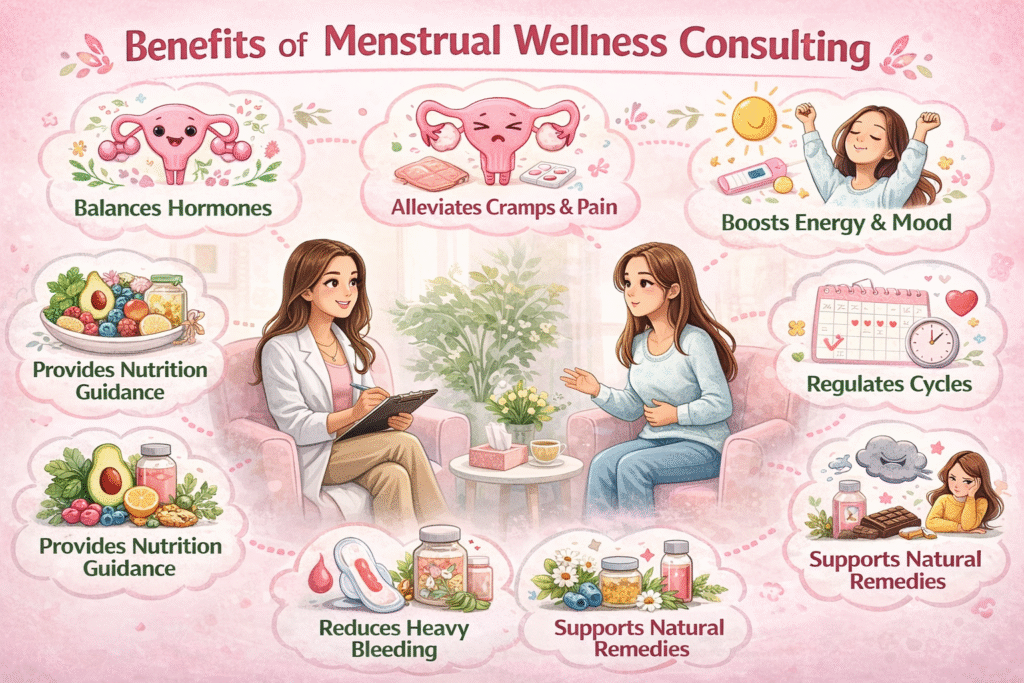
Benefits of Menstrual Wellness Consulting
1. Enhanced Cycle Awareness
Understanding menstrual patterns allows individuals to anticipate symptoms, plan activities, and recognize abnormal changes. Research shows that cycle tracking improves:
- Predictability of symptoms
- Ability to identify irregularities early
- Self-awareness and empowerment [7]
Example Table: Common Symptoms Across Cycle Phases
| Cycle Phase | Common Symptoms | Tips to Manage Symptoms |
|---|---|---|
| Menstrual | Cramping, fatigue, bloating | Gentle exercise, hydration, heat therapy |
| Follicular | Increased energy, focus | Strength training, high-protein diet |
| Ovulatory | Peak energy, social motivation | Cardio workouts, social activities |
| Luteal | PMS, irritability, bloating | Mindfulness, magnesium-rich foods |
2. Symptom Management
Consultants provide personalized guidance to reduce discomfort during the cycle:
- Dietary adjustments to reduce cramps and bloating
- Exercise routines adapted to energy levels
- Stress management strategies such as meditation or breathing exercises [8]
This holistic approach minimizes reliance on medications unless necessary.
3. Emotional and Mental Well-Being
Menstrual wellness consulting addresses PMS-related mood changes, anxiety, and irritability. Evidence suggests that behavioral interventions such as mindfulness, journaling, and cognitive-behavioral strategies improve emotional regulation [9]. Clients report enhanced confidence, reduced anxiety, and improved daily functioning.
4. Lifestyle Optimization
Consulting encourages long-term lifestyle adjustments that support menstrual health:
- Balanced nutrition for hormonal support
- Exercise routines aligned with cycle phases
- Adequate sleep to regulate hormones
- Stress-reduction practices to maintain mental wellness [10]
Key Takeaway: Sustainable improvements in lifestyle often lead to better cycle regularity, reduced symptoms, and improved overall health.
Limits of Menstrual Wellness Consulting
While menstrual wellness consulting provides valuable guidance, it has limitations:
1. Not a Substitute for Medical Care
Consulting cannot diagnose or treat medical conditions such as endometriosis, PCOS, or severe dysmenorrhea. Clients with these conditions require clinical evaluation and treatment [11].
2. Individual Variability
Menstrual experiences vary widely. What works for one individual may not work for another, making personalized advice essential [12].
3. Evidence Limitations
Some interventions may lack robust scientific evidence. While lifestyle changes are generally safe, unverified supplements or alternative therapies should be approached with caution [13].
Core Components of Menstrual Wellness Care
1. Cycle Tracking Techniques
| Method | Benefits | Notes |
|---|---|---|
| Mobile Apps | Easy, automated tracking | Ensure data privacy |
| Paper Journals | Detailed symptom reflection | Encourages mindfulness |
| Hormonal Monitoring | Accurate identification of cycle phases | Requires professional guidance |
2. Nutritional Guidance
- Focus on iron, magnesium, and B vitamins for symptom relief
- Maintain stable blood sugar with balanced meals
- Avoid excessive processed foods and refined sugar [14]
3. Exercise Recommendations
- Light cardio during menstruation to reduce cramps
- Strength and flexibility exercises during follicular phase
- Mind-body practices such as yoga and Pilates for stress management [15]
4. Stress and Mental Health Support
- Mindfulness meditation and breathing techniques
- Cognitive-behavioral approaches for PMS-related mood changes
- Peer support or counseling groups [16]
Advanced Insights in Menstrual Wellness
Hormonal Education
Educating clients on estrogen, progesterone, and other hormones helps them understand why symptoms occur and how lifestyle choices influence hormonal balance [17].
Fertility Awareness
Consulting can provide knowledge on fertility windows, ovulation, and natural family planning while emphasizing awareness rather than intervention [18].
Preventive Care
Early identification of irregular cycles, heavy bleeding, or severe pain allows timely referral to healthcare providers, reducing the risk of complications [19].
Choosing the Right Menstrual Wellness Consultant
Qualifications to Look For
- Certified nutritionist, dietitian, or wellness coach
- Specialized training in menstrual or hormonal health
- Evidence-based approach and experience with diverse clients [20]
Questions to Ask Before Booking
- How is personal data protected?
- What assessment methods are used?
- Do you collaborate with healthcare providers for complex cases? [21]
Integrating Menstrual Wellness into Daily Life
Daily Habits for Support
- Exercise aligned with cycle phases
- Balanced diet with essential nutrients
- Sleep hygiene to regulate hormones
- Stress reduction techniques [22]
Using Technology Safely
- Apps for tracking cycles and symptoms
- Wearable devices for hormonal monitoring if medically advised
- Avoid over-reliance on unverified digital advice [23]
Common Misconceptions About Menstrual Wellness
Myth 1: All Cycles Should Be Perfectly Regular
Cycle variability is normal; minor irregularities are not always pathological [24].
Myth 2: Menstrual Wellness Only Concerns Periods
It encompasses hormonal health, fertility, symptom management, and lifestyle optimization [25].
Myth 3: Supplements Are Always Necessary
Not all individuals need supplements; diet and lifestyle often suffice [26].
Measuring Success in Menstrual Wellness
Indicators of successful consulting include:
- Reduced symptom severity
- Increased self-awareness and empowerment
- Improved lifestyle habits and adherence
- Enhanced overall well-being [27]
When to Seek Medical Support
Seek clinical care when:
- Pain is severe or worsening
- Bleeding is unusually heavy or prolonged
- Symptoms suggest hormonal disorders or chronic conditions [28]
Conclusion: Maximizing the Benefits
Menstrual wellness consulting provides valuable guidance, symptom management, and lifestyle support. Its effectiveness is highest when individuals understand the limits, integrate evidence-based habits, and seek medical evaluation when necessary. By focusing on education, self-awareness, and preventive care, individuals can achieve sustainable menstrual health, improved daily functioning, and enhanced well-being.
References
- WHO, Menstrual Health Guidelines (2020)
- American College of Obstetricians and Gynecologists (ACOG) – Cycle Health (2019)
- Johns Hopkins Medicine – Cycle Tracking Benefits (2021)
- Mayo Clinic – Hormonal Influence on Menstruation (2018)
- Teixeira et al., Behavioral Variability in Health Interventions (2015)
- NIH – Lifestyle and Hormonal Health (2019)
- Academy of Nutrition and Dietetics – Menstrual Nutrition (2020)
- Harvard Health – PMS Management (2020)
- Mindful Health – Stress and Menstrual Health (2019)
- American Council on Exercise – Exercise and Cycle Phases (2018)
- Endometriosis Foundation – When to See a Doctor (2020)
- Blundell et al., Appetite and Mood During Menstruation (2014)
- NIH Dietary Supplement Fact Sheet (2021)
- Mozaffarian et al., Nutrition and Hormonal Health (2010)
- Ainsworth et al., Physical Activity and Menstrual Health (2011)
- Kristeller et al., Mindful Eating and PMS (2019)
- Hormone Health Network – Hormonal Education (2020)
- Fertility Awareness Foundation – Natural Family Planning (2021)
- CDC – Early Identification of Menstrual Disorders (2019)
- National Board for Health & Wellness Coaching – Qualifications (2020)
- Harvard Health – Choosing a Health Consultant (2018)
- Stanford Medicine – Daily Lifestyle Habits (2021)
- Mayo Clinic – Digital Tools in Health Tracking (2019)
- ACOG – Normal Cycle Variability (2019)
- WHO – Comprehensive Menstrual Health (2020)
- NIH – Supplement Use Guidelines (2018)
- National Weight Control Registry – Tracking Success Metrics (2014)
- Academy of Nutrition & Dietetics – Clinical Referral Guidelines (2022)