
Dr Ahsan Tariq , MBBS, MRCP (UK ) ongoing, IMT ( Internal Medicine Trainee, NHS England), GMC : 7805049
Dr Ahsan Tariq is a UK-registered medical doctor with a background in internal medicine and a focus on evidence-based research in cognitive health and nootropics. He critically reviews scientific studies, supplements, and ingredients to help readers make informed, safe, and effective choices for brain health and performance.
Introduction:
Stretching is often overlooked, but it is a key factor in improving flexibility, preventing injury, and enhancing overall strength. A proper stretching routine can help you feel energized, avoid stiffness, and maintain a healthy, mobile body. In this guide, we will cover everything from awareness to benefits, types of stretches, and a sample routine to maximize your results.
Understanding the Importance of Stretching
Stretching is more than just a warm-up. It plays a vital role in improving physical performance, reducing muscle tension, and enhancing mental focus. Many people ignore stretching until they experience stiffness, pain, or limited mobility. Understanding the importance of stretching is the first step to creating a routine that truly benefits your body.
Why Stretching Matters
- Improves Flexibility: Regular stretching increases the length of muscles and tendons, allowing for greater range of motion.
- Reduces Risk of Injury: Flexible muscles are less prone to strains and tears.
- Boosts Circulation: Stretching stimulates blood flow, delivering oxygen and nutrients to muscles.
- Enhances Posture: Stretching tight muscles, especially in the back and shoulders, improves posture.
- Relieves Stress: Stretching promotes relaxation by releasing tension in muscles.
Common Stretching Mistakes
- Skipping Warm-Up – Stretching cold muscles can cause injury.
- Bouncing Stretches – Ballistic stretching can strain muscles.
- Holding Breath – Breathing deeply improves oxygen flow and relaxation.
- Ignoring Pain Signals – Stretching should feel tension, not sharp pain.
- Inconsistency – Irregular stretching reduces benefits significantly.
Types of Stretching
There are several stretching methods, each serving different purposes. Understanding which type to use and when is critical.
Static Stretching
Static stretching involves holding a stretch for 15–60 seconds. It’s ideal after a workout to improve flexibility and relax muscles.
Examples:
- Hamstring stretch
- Quadriceps stretch
- Shoulder stretch
Dynamic Stretching
Dynamic stretching uses controlled movements to prepare muscles for activity. It’s best before a workout to increase blood flow and mobility.
Examples:
- Leg swings
- Arm circles
- Hip openers
PNF Stretching (Proprioceptive Neuromuscular Facilitation)
PNF is an advanced stretching technique involving contracting and relaxing muscles. It significantly improves flexibility but requires caution or professional guidance.
Benefits of a Consistent Stretching Routine
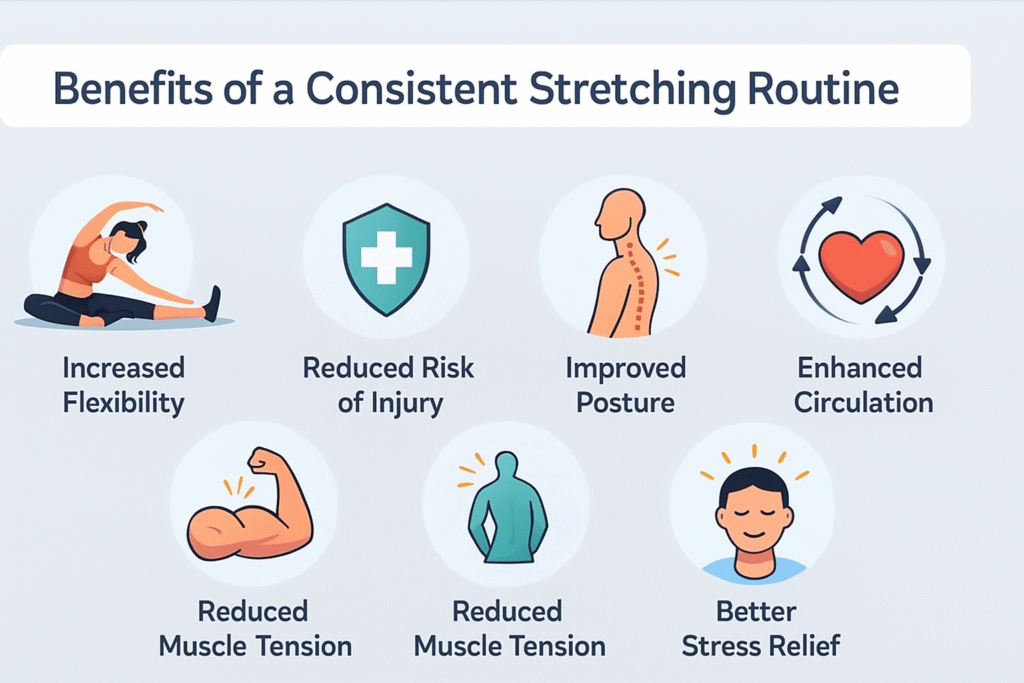
Creating a stretching routine offers physical, mental, and long-term health benefits:
| Benefit | Explanation |
|---|---|
| Improved Flexibility | Increases muscle and joint range of motion |
| Injury Prevention | Reduces risk of strains, sprains, and muscle tears |
| Better Posture | Loosens tight muscles that cause slouching |
| Enhanced Circulation | Boosts blood flow to muscles, aiding recovery |
| Reduced Muscle Soreness | Helps in faster recovery after workouts |
| Stress Relief | Stretching reduces cortisol and promotes relaxation |
| Enhanced Athletic Performance | Flexible muscles perform better in sports and daily activities |
How to Create Your Ultimate Stretching Routine
A successful stretching routine requires planning, consistency, and proper technique.
Step 1 – Warm-Up
Start with 5–10 minutes of light cardio, such as walking, jogging, or cycling. Warm muscles stretch more effectively and reduce the risk of injury.
Step 2 – Full Body Stretch
Focus on major muscle groups for overall flexibility:
- Neck and Shoulders – Tilt head side to side, shoulder rolls
- Upper Back – Cat-cow stretches, thoracic rotations
- Chest – Chest openers, doorway stretches
- Arms and Wrists – Triceps stretch, wrist flexor stretch
- Lower Back and Hips – Hip flexor stretch, seated twist
- Legs – Hamstrings, quadriceps, calves
Step 3 – Hold and Breathe
- Hold each stretch for 20–60 seconds
- Breathe deeply and avoid straining
- Repeat 2–3 times per stretch
Step 4 – Cool Down
After your routine, perform light movements or meditation to relax muscles and improve circulation.
Sample 15-Minute Daily Stretching Routine
Here’s a simple, time-efficient routine you can follow daily:
| Muscle Group | Stretch Exercise | Duration |
|---|---|---|
| Neck & Shoulders | Side Neck Stretch, Shoulder Rolls | 1 min each |
| Upper Back | Cat-Cow Stretch | 1 min |
| Chest | Doorway Stretch | 1 min |
| Arms & Wrists | Triceps Stretch, Wrist Flex | 1 min |
| Lower Back & Hips | Seated Twist, Hip Flexor Stretch | 2 min each |
| Legs | Hamstring, Quadriceps, Calf Stretch | 2 min each |
Total Time: ~15 minutes
Tip: You can extend this routine to 30–40 minutes for deeper flexibility training.
How to Avoid Stiffness Effectively
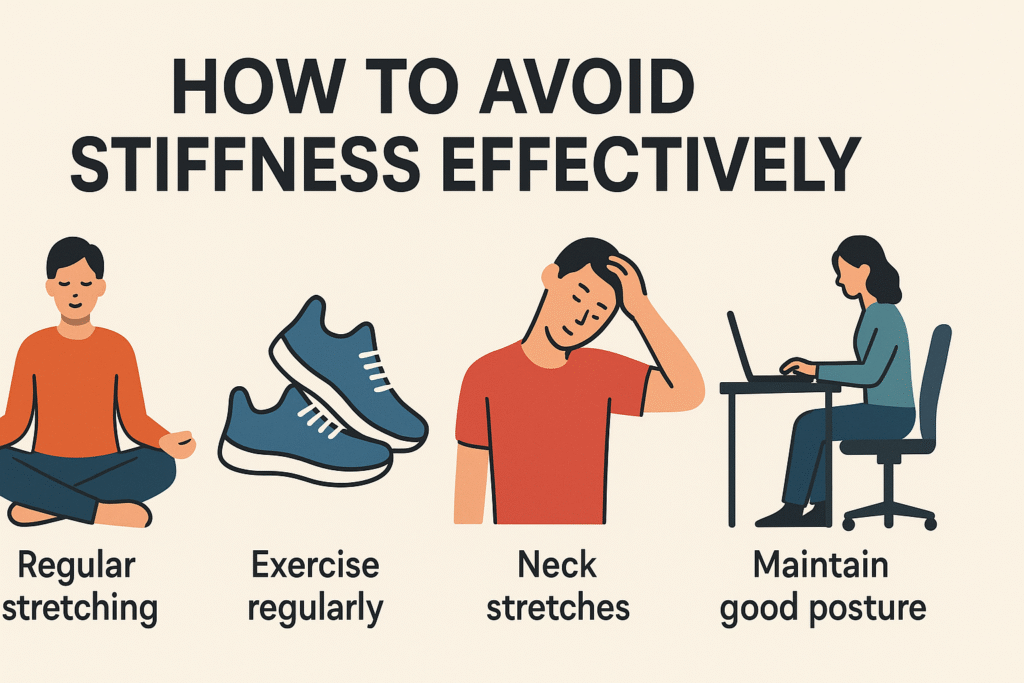
Even with regular stretching, stiffness can occur due to sedentary lifestyle or poor posture. Here’s how to combat it:
Stay Active Throughout the Day
- Stand up every 30–60 minutes if sitting long hours
- Take short walks or do light stretches at your desk
Hydration and Nutrition
- Drink sufficient water for muscle elasticity
- Include protein, magnesium, and potassium in your diet
Use Tools for Deep Stretching
- Foam rollers, resistance bands, and yoga straps can enhance flexibility
- Perform slow, controlled movements to target tight areas
Common Questions About Stretching
How Often Should I Stretch?
- Daily stretching is ideal for maximum flexibility
- 2–3 times per week can maintain mobility if daily isn’t possible
Should Stretching Hurt?
- Stretching should create mild tension, not pain
- Sharp or intense pain indicates over-stretching
Can Stretching Replace Exercise?
- Stretching improves flexibility but does not replace strength or cardio training
- Combine stretching with strength and cardio for optimal health
Key Takeaways
- Stretching is essential for strength, flexibility, and injury prevention
- A daily routine improves posture, circulation, and mental focus
- Use dynamic stretches before workouts and static stretches after
- Stay consistent and mindful for long-term benefits
References
- American College of Sports Medicine. Stretching Guidelines for Flexibility and Injury Prevention.
- Mayo Clinic. Stretching: Focus on Flexibility.
- National Institutes of Health. Benefits of Stretching for Health and Mobility.
- Harvard Health Publishing. Stretching: The Key to Muscle Health.
- American Council on Exercise. Dynamic vs. Static Stretching.
- National Academy of Sports Medicine. Flexibility and Stretching Techniques.
- WebMD. How Stretching Improves Posture and Reduces Pain.
- Cleveland Clinic. Stretching Tips for Injury Prevention.
- Journal of Sports Science & Medicine. Effectiveness of PNF Stretching.
- Healthline. Daily Stretching Routine for Full-Body Flexibility.

3 thoughts on “Ultimate Stretching Routine”