
Dr Ahsan Tariq , MBBS, MRCP (UK ) ongoing, IMT ( Internal Medicine Trainee, NHS England), GMC : 7805049
Dr Ahsan Tariq is a UK-registered medical doctor with a background in internal medicine and a focus on evidence-based research in cognitive health and nootropics. He critically reviews scientific studies, supplements, and ingredients to help readers make informed, safe, and effective choices for brain health and performance.
Introduction
We live in a world where the mind rarely rests. Your brain receives hundreds of micro-stresses every day messages, deadlines, comparisons, and expectations. Overthinking increases anxiety, reduces productivity, affects sleep, and drains confidence.
In 2025, mindfulness meditation is no longer just a wellness trend; it is a mental survival skill. People are turning to mindful living to stay emotionally strong, mentally clear, peaceful, and productive.
Mindfulness offers two things overthinking cannot:
- Presence instead of mental noise
- Calm instead of confusion
- Strength instead of self-doubt
This blog will show you exactly how to use mindfulness meditation to break the chain of overthinking and rise stronger than ever.
What Is Mindfulness Meditation?
Mindfulness meditation is the practice of paying attention intentionally, calmly, and without judgment to the present moment. It means being fully aware of your thoughts, feelings, and surroundings without letting them control you.
Key Elements of Mindfulness
- Awareness of breath
- Awareness of thoughts
- Acceptance without reacting
- Returning focus gently
- Observing rather than absorbing
Mindfulness meditation helps you step out of the autopilot mode where overthinking thrives.
How Overthinking Affects Your Brain and Life
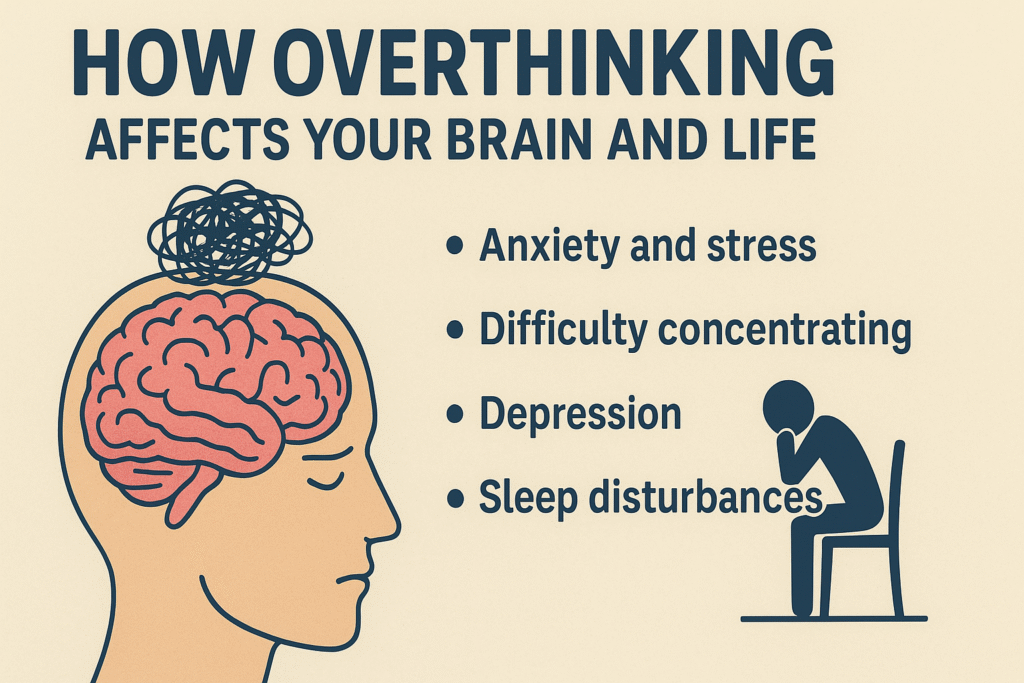
Overthinking is more than “thinking too much.” It is a habit that changes how your brain operates.
Psychological Effects
- Constant worry
- Self-doubt
- Fear of failure
- Difficulty making decisions
- Mental exhaustion
Physical Effects
- Increased cortisol
- Headaches
- Sleep disruption
- Fatigue
- Muscle tension
Lifestyle Effects
- Reduced productivity
- Low motivation
- Poor relationships
- Emotional burnout
Mindfulness meditation helps you break these patterns by teaching the brain to pause instead of panic.
Why Mindfulness Meditation Works (Science Explained)
Modern research consistently shows mindfulness meditation changes the structure and function of the brain.
Reduced Activity in the Overthinking Region
Mindfulness reduces activity in the default mode network (DMN) the part of the brain responsible for endless mental chatter.
Improved Focus and Cognitive Control
Meditation strengthens the prefrontal cortex, helping you make clearer decisions and avoid emotional overwhelm.
Lower Stress Hormones
Practicing mindfulness reduces cortisol, stabilizes heart rate, and induces calmness.
Enhanced Emotional Regulation
Mindfulness strengthens the brain’s ability to handle stress, conflict, and emotional triggers.
This is why mindfulness is recommended by therapists, neuroscientists, and mental health professionals worldwide.
Benefits of Mindfulness Meditation in 2025
Mindfulness meditation gives powerful benefits that directly counter modern mental struggles.
1. Ends Overthinking
Mindfulness stops the brain from spiraling into “what if” scenarios.
2. Enhances Focus and Productivity
When your mind is clear, decision-making becomes easier.
3. Improves Emotional Strength
You learn to pause, reflect, and respond instead of reacting.
4. Reduces Stress and Anxiety
Breathing-based mindfulness activates relaxation in the nervous system.
5. Boosts Sleep Quality
Calm mind = deeper sleep.
6. Builds Confidence and Self-Trust
As you reduce mental noise, clarity rises.
7. Helps You Feel Grounded and Present
Mindfulness brings you back to reality instead of living inside your worries.
How to Start Mindfulness Meditation
Starting mindfulness is simple and does not require equipment.
Step 1: Find a Quiet Place
Choose a space where you won’t be disturbed for 5–10 minutes.
Step 2: Sit Comfortably
You can sit on a chair or floor, keeping your back straight.
Step 3: Focus on Your Breath
Slowly inhale and exhale. Feel the air moving.
Step 4: Observe Thoughts Without Judgment
Thoughts will appear simply watch them pass.
Step 5: Return to Your Breath
Bring your attention back whenever your mind wanders.
The goal is not to stop thinking; it is to stop overreacting to thoughts.
Daily Mindfulness Techniques for Ending Overthinking
Here are beginner-friendly techniques that can be practiced anytime.
1. Breath Awareness
Watch your natural breathing patterns for 2–3 minutes.
2. Body Scan Meditation
Mentally relax each part of your body from head to toe.
3. Mindful Walking
Focus on footsteps, sensations, and movement.
4. Thought Labeling
Identify thoughts as “worry,” “planning,” “fear,” or “memory” to detach from them.
5. Mindful Journaling
Write your thoughts without analyzing.
6. Mindfulness in Daily Tasks
Be fully present while eating, cleaning, or working.
Advanced Mindfulness Practices for 2025
These practices are ideal once you master the basics.
1. Loving-Kindness Meditation (Metta)
Helps build compassion, emotional strength, and internal peace.
2. Visualization Meditation
Picture calm scenes to reduce anxiety quickly.
3. Mindfulness with Mantras
Repeating a positive phrase helps anchor focus.
4. Deep Breath Cycling
Alternate breathing cycles to regulate energy.
5. Digital Mindfulness
Conscious management of technology use.
Table: Mindfulness Techniques vs Benefits
| Technique | Primary Benefit | Best For |
|---|---|---|
| Breath Awareness | Reduces stress | Beginners |
| Body Scan | Physical relaxation | Sleep issues |
| Mindful Walking | Improves presence | Overthinkers |
| Thought Labeling | Stops mental spirals | Anxiety |
| Mindful Journaling | Clears mental clutter | Emotional clarity |
| Loving-Kindness Meditation | Boosts self-compassion | Emotional healing |
| Visualization | Deep calm | High-stress situations |
| Mantra Meditation | Enhances focus | Busy minds |
| Digital Mindfulness | Reduces overwhelm | Tech-heavy lifestyle |
Common Mistakes Beginners Must Avoid
1. Expecting Instant Results
Mindfulness is a practice, not a quick fix.
2. Trying to “Empty the Mind”
The mind will think it’s normal.
3. Being Self-Critical
Judging yourself defeats the goal of mindfulness.
4. Inconsistency
Short daily practice is better than long occasional sessions.
5. Overcomplicating It
Mindfulness is simple. Consistency = results.
How Mindfulness Helps You Rise Strong
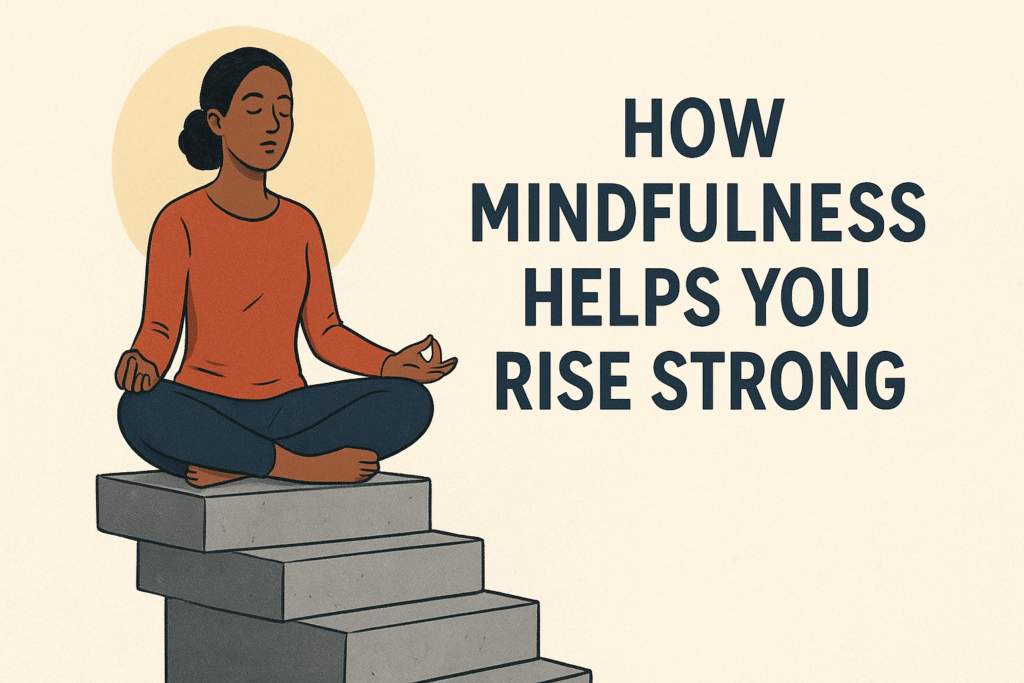
When you practice mindfulness consistently, your mind becomes sharper, calmer, and more powerful. You start breaking emotional patterns, thinking clearly, and making decisions from strength, not fear.
Mindfulness helps you rise stronger by:
- Building resilience
- Improving self-control
- Strengthening clarity
- Reducing emotional overwhelm
- Boosting confidence
- Creating balance
In 2025, mental clarity is not a luxury it’s essential. Mindfulness meditation provides a path to reclaim your power.
Final Thoughts
Mindfulness meditation in 2025 is one of the greatest tools for ending overthinking and rising stronger. Whether you want peace, productivity, emotional strength, or clarity mindfulness gives you the foundation to rebuild your inner world.
You don’t need hours. You only need consistency, presence, and patience.
Start small. Stay regular.
Your mind will begin to transform.
References
- American Psychological Association – “Mindfulness and Stress Reduction.”
- National Institute of Mental Health – “Understanding Anxiety and Thought Patterns.”
- Harvard Medical School – “Benefits of Mindfulness Meditation.”
- Mayo Clinic – “Meditation: A Simple, Fast Way to Reduce Stress.”
- National Center for Complementary and Integrative Health – “Mindfulness Research Summary.”
- University of California, Berkeley – “Greater Good Science Center: Mindfulness Studies.”
- American Heart Association – “Mindfulness and Its Mental Health Impact.”
- Cleveland Clinic – “Mindfulness for Overthinking and Anxiety.”
- Journal of Clinical Psychology – “Cognitive Control Improvements Through Meditation.”
- Stanford Medicine – “Neuroscience of Mindfulness Practices.”

3 thoughts on “Mindfulness Meditation 2025”