
Dr Ahsan Tariq , MBBS, MRCP (UK ) ongoing, IMT ( Internal Medicine Trainee, NHS England), GMC : 7805049
Dr Ahsan Tariq is a UK-registered medical doctor with a background in internal medicine and a focus on evidence-based research in cognitive health and nootropics. He critically reviews scientific studies, supplements, and ingredients to help readers make informed, safe, and effective choices for brain health and performance.
Introduction
Diet Cola Nutrition has become one of the most popular low-calorie beverages in the world, especially among people trying to reduce sugar intake or manage weight. Its “zero sugar” promise attracts millions but like any widely consumed product, it comes with both powerful benefits and hidden risks.
This comprehensive guide breaks down the ingredients, nutrition facts, and the real science behind diet cola. You’ll learn how it affects your body, who should be cautious, and whether it truly fits into a healthy lifestyle.
What Exactly Is Diet Cola?
Diet cola is a low-calorie soft drink formulated to mimic the taste of regular cola while eliminating sugar.
Instead of sugar, it uses non-nutritive sweeteners like:
- Aspartame
- Sucralose
- Acesulfame potassium (Ace-K)
- Stevia (in some versions)
These sweeteners provide intense sweetness with almost no calories.
Diet Cola Nutrition Facts
Most diet colas contain 0–5 calories per serving, depending on brand and flavor. Although calorie-free, they still include:
- Carbonated water
- Artificial sweeteners
- Acids (phosphoric or citric)
- Caffeine
- Caramel color
- Flavor additives
- Preservatives like potassium benzoate
Below is a simple breakdown.
Table: Diet Cola Nutritional Overview Per 355ml (12 oz)
| Nutrient / Ingredient | Amount | Impact |
|---|---|---|
| Calories | 0–5 kcal | Low energy intake |
| Total Sugar | 0g | Sugar-free |
| Artificial Sweeteners | 80–200 mg | Taste without calories |
| Sodium | 20–40 mg | Mild contribution to daily intake |
| Carbohydrates | 0g | No digestible carbs |
| Caffeine | 30–46 mg | Mild stimulant |
| Acids | — | May affect dental enamel |
| Preservatives | — | Shelf-life extension |
Why Diet Cola Has Gained Massive Popularity
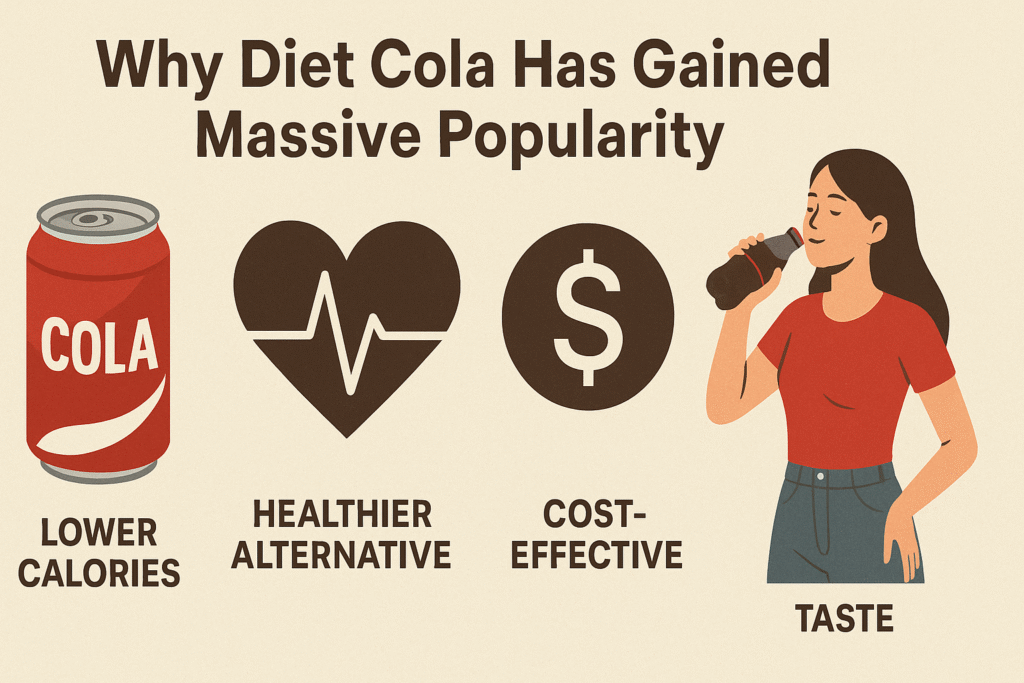
Diet sodas rose in popularity for various reasons:
1. The global fight against obesity
People looking for ways to reduce calorie intake often switch from regular soda to diet versions.
2. Rise in sugar-related illnesses
Conditions like diabetes have made sugar-reduction strategies mainstream.
3. Strong marketing campaigns
Brands heavily promote diet sodas as “smart switches,” influencing perception.
4. Taste preferences
Many consumers enjoy carbonation and sweetness without guilt.
Powerful Perks of Diet Cola
Diet cola isn’t all bad. When used mindfully, it can offer genuine benefits especially when replacing sugary drinks.
1. Zero or Minimal Calories
The most obvious advantage is the caloric difference.
A regular cola has ~140 calories per can; diet cola has nearly zero.
Switching from regular to diet can help:
- Reduce daily calorie intake
- Support weight-loss plans
- Limit blood sugar spikes
For individuals monitoring calories, this swap can make a meaningful impact.
2. Helpful for People with Diabetes (In Moderation)
Since diet cola contains no sugar, it doesn’t cause sudden rises in blood glucose. For diabetics, replacing sugary sodas with diet versions is often easier than eliminating the craving entirely.
However, long-term use should be discussed with a healthcare provider.
3. Supports Weight Management
When used properly, diet soda may help:
- Control cravings
- Reduce excess caloric intake
- Provide a “treat” without adding weight gain
It’s the combination of sweetness + zero calories that makes it appealing.
4. Convenient Caffeine Source
Diet cola contains caffeine, offering:
- Increased alertness
- Better focus
- Mild energy boost
For people who dislike coffee or tea, diet cola can be an alternative source.
5. Enjoyable Taste Without Sugar
Artificial sweeteners mimic sweetness effectively.
This gives consumers a satisfying flavor while sticking to low-calorie diets.
6. Better for Teeth Compared to Sugary Soda (But Not Perfect)
Sugar is a major cause of cavities.
Removing sugar reduces cavity risk.
However, diet cola still contains acids, which come with their own concerns.
Hidden Risks of Diet Cola
Despite its benefits, diet cola has several less-visible risks that health experts often discuss.
1. Artificial Sweeteners May Influence Cravings
Some studies suggest that zero-calorie sweeteners may:
- Trigger sugar cravings
- Confuse hunger signals
- Lead to overeating in some individuals
The sweet taste without calories may disrupt the brain’s reward system.
2. Possible Metabolic Effects
Research is mixed, but some studies link long-term diet soda use to:
- Increased appetite
- Changes in gut bacteria
- Higher risk of metabolic issues in certain groups
These effects are not proven, but they are important considerations for long-term consumers.
3. Dental Enamel Erosion
Acids in diet soda especially phosphoric and citric acid can weaken tooth enamel.
Even without sugar, frequent consumption may cause:
- Tooth sensitivity
- Weakening enamel
- Increased risk of erosion
Drinking with a straw or rinsing the mouth with water afterward may reduce this effect.
4. Possible Bone Health Concerns
Some research suggests that high intake of phosphoric acid (common in colas) may affect bone mineral density in women.
More research is needed, but the concern persists.
5. Caffeine-Related Side Effects
Caffeine may cause:
- Sleep disturbance
- Anxiety
- Rapid heartbeat (in sensitive people)
- Dehydration
For teens or people with low caffeine tolerance, diet cola may cause noticeable effects.
6. Not a Substitute for Hydration
Though calorie-free, diet cola is not a replacement for water.
Excess intake may reduce water consumption, affecting hydration levels.
Who Should Limit Diet Cola Intake?
1. Individuals with sensitivity to caffeine
May experience jitteriness, headaches, or sleep issues.
2. People prone to digestive issues
Some artificial sweeteners may cause bloating or discomfort.
3. Those with bone-density concerns
Women with osteoporosis risk may need to minimize cola intake.
4. Teenagers
Caffeine + artificial sweeteners may affect developing habits and sleep cycles.
5. People who replace meals with diet soda
This leads to poor nutritional intake.
How to Use Diet Cola Safely
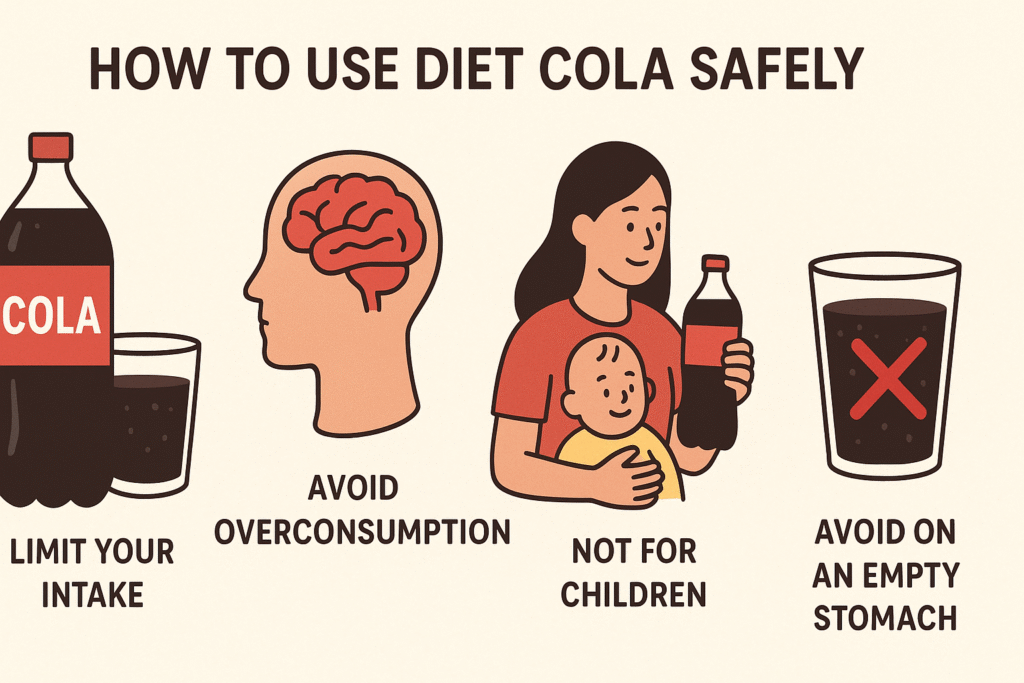
1. Keep it occasional, not daily
A few times a week is safer than multiple cans per day.
2. Balance with plenty of water
Always prioritize hydration.
3. Avoid pairing with sugary snacks
It may encourage overeating.
4. Choose caffeine-free versions
Useful for sensitive individuals.
5. Watch for enamel sensitivity
Use a straw or rinse with water after drinking.
Diet Cola vs Regular Cola vs Sparkling Water
Diet Cola
- Zero calories
- Artificial sweeteners
- Acidic
- Contains caffeine
Regular Cola
- High in sugar
- High calorie
- Leads to weight gain
- Stronger dental risks
Sparkling Water
- No sugar
- No sweeteners
- Hydrating
- Best daily option
Final Thoughts: Is Diet Cola Healthy or Harmful?
Diet cola is neither a “miracle drink” nor a “dangerous poison.”
It exists in the middle.
The Good:
- Low calorie
- No sugar
- Helps prevent weight gain from soda
- Convenient and enjoyable
The Hidden Risks:
- May affect cravings
- Possible metabolic effects
- Dental erosion
- Not ideal for bone health
- Adds caffeine intake
Best approach:
Use diet cola as an occasional beverage, not a daily hydration source. When balanced with water, proper meals, and a healthy lifestyle, it can fit into a moderate diet without major issues for most people.
References
- American Heart Association – Artificial Sweeteners Guidance
- Centers for Disease Control and Prevention – Obesity Data
- World Health Organization – Non-Nutritive Sweeteners Overview
- Mayo Clinic – Diet Soda and Diabetes Insights
- National Institutes of Health – Sweetener Safety Research
- Harvard School of Public Health – Sugary Beverage Studies
- American Dental Association – Acids and Enamel Health
- Journal of Nutrition & Metabolism – Metabolic Response to Sweeteners
- American Academy of Pediatrics – Caffeine Intake for Teens
- National Osteoporosis Foundation – Soda and Bone Health Reports
2 thoughts on “Diet Cola Nutrition: Powerful Perks vs Hidden Risks”