
Dr Ahsan Tariq , MBBS, MRCP (UK ) ongoing, IMT ( Internal Medicine Trainee, NHS England), GMC : 7805049
Dr Ahsan Tariq is a UK-registered medical doctor with a background in internal medicine and a focus on evidence-based research in cognitive health and nootropics. He critically reviews scientific studies, supplements, and ingredients to help readers make informed, safe, and effective choices for brain health and performance.
Introduction
The modern healthcare landscape is evolving quickly, driven by the demand for faster access, affordable options, and more personalized care. One model gaining attention is direct primary care (DPC) and Everside Health is one of the leading providers in this space.
While the service offers meaningful advantages, there are also quieter gaps that potential members should understand. This comprehensive guide breaks down those strengths and limitations, helping readers make informed decisions.
Understanding Everside Health
Everside Health is a direct-to-employer healthcare model built around preventive care, unlimited visits, and reduced out-of-pocket costs. Instead of charging per visit or relying solely on insurance billing, Everside partners with employers to create simplified access to primary care and wellness services for employees and their families.
How the Model Works
- Employers pay a monthly membership fee for employees.
- Members get unlimited visits with their provider.
- Care includes primary care, chronic disease support, labs, and virtual care.
- Costs are reduced because the model removes layers of billing and claims.
Table: Quick Comparison: Benefits vs Gaps
| Category | Powerful Benefits | Hidden Gaps |
|---|---|---|
| Cost | Lower out-of-pocket spending | Availability depends on employer |
| Access | Faster appointments & shorter waits | Limited clinic locations |
| Personalization | Longer visits, better relationships | Provider availability varies |
| Wellness Support | Lifestyle coaching & chronic care | Not full replacement for specialty care |
| Convenience | Virtual care options | Quality varies by region |
| Coverage | Predictable patient costs | Limited services beyond primary care |
Why Everside Health Is Gaining Attention
Awareness of Rising Healthcare Challenges
Healthcare systems globally face similar problems:
- Long wait times
- High consultation fees
- Limited preventive care
- Burnout among providers
- Complex and confusing insurance structures
Employees want solutions that solve these pain points without overwhelming costs. Employers, too, need programs that improve health outcomes while reducing medical spending.
This is where Everside’s direct-care model gains traction.
Powerful Benefits of Everside Health
1. Lower Out-of-Pocket Costs
Traditional healthcare often leads to unpredictable expenses consultation fees, co-pays, lab fees, and unexpected bills.
Everside Health simplifies this by eliminating or reducing many of these costs.
Members often receive:
- No co-pays
- No surprise bills
- Free or discounted lab work
- Predictable monthly employer-covered fees
This financial transparency is one of the most appreciated benefits among users.
2. Faster Appointments and Less Waiting
In traditional systems, scheduling can take days or weeks especially for chronic conditions.
Everside clinics generally offer:
- Same-day or next-day appointments
- Significantly shorter waiting room times
- Longer appointment durations
The extended visit time allows deeper conversations, more health planning, and better follow-up.
3. Stronger Provider Patient Relationships
Everside’s approach enables providers to spend more meaningful time with each patient. This leads to:
- More accurate assessments
- Better lifestyle planning
- Improved chronic condition management
- Higher patient satisfaction
This model supports continuity of care something many traditional practices struggle with.
4. Personalized Preventive Care
Preventive care is a major priority at Everside. Instead of only treating sickness, the team focuses on empowering healthier habits.
Support may include:
- Nutrition guidance
- Exercise planning
- Smoking cessation help
- Stress and sleep management
- Annual screenings
This shift from reactive to proactive care helps reduce long-term health risks.
5. Chronic Disease Support
Chronic illnesses such as diabetes, hypertension, asthma, and arthritis require frequent check-ins and personalized oversight.
Everside Health offers structured programs for:
- Medication management
- Monitoring goals
- Lab tracking
- Lifestyle recommendations
This continuous support helps improve control, especially for individuals who struggle with irregular visits in traditional systems.
6. Convenience Through Virtual Care
Everside members can access providers through:
- Video calls
- Phone consultations
- Secure messaging
This convenience supports employees traveling, working remotely, or managing busy schedules.
7. Lower Employer Costs
For organizations, Everside can help reduce total healthcare spending by:
- Fewer emergency visits
- Better chronic care control
- Reduced absenteeism
- Improved workplace productivity
This makes it a financially appealing option for companies that want long-term cost stability.
Hidden Gaps You Should Know
While the benefits are strong, some limitations deserve attention.
1. Access Depends on Employer Participation
Everside isn’t an open public service. You can only use it if:
- Your employer partners with Everside
- You are eligible under the employer’s plan
If someone leaves their job or switches companies, access usually ends.
2. Limited Clinic Locations
Although expanding, Everside does not have clinics in every region.
This may create challenges for:
- Employees in rural areas
- Families wanting in-person care
- Those who prefer face-to-face visits over virtual appointments
3. Not a Replacement for Specialty Care
Everside primarily offers primary and preventive care. Specialty needs like cardiology, dermatology, neurology, or orthopedics still require external providers.
This means:
- Some referrals may still take time
- Insurance billing still applies for specialists
- Certain tests or treatments may not be available through Everside clinics
4. Variability in Service Quality
As with any large organization, patient experiences can vary.
Factors include:
- Clinic staffing levels
- Provider skill and communication style
- Regional differences in healthcare systems
While many patients report excellent care, consistency is not guaranteed everywhere.
5. Limited Services Beyond Primary Care
Everside may not offer:
- Extensive imaging (MRI, CT)
- Advanced procedures
- Emergency care
It is designed to be the first point of contact, not a complete substitute for all medical services.
Who Benefits Most from Everside Health?
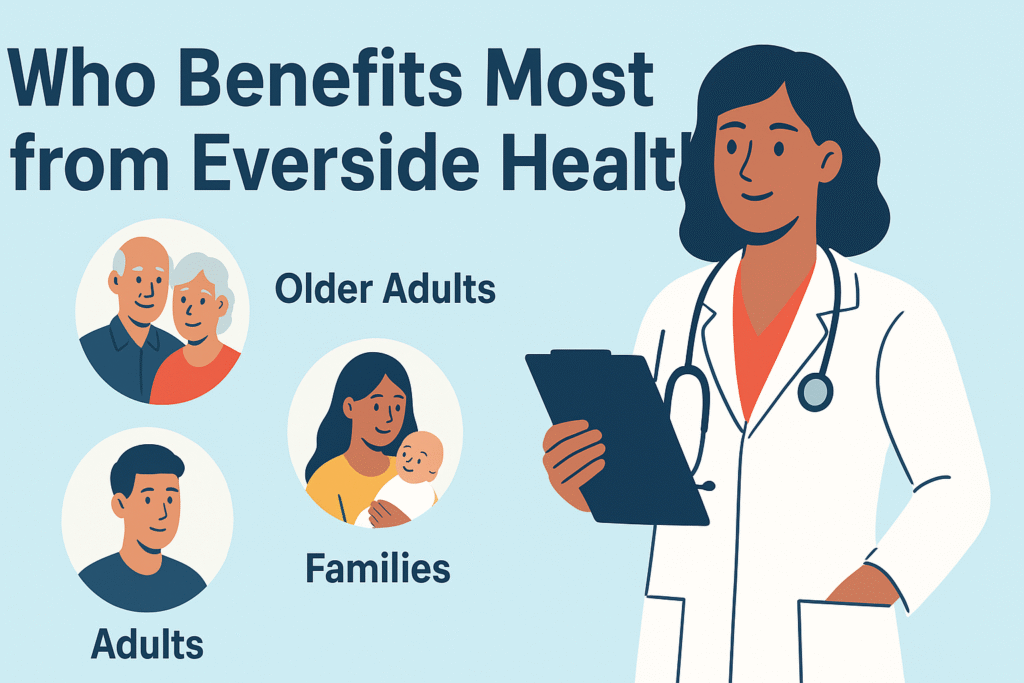
Ideal for:
- Employees wanting predictable healthcare access
- People managing chronic conditions
- Individuals seeking personalized preventive care
- Busy professionals needing flexible scheduling
May Not Be Ideal for:
- Individuals requiring ongoing specialist treatment
- People living far from Everside clinic locations
- Individuals without employer coverage
Final Thoughts: Is Everside Health Worth It?
Everside Health provides a refreshing alternative to traditional healthcare challenges.
Its strengths reduced costs, faster access, personalized care, and strong preventive support make it a powerful model for many employees and families. However, it’s important to recognize gaps such as limited locations, employer dependency, and the need for external specialty care. Understanding both sides gives you a more complete picture, allowing you to decide whether the service aligns with your health needs and lifestyle.
References
- American Academy of Family Physicians – Direct Primary Care Overview
- National Institute for Health Care Management – Primary Care Access Report
- American College of Physicians – Chronic Disease Management Guidelines
- Health Affairs Journal – Employer-Sponsored Healthcare Trends
- Mayo Clinic – Preventive Care Recommendations
- Centers for Disease Control and Prevention (CDC) – Chronic Disease Data
- American Telemedicine Association – Telehealth Benefits
- Harvard Business Review – Healthcare Cost Reduction Models
- Journal of Primary Care & Community Health – Patient Satisfaction Studies
- World Health Organization (WHO) – Primary Health Care Framework
10 thoughts on “Everside Health: Powerful Benefits vs Hidden Gaps”